
Hotel Property Improvement Plan (PIP) Cost Guide 2026: FF&E Budget, Per-Room Breakdown & Renovation Costs
Last Updated: July 2026 | Reading Time: 18 minutes
Executive Summary — Hotel PIP at a Glance
| Metric | Typical Value |
|---|---|
| Cost Per Room | $12,000–$45,000 |
| 100-Room Hotel Total | $1.2M–$4.5M |
| Renovation Timeline | 3–6 months |
| FF&E Share of Budget | 55–65% |
| Hidden Costs | 12–20% on top |
| Revenue Loss During Renovation | $15K–$50K per day |
Hotel PIP cost per room in 2026 ranges from $12,000 to $45,000 depending on hotel tier — and most owners underestimate the total by 20–35% because they budget for furniture without accounting for brand-mandated upgrades, fire & life safety compliance, and procurement premiums during tight renovation timelines. This guide breaks down hotel PIP cost per room with real allocation numbers for FF&E, OS&E, and construction across select-service, full-service, and luxury tiers. Figures based on procurement benchmarks and aggregated project data from Gulf, European, and Southeast Asian markets.
This guide explains how to estimate renovation budgets for branded hotels, including FF&E, OS&E, procurement planning, timeline risks, and cost-saving strategies for Property Improvement Plans. It covers per-room costs, public area upgrades, and sourcing decisions across select-service, full-service, and luxury tiers.
What is a Hotel Property Improvement Plan (PIP) and how much does it cost?
A Property Improvement Plan (PIP) is a brand-mandated renovation cycle that requires hotels to update their physical assets to maintain brand standards. PIPs are typically required every 7–10 years for branded properties under Marriott, Hilton, IHG, Accor, and other major chains.
Unlike voluntary renovations, PIPs are non-negotiable. Failure to comply can result in brand termination, loss of reservation systems, and devaluation of the asset. PIPs cover everything from guestroom FF&E replacement to public area upgrades, bathroom renovations, OS&E replenishment, and life safety compliance.
Key Takeaways for Hotel Owners
- PIP cost per room ranges from $12,000 (select-service) to $45,000 (luxury full-service) — typical industry ranges
- FF&E replacement accounts for 55–65% of total PIP cost
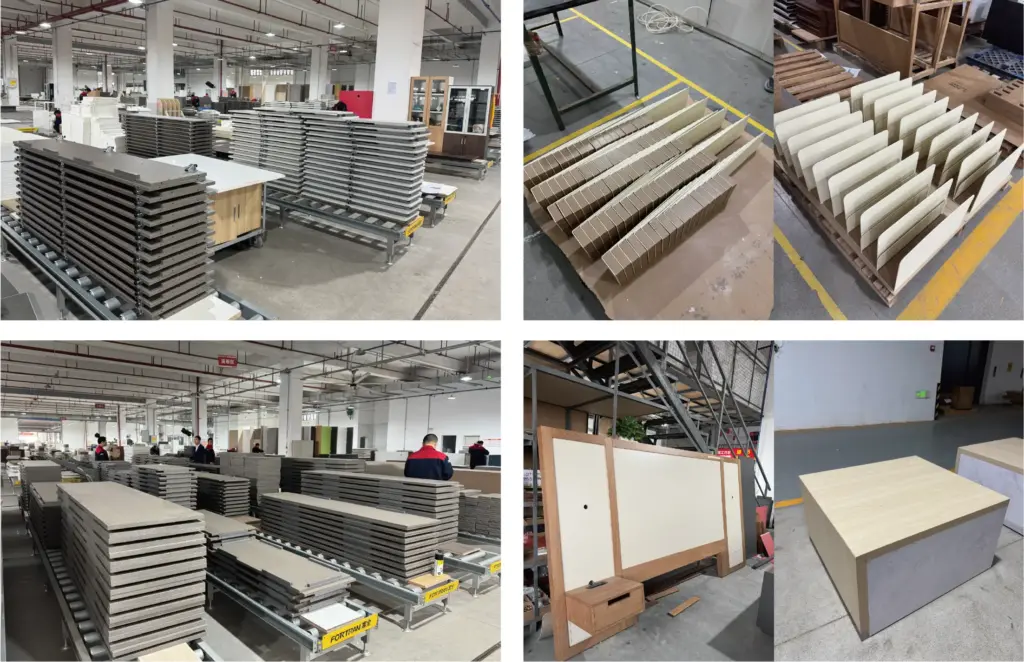
- China sourcing during PIP saves 20–35% vs. regional suppliers — but only if planned 6+ months ahead
- Rush procurement premiums during PIP add 25–45% on top of normal pricing
- Revenue loss during renovation: $15,000–$50,000 per day for a 100-room property (typical industry range depending on ADR and occupancy)
- Average timeline: 3–6 months for a full 100-room PIP
Who This Guide Is For
- Hotel owners facing a brand-mandated PIP in the next 12–24 months
- Asset managers evaluating renovation ROI and budget allocation
- Procurement teams planning FF&E and OS&E replacement for PIP cycles
- Investors underwriting hotel acquisitions requiring immediate PIP investment
Wondering what your specific PIP will cost? Request a preliminary PIP budget estimate (24h response) →
What Triggers a Hotel PIP?
Understanding the trigger helps you plan ahead — and planning ahead is the single biggest factor in controlling PIP costs.
| Trigger | Frequency | Cost Impact |
|---|---|---|
| Brand Inspection Failure | Every 7–10 years | High — mandatory compliance |
| Guest Score Decline | Continuous monitoring | Medium — cosmetic upgrades |
| Asset Age | 10+ years | High — full renovation |
| Rebranding / Flag Change | Ownership change | Very High — full brand alignment |
| Insurance / Life Safety Upgrade | Regulatory cycle | Medium — compliance focused |
Hotel PIP Cost Per Room Breakdown (2026 Budget Guide by Hotel Tier)
PIP costs vary based on brand standards, scope of work, and geographic market. The ranges below reflect typical industry benchmarks used in 2026, consistent with data from a 400-room five-star new-build ($12K–$15K/room FF&E) and a 30-unit apartment PIP ($8K–$10K/room) completed in the Gulf region (2024–2025).
| Hotel Tier | PIP Cost Per Room | Total 100-Room PIP | FF&E Share | OS&E Share |
|---|---|---|---|---|
| Select-Service | $12,000–$18,000 | $1.2M–$1.8M | 60% | 12% |
| Full-Service | $25,000–$35,000 | $2.5M–$3.5M | 58% | 14% |
| Luxury | $35,000–$45,000 | $3.5M–$4.5M | 55% | 15% |
Figures exclude MEP upgrades, elevator modernization, and structural work.
PIP Budget Estimate by Hotel Size (Full-Service, 2026)
Use this table to scale the per-room benchmark to your property size. Figures are totals including FF&E, OS&E, and contingency.
| Rooms | Estimated Budget (Select-Service) | Estimated Budget (Full-Service) |
|---|---|---|
| 50 | $600K–$900K | $1.25M–$1.75M |
| 75 | $900K–$1.35M | $1.88M–$2.63M |
| 100 | $1.2M–$1.8M | $2.5M–$3.5M |
| 150 | $1.8M–$2.7M | $3.75M–$5.25M |
| 200 | $2.4M–$3.6M | $5M–$7M |
| 300 | $3.6M–$5.4M | $7.5M–$10.5M |
Need a China factory-direct PIP cost breakdown for your property? Compare China vs local procurement costs for your PIP →
Hotel PIP Cost Formula
Use this formula to estimate a preliminary PIP budget before detailed line-item costing:
Total PIP Budget = (Rooms × Per-Room Cost) + Public Areas + F&B + Contingency + Revenue Loss During Renovation
Example calculation — 120-room full-service hotel:
| Line Item | Calculation | Amount |
|---|---|---|
| Guestroom FF&E | 120 rooms × $28,000 | $3,360,000 |
| Public Areas | ~25% of guestroom FF&E | $840,000 |
| F&B / Restaurant | ~10% of total FF&E | $420,000 |
| OS&E | ~12% of FF&E | $500,000 |
| Contingency (10%) | 10% of subtotal | $512,000 |
| Revenue Loss (est.) | 120 days × $25K/day | $3,000,000 |
| Total Estimated PIP | ~$8.6M |
Revenue loss is often the single largest line item in a PIP budget yet it is frequently omitted from initial estimates. Including it changes the financial decision from “can we afford this renovation” to “can we afford not to finish on time.”
What a Full PIP Actually Covers
Most owners focus on guestroom furniture — but a full PIP extends beyond the rooms. Here’s the budget distribution for a typical full-service property:
Mid-Article Recap: Key PIP Numbers
100-room full-service PIP: $2.5M–$3.5M | Per room: $25K–$35K | FF&E share: 55–65% | Timeline: 4–6 months | Revenue loss/day: $15K–$50K (varies by ADR/occupancy)
| PIP Component | % of Total | Typical Cost (100-Room) |
|---|---|---|
| Guestroom FF&E Replacement | 35% | $875,000–$1.225M |
| Bathroom Renovation | 18% | $450,000–$630,000 |
| Public Area & Lobby | 15% | $375,000–$525,000 |
| F&B / Restaurant | 10% | $250,000–$350,000 |
| Fire & Life Safety | 8% | $200,000–$280,000 |
| OS&E Replenishment | 7% | $175,000–$245,000 |
| MEP / Electrical / HVAC | 5% | $125,000–$175,000 |
| Signage & Brand Collateral | 2% | $50,000–$70,000 |
Typical 100-Room PIP Checklist
A full PIP covers more than guestrooms. Here is the typical scope checklist for a 100-room branded property:
- Guestroom FF&E — case goods, seating, lighting, soft goods, media units
- Bathroom — vanities, mirrors, fixtures, shower enclosures, tile
- Corridors & Elevator Lobby — wall covering, flooring, lighting, artwork
- Restaurant & F&B — dining furniture, bar, kitchen equipment
- Back of House — staff areas, laundry, storage, housekeeping
- Signage & Brand Collateral — exterior, lobby, room numbers, directories
- Life Safety & MEP — fire alarms, sprinklers, HVAC, electrical
Hidden Costs Hotel Owners Often Miss
Beyond FF&E and OS&E, several cost categories are frequently excluded from initial PIP budgets but appear reliably during execution:
- Permit and inspection fees — vary by municipality, typically $15K–$50K for a full PIP
- Mockup room construction — brands usually require one before approving full production; ~$25K–$60K per room
- Existing furniture disposal — removal and landfill or resale fees, $5K–$20K per floor
- Temporary storage and logistics — warehouses near site during phased renovations
- Freight insurance and customs — 1–3% of FF&E value for international shipments
- Brand consultant or PIP project manager — 3–8% of project cost for third-party oversight
- Change orders after demolition — hidden MEP issues behind walls; budget 5–10% of construction cost
- Commissioning and testing — fire alarms, HVAC, guestroom technology; often required before brand inspection
In our experience, these hidden costs add 12–20% on top of the visible FF&E + OS&E budget. A $2.5M PIP can easily become $3M when these items are factored in after project start.
Soft PIP vs Full Renovation vs Rebranding
Not all PIPs are the same. Understanding the scope helps you budget accurately.
| Option | Cost Per Room | Downtime | ROI Impact | Best For |
|---|---|---|---|---|
| Soft PIP | $5K–$10K | 6–8 weeks | Moderate — improves guest scores, extends brand compliance | Properties passing inspection but needing refresh |
| Full Renovation | $25K–$45K | 4–6 months | High — resets asset value, enables ADR growth | Post-inspection failure or 7–10 year cycle |
| Rebranding | $40K–$70K | 6–12 months | Variable — may reduce future CapEx if switching to lower-FF&E brand | Asset repositioning or flag change |
- Soft PIP ($5K–$10K/room, 6–8 weeks): Cosmetic refresh — soft goods, paint, select FF&E. Best for properties passing brand inspection but needing a guest experience upgrade without full downtime.
- Full Renovation ($25K–$45K/room, 4–6 months): Complete FF&E, bathrooms, public areas, OS&E. Required after brand inspection failure or at the 7–10 year cycle for most full-service brands.
- Rebranding / Flag Change ($40K–$70K/room, 6–12 months): Full brand alignment — all FF&E, OS&E, signage, MEP. Highest cost but may reduce long-term CapEx if switching to a brand with lower FF&E standards.
Brand PIP Comparison: Marriott, Hilton, IHG, Accor
PIP requirements vary significantly by brand. The table below summarizes typical cycles and relative strictness based on available brand documentation and project experience. Actual requirements vary by individual franchise agreement, property tier, and regional brand team discretion.
| Brand | Typical PIP Cycle | Strictness | FF&E Emphasis |
|---|---|---|---|
| Marriott | Every 7–8 years | High — detailed brand standards manual | Public areas, bathrooms, guestroom FF&E |
| Hilton | Every 7–10 years | High — property inspections drive scope | Guestroom soft goods, bathroom upgrades |
| IHG | Every 7–10 years | Medium-high — varies by brand tier (Holiday Inn vs InterContinental) | Brand signage, public area FF&E |
| Accor | Every 8–10 years | Medium — flexible by region | F&B areas, guestroom refurbishment |
The PIP Cost Pressure Model
PIP procurement is fundamentally different from new-build because of time pressure. Every week of delay can reach up to $100K–$350K in lost revenue for a 100-room property with high ADR and occupancy — so suppliers know buyers will pay a premium. Based on industry procurement data, here’s how costs escalate:
| Procurement Scenario | Premium vs. Normal Pricing | Typical Situation |
|---|---|---|
| Planned 6+ months ahead | Baseline (0%) | Ideal — factory-direct sourcing |
| Planned 3–5 months ahead | +10–15% | Local sourcing, standard catalog items |
| Rush order (1–2 months) | +25–35% | Brand requirement arrived late |
| Emergency replacement | +40–45% | Supplier mismatch or quality failure |
The most common procurement mistake hotel owners make during a PIP is treating it like a new-build timeline. New-build projects operate on 12–18 months of lead time, while PIPs are typically compressed to 3–6 months from brand notification to completion. If you start procurement the same way you would for a ground-up development, you are already behind schedule and facing premium pricing before the first PO is issued.
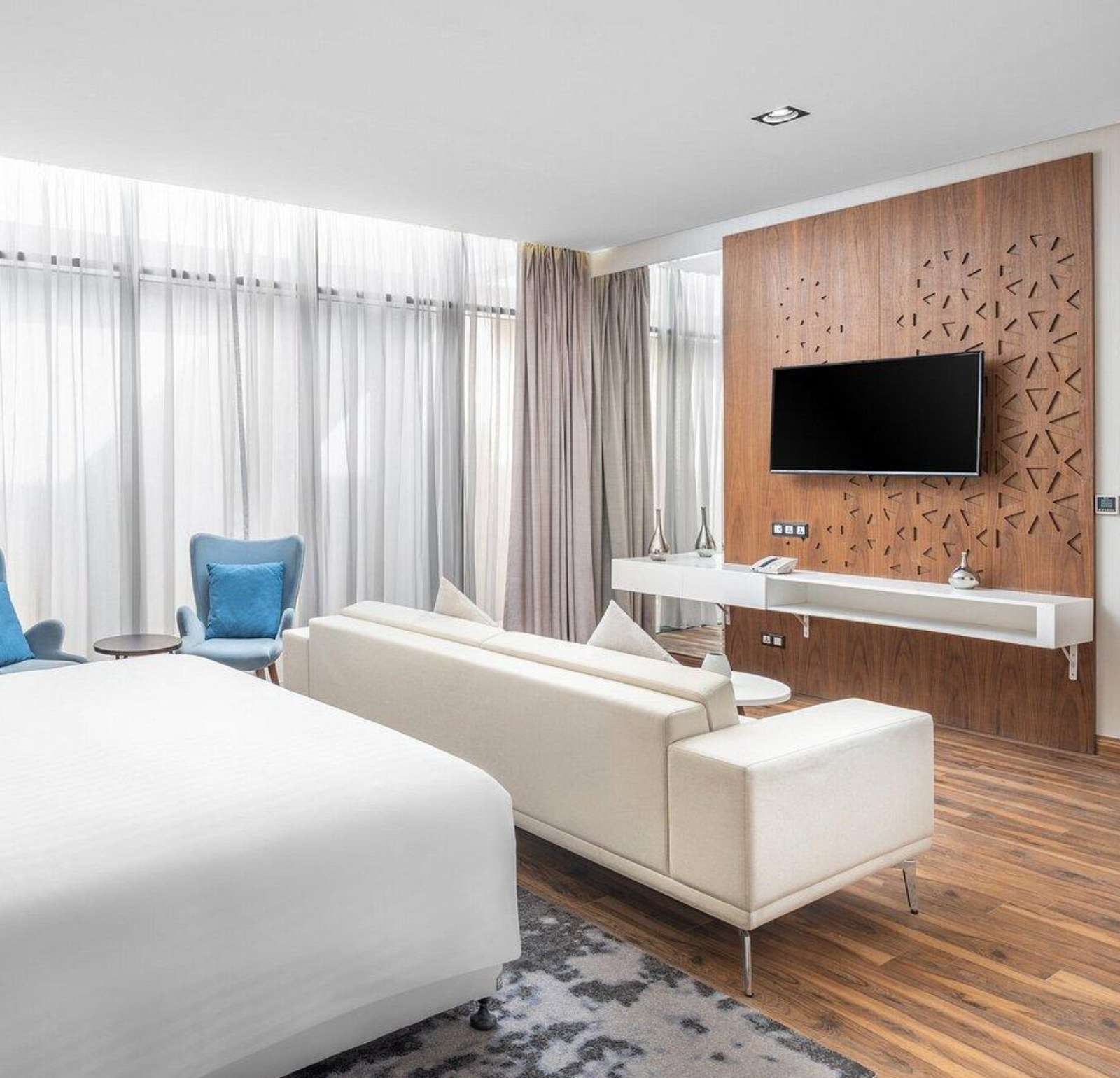
FF&E and OS&E Replacement During PIP
FF&E tends to dominate the budget in most PIP cycles, often absorbing well over half of total renovation spend once brand specifications and replacement cycles are factored in. OS&E replenishment runs a different pattern — it tends to get overlooked during planning, then rushed at emergency pricing in the final weeks before opening.
FF&E Cost Breakdown Per Room
FF&E costs vary by brand tier and scope. For a 100-room full-service property, typical guestroom FF&E runs $8,000–$15,000 per room including case goods, upholstery, lighting, and soft goods. Public area FF&E adds roughly 25–30% on top of guestroom costs — similar to the per-item allocation in our hotel FF&E cost breakdown for 2026.
OS&E Budget Planning for PIP
OS&E typically accounts for 7–15% of total PIP cost but causes outsized delays when ordered late. Budget $1,500–$3,500 per room for linens, amenities, tableware, and housekeeping supplies — consistent with the line-item pricing in our hotel OS&E procurement guide.
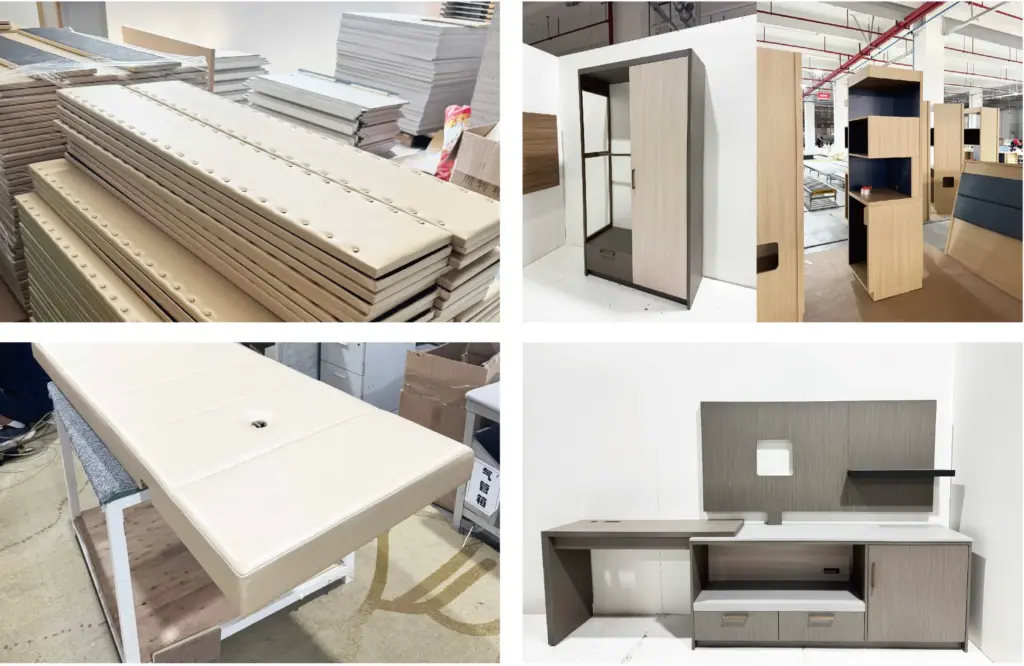
- Case goods must be remeasured to fit existing dimensions — never assume standard sizes work in a renovated room
- Upholstery fabric grades must match new brand standards — one grade upgrade adds $150–$300 per room
- Audit existing OS&E inventory before ordering — hotels often have 30–40% usable stock that only needs partial replacement
- Brand amenity programs change between PIP cycles — confirm current specs before ordering OS&E
- Public area furniture has the longest lead time (8–14 weeks) — order these first
China vs Local Sourcing During PIP
The sourcing decision during PIP is different from new-build because of time constraints.
| Factor | China Factory-Direct (PIP) | Local / Regional (PIP) |
|---|---|---|
| Cost Premium vs. Normal | Baseline savings of 20–35% | +15–30% over China pricing |
| Lead Time | 6–10 weeks + 2–4 weeks freight | 2–4 weeks |
| Best For | Planned PIP (6+ months out) | Rush PIP (1–3 months out) |
| Customization | Full brand customization | Limited — catalog items only |
The smart strategy: Place FF&E orders 6+ months ahead. Source OS&E 4+ months ahead. Reserve local sourcing for emergency fill-ins and custom millwork requiring on-site measurements.
PIP Procurement Timeline (100-Room Property)
Renovation Timeline Cost Impact
Every month of delay adds roughly $450K–$1.5M in lost revenue for a mid-size branded property. The biggest cost risk is not the renovation itself — it’s the extended downtime. A 4-month renovation that slips to 5 months costs $250K–$500K more in lost ADR than the entire FF&E contingency budget.
| Phase | When | Activities |
|---|---|---|
| Scope & Budget | 12 months out | Brand PIP spec review, cost estimate, sourcing strategy |
| FF&E Samples | 10 months out | Material boards, fabric approvals, mockup room |
| FF&E Order | 8 months out | POs for case goods, seating, public area furniture |
| OS&E Order | 6 months out | Linens, amenities, tableware, housekeeping supplies |
| Logistics | 3 months out | Container booking, freight consolidation |
| Renovation Start | Month 1 | Bathrooms, MEP, demolition |
| FF&E Installation | Month 2–3 | Case goods, upholstery, lighting, public areas |
| OS&E + Brand Inspection | Month 4–5 | Final delivery, sign-off, opening |
PIP Process Timeline — From Brand Notice to Opening
A typical PIP follows this sequence. Each phase depends on the previous one, and delays early in the chain compound at each step:
Brand Notice → Budget & Scope → Design & Samples → Factory Production → Shipping & Logistics → Installation → Brand Inspection → Opening
Total duration: 3–6 months for a 100-room PIP. The factory production phase (8–14 weeks) is typically the longest single step and the most common source of timeline pressure.
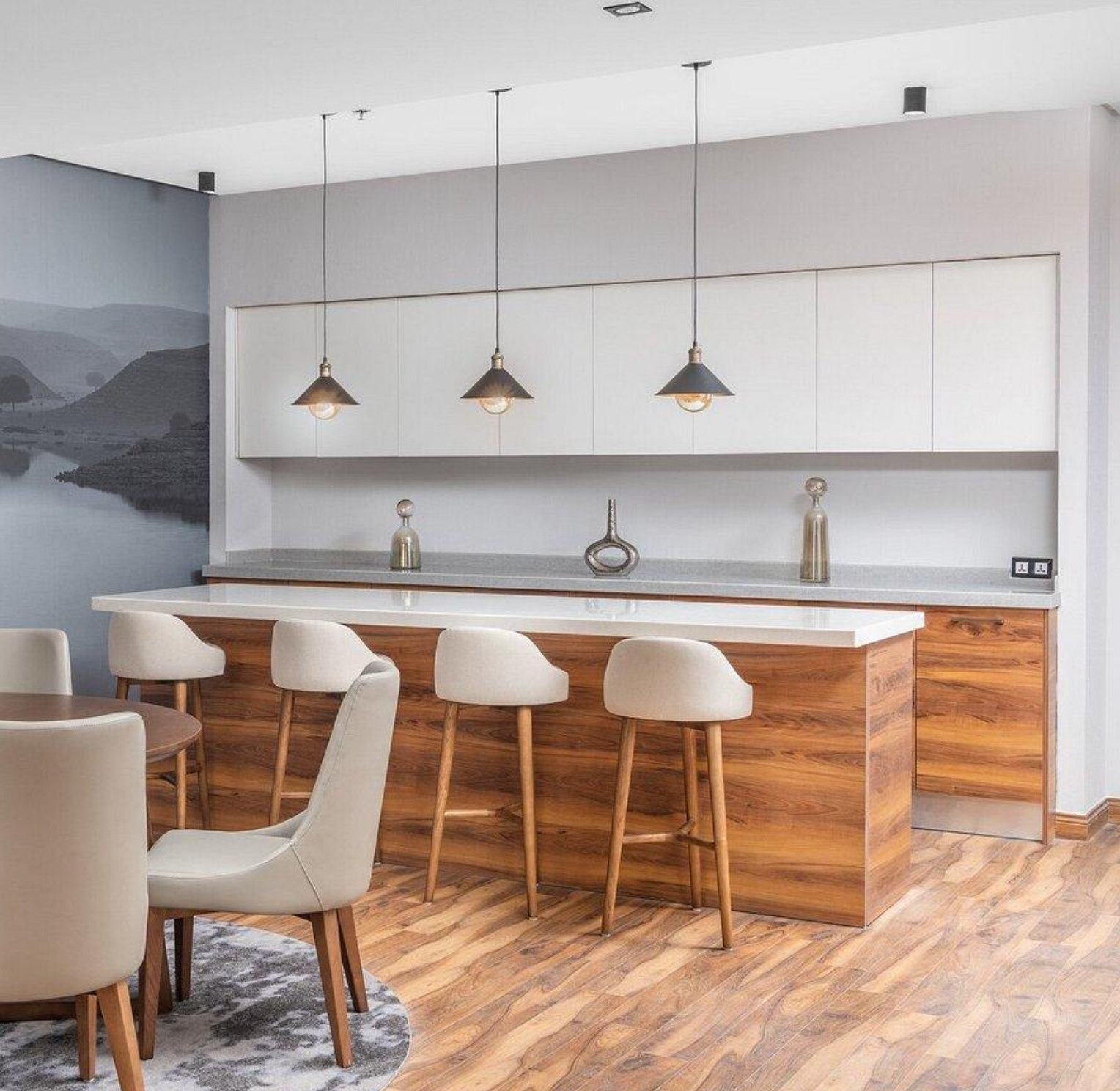
Actual Project Budget: 100-Room Full-Service PIP (Client Details Withheld)
The following budget is based on an actual hotel PIP project supported by our procurement team in the Gulf region in 2025 — 100 rooms, IHG brand requirement, 4-month renovation window. Certain client identifiers and commercially sensitive details have been omitted under confidentiality agreements.
| Budget Line | Initial Estimate | Final Cost | Variance |
|---|---|---|---|
| Guestroom FF&E | $1,100,000 | $1,250,000 | +13.6% |
| Bathroom Renovation | $450,000 | $520,000 | +15.5% |
| Public Area FF&E | $380,000 | $410,000 | +7.9% |
| F&B Furniture | $220,000 | $245,000 | +11.4% |
| OS&E Replacement | $175,000 | $210,000 | +20.0% |
| Logistics & Installation | $185,000 | $225,000 | +21.6% |
| Contingency | $150,000 | $150,000 | 0% |
| Total PIP | $2,660,000 | $3,010,000 | +13.2% |
Causes of variance: Brand-mandated linen upgrade (OS&E +$35K), rush freight on public area furniture (+$22K), bathroom tile specification change (+$38K), and extended renovation duration (+$250K in lost ADR over 3 weeks).
Project Reference: New-Build vs PIP — Real Cost Data (Gulf Region, 2024–2025)
Rather than relying solely on published benchmark reports, the figures below include anonymized cost data from completed hotel procurement projects coordinated by Skyline Trading between 2024 and 2025. Client names have been removed under confidentiality agreements, while cost allocations remain representative of actual procurement and renovation projects.
The table below summarizes cost data from two completed hotel projects in the Gulf region. Ranges reflect actual procurement and installation costs under standard lead times.
| Metric | 400-Room Five-Star New-Build | 30-Unit Apartment PIP |
|---|---|---|
| FF&E Cost Per Room | $12,000–$15,000 | $8,000–$10,000 |
| Total FF&E Budget | $5M–$6M | $240K–$300K |
| OS&E Budget | $900K–$1.2M (15–20% of FF&E) | $40K–$60K |
| Lead Time (order to install) | 10–14 months | 3–6 months |
| Budget Variance | 7–10% (design changes, logistics) | 10–15% (hidden MEP issues post-demolition) |
In both cases, the key cost driver was not furniture pricing — it was timeline pressure and post-award changes. The new-build project had sufficient lead time to source factory-direct from China, while the PIP renovation required faster local fill-ins that added 10–15% to specific line items.
5 Biggest PIP Budget Mistakes
Based on industry project tracking, these mistakes cost hotel owners an estimated $300,000–$500,000 per PIP:
- 1. Starting procurement too late — PIP timelines are 50–60% shorter than new-build. Waiting for brand specification approval before ordering = guaranteed rush premiums.
- 2. Ignoring revenue loss in budget — Every day of renovation can cost $15,000–$50,000 in lost revenue depending on ADR and occupancy. Extending 4 months to 5 months costs more than the entire FF&E budget.
- 3. No supplier verification — PIP time pressure leads to skipping factory audits. We’ve tracked projects where unverified suppliers delivered damaged goods requiring emergency reordering.
- 4. Overlooking OS&E until the end — OS&E is 7–15% of PIP cost but causes a disproportionate share of delays.
- 5. No contingency for brand changes — Brand PIP specifications often change between initial review and final approval. Budget 10–15% contingency specifically for brand-driven changes.
Procurement Note — From Real Project Experience
During several Gulf hotel projects, bathroom materials were among the most common causes of budget overruns. Tile specifications often changed after demolition revealed unexpected conditions beneath existing finishes — adding 8–15% to bathroom budgets in two cases we supported. The lesson: budget a contingency specifically for post-demolition discoveries, separate from the general project contingency.
Cost Saving Scenarios for PIP
| Action | Impact | When |
|---|---|---|
| China factory-direct for FF&E | Save 20–35% vs. local (when lead time planned 8+ months ahead) | 8+ months ahead |
| Consolidate FF&E + OS&E in one shipment | Save 10–15% on freight | Logistics planning phase |
| Audit existing OS&E before ordering | Save 20–40% on replacement | Pre-PIP inventory check |
| Phase renovation by floor | Reduce revenue loss by 40–50% | Project planning |
Common Budget Assumptions — What These Numbers Include and Exclude
All cost ranges in this guide reflect typical procurement budgets for China factory-direct FF&E sourcing with sea freight to Gulf and Middle East destinations. Before using these figures for your own budget planning, confirm the following:
- Freight: Sea freight included; air freight adds 20–40% for emergency shipments
- Taxes: VAT and customs duties not included unless noted
- Installation: FF&E installation costs vary by location and contractor; budget 8–15% of FF&E value
- Contingency: 10–15% recommended for brand-driven changes and post-demolition discoveries
- Design & Samples: Mockup room and design fees not included in per-room ranges
- Local Taxes & Permits: Vary significantly by municipality; budget separately
These assumptions matter because two hotels with the same per-room FF&E budget can have 15–25% differences in total project cost depending on freight route, installation scope, and local tax regime.
Decision Framework: Renovate Now, Phase, or Rebrand
Owners facing a PIP often assume full renovation is the only path. In practice, the decision depends on three factors: brand deadline, asset condition, and capital availability.
- Renovate now (full PIP) — Best when brand inspection is within 12 months, asset age is 10+ years, and financing is available. Highest upfront cost but shortest downtime window.
- Phase over 12–18 months — Some brands allow partial compliance if ownership presents a committed timeline. Reduces annual CapEx burden and allows better procurement planning. Requires brand approval upfront.
- Delay and rebrand — If PIP cost exceeds 30% of property value, rebranding to a different chain with lower FF&E standards may be financially rational. This adds 6–12 months but can reduce total renovation spend by 20–40%.
Each path changes the FF&E, OS&E, and procurement strategy significantly. A full PIP requires complete replacement. Phased PIPs let you prioritize public areas first, then guestrooms. Rebranding resets the brand spec entirely.
Author Experience & Project Background
Skyline Trading has supported hotel procurement projects across the Gulf region since 2015, coordinating FF&E sourcing, factory verification, supplier negotiations, quality inspections, and export logistics for hospitality developments ranging from apartment renovations to five-star hotels. The practical recommendations in this guide are based on procurement workflows observed across completed projects, combined with manufacturer quotations and publicly available hospitality benchmark data.
Data Sources & Methodology
This guide combines: cost data from hotel procurement projects completed by Skyline Trading, manufacturer quotations collected during FF&E sourcing, brand PIP documentation (Marriott, Hilton, IHG), industry benchmark reports, and supplier pricing collected between 2024 and 2026. Per-room ranges reflect typical midscale to luxury projects across Middle East, European, and Southeast Asian markets. Actual costs vary by property condition, brand tier, geographic location, material specifications (veneer vs laminate), shipping costs, customs duties, and procurement timeline.
Frequently asked questions about hotel PIP budgeting and procurement:
FAQ
A PIP is a brand-mandated renovation cycle (typically every 7–10 years) that requires hotels to update furniture, fixtures, equipment, and operating supplies to maintain brand standards. PIPs are required by major chains including Marriott, Hilton, IHG, and Accor.
In 2026, typical industry ranges for PIP costs are $12,000–$18,000 per room for select-service properties and $35,000–$45,000 per room for luxury hotels. A 100-room full-service PIP typically totals $2.5M–$3.5M including FF&E, OS&E, and renovation labor.
Most branded hotels require a PIP every 7–10 years. Some brands conduct intermediate inspections at year 5 and may require a soft PIP at that point. Luxury and upper-upscale properties often have stricter cycles.
A full PIP covers guestroom FF&E replacement, bathroom renovation, public area furniture, F&B furniture, OS&E replenishment, fire and life safety upgrades, MEP work, signage, and professional installation.
Yes, China factory-direct sourcing for PIP FF&E saves 20–35% compared to regional suppliers. However, PIP timelines are shorter than new-build, so orders should be placed 6–8 months ahead. Factory audits and pre-shipment QC are essential.
Failing a PIP inspection can result in brand probation, loss of reservation system access, fines, or termination of the franchise agreement. This typically triggers an immediate remediation PIP with accelerated timelines and higher costs.
A full 100-room PIP takes 3–6 months from demolition to brand inspection. Soft PIPs take 6–8 weeks. The bigger risk is timeline slippage: every extra month of renovation adds roughly $450K–$1.5M in lost revenue for a 100-room property, often exceeding the FF&E contingency entirely.
Partial negotiation is possible. Brand standards are non-negotiable, but timing and scope can often be discussed. Some brands allow phasing the PIP over 12–18 months if ownership presents a committed timeline with procurement milestones. The key is to engage the brand team early, before an inspection failure triggers an accelerated mandate.
The most effective ways to reduce PIP cost depend on your timeline. With 6+ months lead time, sourcing FF&E from China factory-direct saves 20–35%. With less time, auditing existing OS&E before reordering saves 20–40% on replacements. Phasing renovation floor by floor reduces revenue loss by 40–50%. Consolidating FF&E and OS&E shipments cuts freight costs 10–15%.
People Also Ask About Hotel PIPs
- Can hotels stay open during a PIP? — Yes, most hotels operate during renovations by phasing work floor by floor. Full closures are rare and only happen when MEP work affects all rooms simultaneously.
- Does every Marriott hotel require the same PIP? — No. Requirements vary by brand tier (Fairfield vs JW Marriott), region, and individual franchise agreement. A Marriott PIP in Riyadh differs from one in London.
- How do brands inspect PIP compliance? — Brands send third-party inspectors to verify all PIP items are completed to standard. The inspection typically covers guestrooms, public areas, F&B, life safety, and brand signage.
- Can furniture be refurbished instead of replaced? — In some cases, yes. Soft goods (curtains, upholstery) can sometimes be refurbished if the frame is sound. However, most brands require full replacement for visible FF&E items.
Planning a hotel PIP for 2026? Get a project-specific cost breakdown with FF&E pricing, OS&E checklist, and China sourcing timeline based on your property size and brand requirements.
Common PIP Terms — Quick Glossary
- FF&E — Furniture, Fixtures & Equipment. All movable furniture and fixed room elements (case goods, seating, lighting, soft goods).
- OS&E — Operating Supplies & Equipment. Consumables and reusable items (linens, amenities, tableware, housekeeping supplies).
- ADR — Average Daily Rate. Standard metric for hotelroom pricing.
- RevPAR — Revenue Per Available Room. ADR × occupancy rate; key performance metric.
- CapEx — Capital Expenditure. Long-term investment in physical assets, including PIP budgets.
- Mockup Room — A fully finished sample room used to approve FF&E quality, finishes, and layout before full production.
- Punch List — Final inspection checklist of remaining items to fix before brand sign-off.
- Brand Standards — Minimum quality and design requirements set by the hotel chain for all franchised properties.
Why This Guide Is Different
Unlike many online articles that summarize published industry reports, this guide combines procurement benchmark data with anonymized budgets from hotel projects supported by Skyline Trading across the Gulf region. All client names have been removed to respect confidentiality agreements, while the cost allocations remain representative of actual procurement and renovation projects completed between 2024 and 2025.
Continue Reading — Related Resources
If you are comparing overseas sourcing options, see our complete guide to hotel procurement from China including supplier selection, factory verification, logistics planning, and quality control processes.
- Hotel FF&E Cost Breakdown (2026) — per-item pricing for 100-room hotels
- Hotel OS&E Procurement Guide (2026) — full OS&E checklist with supplier pricing
- Factory Audit Guide — how to verify Chinese furniture suppliers before placing PIP orders
- China Sourcing Risks — common pitfalls when sourcing hotel FF&E from Asia
- Hospital Furniture FF&E – Hospital Furniture
- Restaurant Furniture – Restaurant Furniture from China