
Hospital FF&E Procurement from China — Complete Guide (2026)
Procurement managers evaluating hospital FF&E procurement from China typically face a sharp reality: local GCC distributors quote prices 40–60% above initial project budgets. Sourcing directly from Chinese manufacturers successfully bridges this financial gap, but only if you know how to handle the hidden technical, regulatory, and metallurgical risks.
Our engineering team at Skyline Trading Co., LTD analyzed operational benchmarks from 6 major medical developments—ranging from General Tertiary Hospitals to Specialized Clinics—across the GCC and the UK (2024–2026). The findings were consistent: steel grade substitution occurred in approximately half of unmanaged international tenders, and poor Bill of Quantities (BOQ) planning led to an average of $30,000–$40,000 in preventable losses per project. This guide shows you exactly how to protect your budget and timeline.
Data Methodology & Disclaimer: All benchmarks, metrics, and pricing indexes listed below are derived from internal engineering procurement projects and anonymized case data handled by Skyline Trading Co., LTD between 2024 and 2026. These figures serve as architectural and procurement indicators and do not constitute formal legal or structural design advice for specific building facilities.
Key Takeaways
- Steel grade substitution (SS201 for SS304) occurred in half of unmanaged international tenders in our project data — PMI testing is the only reliable detection method.
- Split-sourcing (steel from China, wood from Turkey, urgent items from UAE) delivered 22–28% total savings across our healthcare portfolio.
- BOQ specification gaps caused preventable losses averaging $30K–$40K per project; third-party BOQ review before factory submission is the recommended first step.
- FF&E and medical equipment should be separate contracts — bundling created cascading port delays and demurrage costs in one of four projects.
In this guide: 1. Sourcing Framework · 2. BOQ Problem · 3. QC & Steel Risk · 4. Case Studies · 5. Cost Benchmarks · 6. Checklists
1. Global Sourcing Framework: China vs. Turkey vs. UAE
Sourcing an entire medical development from a single country introduces supply-chain vulnerabilities. The most successful projects use a split-sourcing model based on regional manufacturing specializations. This approach delivered 22–28% total savings across our recent healthcare portfolio.
The Strategic Sourcing Matrix
| Product Package | Primary Hub | Cost Index | Transit to GCC | Core Sourcing Rule |
|---|---|---|---|---|
| Steel Furniture (Beds, Trolleys, Cabinets) | China | 1.0x (Baseline) | 18–25 Days | Always China. Unmatched pricing and production scale for raw steel fabrication. |
| Wood Furniture & Millwork (Lounges, Custom Panels) | Turkey | 0.85x – 1.0x | 10–14 Days | Sourcing Split. Superior craftsmanship for wood, lower tooling costs, and faster transit. |
| Urgent Replacements (Fast-track items) | UAE (Local) | 1.5x – 1.8x | 1–3 Days | Emergency Buffer. Use strictly to protect project timelines during final handover. |
The Strategic Exception (When NOT to follow the matrix): Do not split the wood millwork package to Turkey if your project requires ultra-high-volume, highly standardized patient ward wardrobes or modular examination desks. If your order exceeds 500 identical units, China’s automated, high-volume furniture factories overcome the shipping distance by delivering up to 35% lower unit costs through massive raw material buying power.
GCC Compliance & Import Gateways
Each GCC country handles import compliance through different frameworks. In Saudi Arabia, all product data must clear the digital SABER platform to fulfill SASO standards. Kuwait’s Public Authority for Industry (PAI) relies on physical port sampling, while Qatar enforces strict laboratory testing upon arrival. Sourcing managers must engineer compliance to meet the most restrictive regional standard to avoid costly port bottlenecks.
2. Technical Gaps: The Bill of Quantities (BOQ) Problem
A standard medical BOQ passes through multiple design stages before reaching a factory floor. When using these documents for manufacturing in China, three common specification gaps consistently disrupt project timelines:
- Ambiguous Metal Specs: Broad descriptions like “metal cabinet” omit critical grade choices. Every medical item should specify SS304 or SS316 under ASTM A240 standards.
- Missing Quantity Buffers: Failing to include a 10–15% buffer for critical wear-and-tear components (such as intensive care bed motor mechanics) results in small re-manufacturing runs that cost 40% more due to air freight.
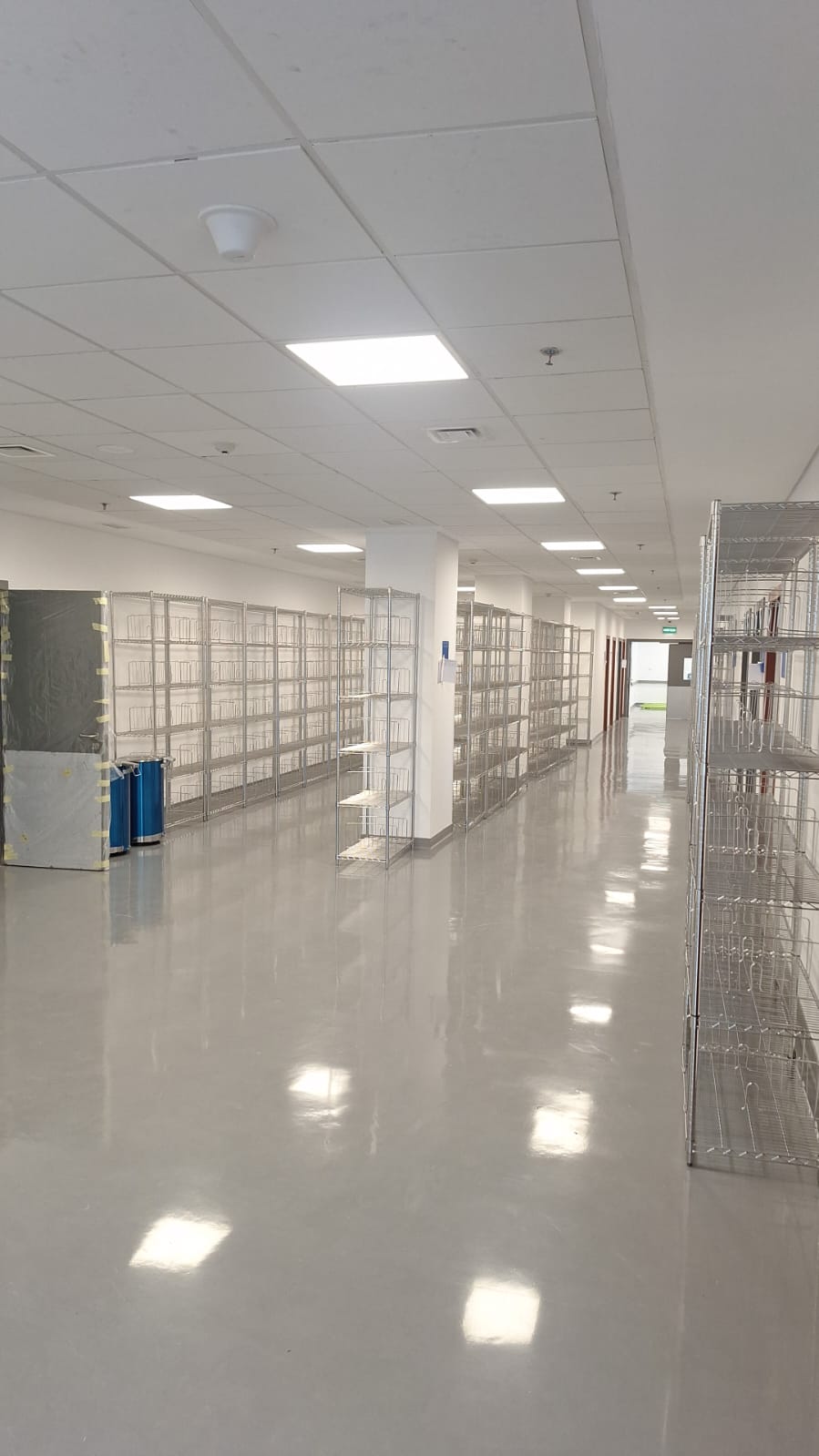
- Omission of Spatial Logistics: Architectural layouts frequently fail to check finished furniture sizes against real-world job site dimensions, like elevator weight capacities and corridor turning radiuses.
3. Quality Control: Preventing Steel Alloy Substitution
In many supply chain assessments, alloy manipulation is evaluated as one of the most financially damaging risks when buying hospital furniture from China. Low-grade steel alloys look identical to high-grade options but typically rust rapidly when exposed to standard hospital chemical disinfectants.
The Stainless Steel Reference Guide
| Alloy Grade | Nickel Content % | Cost Multiplier | Approved Healthcare Application |
|---|---|---|---|
| SS201 Grade | 3.5% – 5.5% | 1.0x (Baseline) | Strictly Prohibited. Rusts rapidly under standard medical cleaning. |
| SS304 Grade | 8.0% – 10.5% | 1.35x – 1.45x | Standard Grade. Ward beds, overbed tables, cabinets, and IV poles. |
| SS316 Grade | 10.0% – 14.0% | 1.80x – 2.20x | Surgical Grade. Operating rooms, sterile processing, and wet areas. |
Enforcing the Inspection Sequence
To eliminate this risk, do not rely on basic paper factory certificates. Mandate on-site Positive Material Identification (PMI) testing using handheld X-ray spectrometers at two specific checkpoints: when raw metal arrives at the factory floor, and during the Mid-Production Inspection (MPI) at 40% completion. Statistical sampling must follow ISO 2859-1 standards at a strict AQL 1.0 threshold for structural defects.
The 48-Hour Design Freeze Protocol: Design changes executed within 48 hours of prototype confirmation incur zero penalty; revisions requested after this window trigger formal Change Orders priced at a baseline average of 3x standard factory cost.
4. Real-World Project Case Studies
Understanding these procurement principles requires looking at actual project outcomes across our regional portfolio. The cases below highlight why rigorous data checking is vital.
Case 1: Kuwait (122 Wards) — Stopping Material Fraud
During a healthcare project in Kuwait City, our team implemented mandatory handheld PMI testing on raw steel shipments. The scans revealed that three sub-tier factories had substituted cheap SS201 alloy for the specified SS304 medical grade on ward bed bases. Because the error was caught before production began, it prevented an estimated $40,000–$80,000 in replacement costs and avoided major structural corrosion failures post-installation.
Case 2: Riyadh, Saudi Arabia (200 Beds) — The Contract Bottleneck
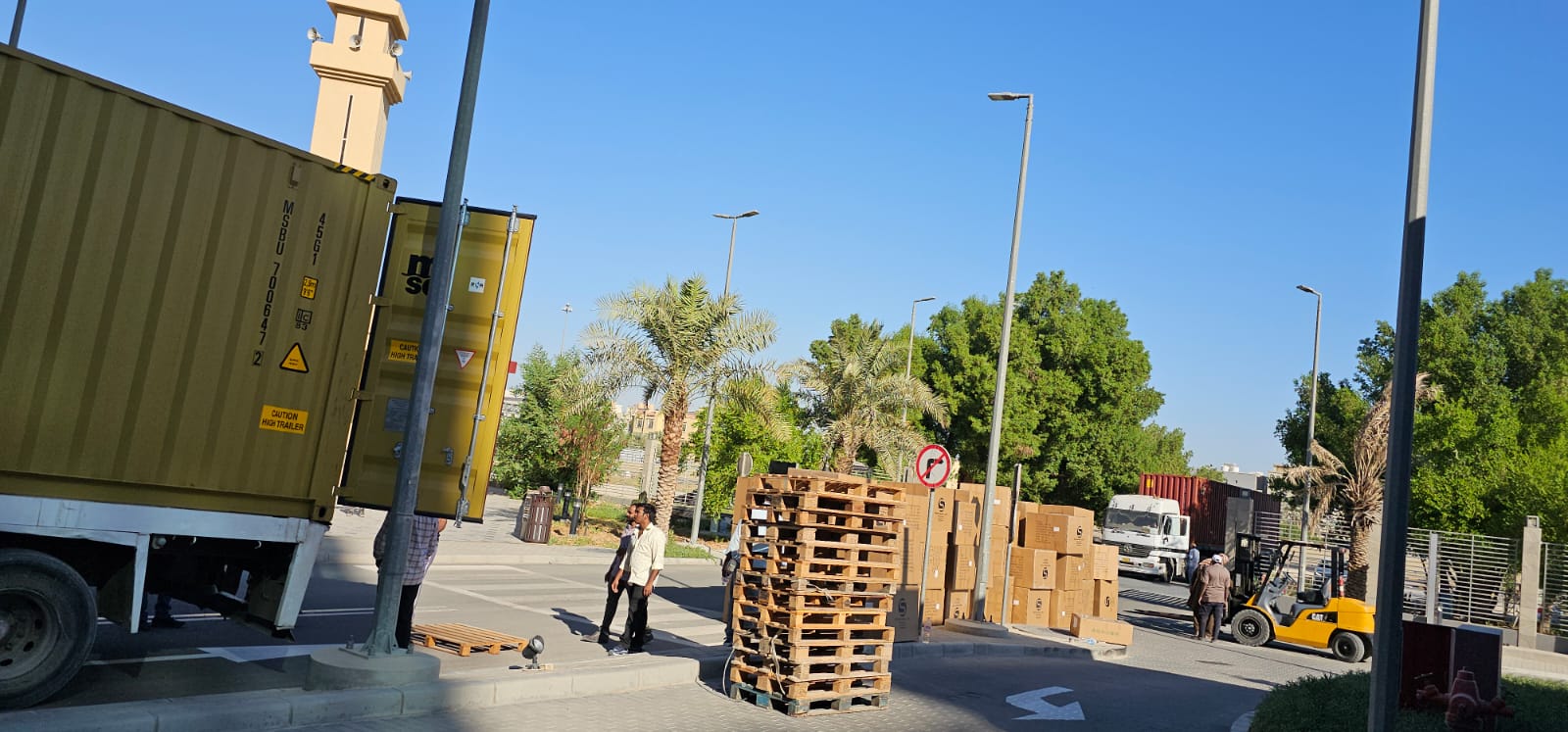
A private medical developer bundled architectural FF&E and high-tech clinical devices into a single master supply contract. A technical registration delay on an anesthesia workstation at the SFDA gateway held up the entire shipment. Because the loose furniture shared the same bill of lading, completed containers of ward furniture sat stuck at the port for five weeks, running up $3,000–$5,000 in unnecessary demurrage fees—a loss that independent contract separation would have entirely avoided.
Case 3: Doha, Qatar (150 Beds) — Mid-Production Design Upgrades
Four weeks into the manufacturing cycle, a client decided to upgrade patient room aesthetics from standard options to custom premium wood laminates. Changing specifications mid-run required stopping the factory lines, re-tooling cutting machinery, and ordering new material batches. This mid-production change caused a 14% quantity gap and added $27,000–$67,000 in structural change orders that a pre-contract design freeze would have eliminated.
5. Project Financial Benchmarks
Accurate budgeting requires understanding how costs scale across different hospital functional zones. Below are baseline costs derived from our project records, calculated on a Standard Medical Grade, FOB China basis.
180-Bed Hospital FF&E Cost Breakdown (SAR)
| Functional Zone / Department | Unit Cost Range (SAR) | Total Package Value (SAR) |
|---|---|---|
| Patient Wards & En-Suites (120 Beds) | 30,000 – 45,000 / Bed | 3,600,000 – 5,400,000 |
| Operating Theaters (4 Surgical Suites) | 80,000 – 120,000 / Suite | 320,000 – 480,000 |
| Intensive Care Units (20 ICU Beds) | 45,000 – 65,000 / Bed | 900,000 – 1,300,000 |
| Main Atrium, Reception & Triage Area | Lump Sum Allocation | 150,000 – 250,000 |
| Clinical Administration Offices (30 Rooms) | 15,000 – 25,000 / Room | 450,000 – 750,000 |
| Public Corridors & General Waiting Floors | 60,000 – 100,000 / Floor | 300,000 – 500,000 |
| Total Estimated FF&E Budget | — | 5,720,000 – 8,680,000 |
Note that common spaces and administrative zones scale non-linearly. When project capacity doubles, common-area procurement benefits from a 15–20% efficiency in scale economies because entrance halls and reception desks scale slower than bed counts.
Cost Scenarios by Hospital Size
| Hospital Capacity | FF&E Range (FOB, SAR) | Estimated Full Project (SAR) |
|---|---|---|
| 100 beds | 2,500,000 – 4,000,000 | 6,600,000 – 10,800,000 |
| 150 beds | 4,000,000 – 6,000,000 | 10,000,000 – 15,200,000 |
| 300 beds | 8,000,000 – 12,000,000 | 19,700,000 – 31,500,000 |
Common areas scale slower than bed count. In our project records, 15–20% scale savings were observed when doubling capacity.
6. Sourcing Playbook Phase Checklists
To keep production lines moving without costly errors, procurement teams should execute the project using strict phase milestones.
Phase 1: Pre-Contract Security
- [ ] Ensure the BOQ is verified by an independent clinical consultant before factory submission.
- [ ] Define exact stainless steel grades (ASTM A240) explicitly for every metal part.
- [ ] Confirm destination-country fire certs (e.g., BS 7177 standards) for all ward upholstery fabrics.
- [ ] Insert mandatory on-site PMI testing clauses and alloy rejection penalties into the contract.
- [ ] Allocate a 15% budget buffer for unexpected architectural design adjustments.
Phase 2: Production & Loading
- [ ] Sign off on first-article prototypes before releasing manufacturing factory deposits.
- [ ] Confirm Pre-Shipment Inspection (PSI) milestone dates per ISO 2859-1 at a strict AQL 1.0 limit.
- [ ] Map the container loading sequence to match your on-site physical room installation order.
- [ ] Verify all manufactured items use a room-specific tracking code:
[Floor]-[Room]-[Item].
Technical Evaluation of Hospital Tenders
Submitting an unverified BOQ to international manufacturing hubs often exposes commercial projects to structural specification changes, compliance failures, and unexpected custom clearance adjustments at destination ports. Skyline Trading Co., LTD provides technical verification to harmonize engineering bills with local GCC frameworks prior to contractual deposit allocation.
Our procurement team assists sourcing teams through two independent processes:
- Pre-Tender Structural Audit: A complete cross-reference of your active BOQ to verify raw material compliance and intercept potential metal grade substitutions.
- GCC Port Integration Mapping: Complete data adjustments mapping items directly to destination regulatory clearing requirements, including SABER, SASO, and PAI frameworks.
To establish verified technical alignment for your technical submittals, you can consult with our team. Submit Your BOQ for Review →