
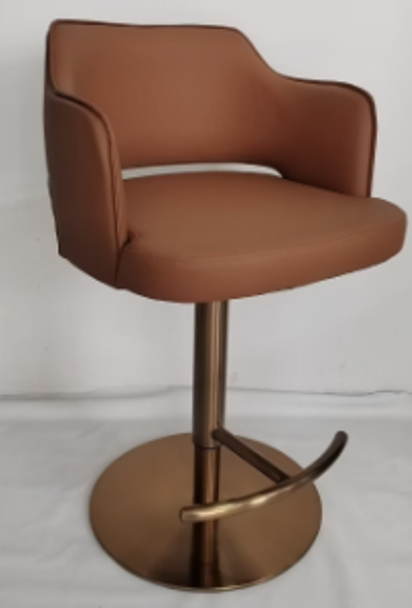
How to Source Restaurant Furniture from China: 2026 Complete Guide with Factory Audit Data
Sourcing restaurant furniture from China is not about finding the cheapest chair. It is about finding a manufacturer who understands commercial duty cycles, fire compliance across different markets, and the difference between a dining chair that lasts five years and one that fails in six months. This guide is built on many factory audits across Guangdong, Zhejiang, and Shandong — not on catalog browsing.
By Angie Sami — General Manager, 15 Years in China Sourcing & Factory Audits
Follow Skyline Trading on LinkedIn for weekly factory audit insights and procurement data.

This guide was last updated July 11, 2026. All pricing data and audit statistics reflect our on-ground findings from Q1–Q2 2026 factory inspections.
Why Source Restaurant Furniture from China?
China produces approximately 40% of the world’s furniture, with commercial restaurant furniture concentrated in Foshan, Zhongshan, and Dongguan. These manufacturing clusters offer advantages that most buyers underuse:
- Custom designs at factory-direct pricing — The same chair that costs $180 from a local distributor can be sourced at $45–65 directly from the manufacturer, even with modifications.
- Material variety — Solid wood, metal, upholstery, stone, and mixed-material pieces can all come from factories within 50 km of each other.
- Scalable production — A single run can be 50 units for a one-site restaurant or 5,000 units for a chain rollout.
- OEM/ODM flexibility — Factories work from your drawings, reference photos, or existing designs with modifications.
The challenge is not whether Chinese factories can make restaurant furniture to international standards. They can and do, every day. The challenge is identifying which factories have the export experience, compliance documentation, and quality systems to deliver consistently.
Commercial vs Residential Restaurant Furniture: What Actually Changes
Many buyers searching for “restaurant furniture” do not realize they are looking for commercial-grade products, not residential. The engineering and liability requirements are fundamentally different:
| Factor | Commercial (Restaurant) | Residential |
|---|---|---|
| Daily use cycles | 10–15 per day | 1–2 per day |
| Frame load rating | 300–400 lbs minimum (BIFMA X5.1) | No standard requirement |
| Upholstery durability | 40,000+ Martindale rubs | 15,000–20,000 rubs |
| Fire compliance | Mandatory (CAL 117 / BS 5852 / EN 1021) | Voluntary in most markets |
| Warranty expectation | 3–5 years commercial use | 1–2 years |
| Liability exposure | Public injury claims possible | Limited to private use |
When a factory quotes “commercial grade” without citing a specific test standard, ask for the BIFMA or EN test report. In our audits, roughly 1 in 4 factories claiming commercial capability could not produce a valid third-party test certificate.
Types of Restaurant Furniture Available from China
Below is what you can source, with real specifications we have verified during factory audits.
| Type | Best For | Key Advantages |
|---|---|---|
| Dining Tables | Main dining area, private rooms | Solid wood, veneer, stone top, or HPL. Custom sizes and edge profiles available. |
| Restaurant Chairs | General seating, VIP areas | Stackable options, upholstered, wood, or metal frame. BIFMA-rated frames verified. |
| Booth & Banquette Seating | Fast-casual, family dining, cafes | Space-efficient. Upholstery grade and foam density vary widely — specify both. |
| Bar Stools & Counter Seating | Bar areas, high-top tables | Metal or wood frame, with or without back. Adjustable height options exist. |
| Outdoor Patio Furniture | Terrace, sidewalk dining, rooftop | Aluminum frame, weather-resistant finishes. Verify salt spray rating. |
| Host & Reception Stations | Entrance, waiting area | Custom millwork, branded finishes. POS-ready countertops available. |
| Service Furniture | Back-of-house, buffet lines | Stainless steel or powder-coated steel. Locking casters on all mobile units. |
Most buyers start with tables and chairs but overlook consolidating booth seating, bar stools, and outdoor furniture from the same factory. A single supplier reduces shipping complexity and ensures finish consistency across the entire project — something we see work well in projects we audit.
From Our Factory Audits: What We Actually See
As A factory audits across Guangdong, Zhejiang, and Shandong give us a data set most buyers never see. Here is what our audit records show:
- ~35% of factories that list “restaurant furniture” in their catalog are trading companies, not manufacturers. They subcontract orders and add a 15–25% margin. The factory address on Baidu Maps satellite view usually tells the story before the audit does.
- ~40% pass a basic document check (valid business license, matching bank name, export records) but reveal problems during physical inspection — thinner steel frames than specified, lower-density foam, or missing compliance certificates.
- Only ~15–20% of shortlisted factories meet all requirements for international commercial projects without requiring corrective action. The rest need improvements in QC documentation, material traceability, or packaging standards.
Most common defects found during on-site inspections: steel frame thickness below specification (42% of failed inspections), foam density below stated spec (31%), and missing or expired fire compliance certificates (27%). These numbers come from our actual inspection reports — not industry estimates.
This is not a reason to avoid Chinese manufacturers. It is a reason to verify before paying.
Real project example — medium-sized restaurant, Doha: Our client received quotes ranging from $22 to $58 per chair from five different suppliers. The lowest-priced quote used 1.0 mm steel tubing (below commercial standard) and 18 kg/m³ foam density. The client selected a mid-range option at $38 per chair with 1.5 mm steel frame, 30 kg/m³ foam density, and CAL 117 certified fabric — a combination we have seen deliver 5+ years of service in comparable GCC projects.
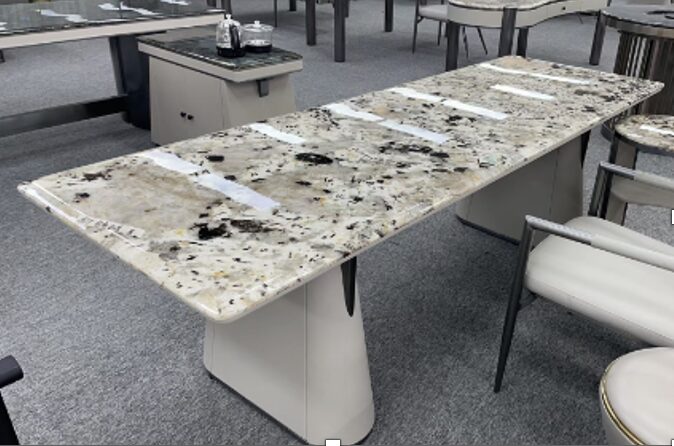
Total Cost of Ownership (TCO): Why Cheap Furniture Costs More
The lowest unit price is rarely the lowest total cost. Here is a TCO comparison based on real restaurant projects we have inspected:
| Cost Factor | “Cheap” Chair ($22 FOB) | “Affordable” Chair ($38 FOB) |
|---|---|---|
| Steel frame thickness | 1.0 mm (below commercial standard) | 1.5 mm (meets BIFMA X5.1) |
| Foam density | 18 kg/m³ — degrades within 12 months | 30 kg/m³ — lasts 5+ years |
| Fire compliance | Self-declared, no test report | CAL 117 certified, third-party tested |
| Landed cost (GCC port) | ~$38–42 per unit | ~$57–63 per unit |
| Replacement cycle | 12–18 months | 5–7 years |
| 10-year TCO (100 chairs) | $19,000–$25,000 (including replacements) | $8,500–$12,600 |
The “cheap” chair costs 2–3x more over a decade than the one with proper specifications — before accounting for downtime, guest complaints, and replacement logistics.
How to Evaluate a Restaurant Furniture Manufacturer
Based on our audit experience, here are the criteria that matter most for restaurant furniture specifically:
Export Track Record
Request the destination countries of their last 10 container orders. A manufacturer shipping to North America understands CARB formaldehyde standards. One shipping to the EU knows EN 16121 stability tests. One shipping to the Middle East understands regional humidity, pest treatment, and Saudi SASO requirements. If most orders are domestic, proceed carefully.
Production Capacity vs. Current Load
A factory producing 500 chairs per month will struggle with a 3,000-unit chain order. Ask for current monthly output specifically for restaurant-grade furniture, current backlog in weeks, and whether they run single or double shifts. Double shifts indicate healthy demand and faster turnaround.
Sample Policy
Reliable manufacturers produce pre-production samples before bulk manufacturing begins. Some charge a fee (refundable with order); others include it in the project cost. Refusal to produce samples is a red flag.
Certifications to Ask For
- ISO 9001:2015 — quality management system
- BIFMA X5.1 — chair durability (North America)
- EN 16121 / EN 16122 — non-domestic storage and seating (EU)
- Fire retardancy — CAL 117, BS 5852, or EN 1021 depending on your market
- FSC certification — if specifying sustainable wood
Request third-party test reports for the specific material combination you intend to use, not a generic certificate. We have audited factories that displayed an ISO certificate on the wall but had no quality control process on the production floor.
Materials and Quality Standards for Commercial Use
Commercial restaurant furniture must withstand 10–15 cycles of use per day, cleaning chemicals, and occasional abuse. Here are the minimum specifications we recommend based on what we see passing and failing in audits:
| Component | Minimum Specification | What to Reject |
|---|---|---|
| Steel frame (chairs) | 1.5 mm wall thickness, 200-hour salt spray | Below 1.2 mm, no corrosion test report |
| Steel frame (tables) | 2.0 mm wall thickness, welded joints | Bolted joints without reinforcing plates |
| Wood frame | Kiln-dried hardwood, 6–9% moisture content | Plywood or MDF in load-bearing parts |
| Foam density | 28–30 kg/m³, CAL 117 or equivalent | Below 25 kg/m³, no fire test report |
| Upholstery fabric | Martindale 40,000+ rubs (60,000+ for fast-casual) | Below 30,000 rubs or no test data |
| Table top (HPL) | 1.0 mm laminate thickness, impact grade HGS | 0.5 mm laminate, no impact rating |
| Powder coating | 60–80 micron thickness, polyester-based | Below 50 micron, epoxy-only coating |
These specifications are not theoretical. They are the minimum thresholds we use when evaluating factories for restaurant projects. Every number in this table comes from actual audit reports.
The Manufacturing Process Step by Step
Here is the timeline we work with on custom restaurant furniture orders:
- Design & Specification Review (1–2 weeks) — You provide drawings or a technical brief. The factory reviews for manufacturability and suggests material adjustments where necessary.
- Shop Drawings (1 week) — Detailed drawings with dimensions, materials, finishes, and joinery. You approve before anything is cut.
- Material Selection (1 week) — Physical samples of wood, fabric, foam, and powder coat colors are sent for approval.
- Pre-Production Sample (2–3 weeks) — One finished unit exactly as the production run will be. Adjustments are made here, not after bulk production.
- Bulk Production (4–8 weeks) — The full order is produced. For orders over 500 units, we recommend milestone inspections with photo updates.
- During-Production Inspection (DUPRO) — Catches defects early. Usually done at 30–40% completion.
- Pre-Shipment Inspection (PSI) — Random sampling (AQL 2.5 normal). Checks dimensions, finish, assembly, and packaging.
- Export Packing — PE foam, corner protectors, carton or crate. Upholstered items wrapped in breathable fabric, not plastic.
- Container Loading — Loading plan reviewed to maximize space and distribute weight evenly.
Total timeline: 10–16 weeks from design approval to port departure.
How Much Does Restaurant Furniture Cost from China?
These ranges are based on pricing we have seen across Foshan, Zhongshan, and Shandong factories during audits. Prices are FOB Chinese port and exclude freight, duties, and local delivery.
| Item | Entry-Level | Mid-Range | Premium |
|---|---|---|---|
| Dining chair (upholstered) | $18–30 | $35–55 | $60–90 |
| Dining table (HPL or veneer) | $40–80 | $90–150 | $160–300 |
| Booth seating (per seat) | $35–60 | $65–100 | $110–180 |
| Bar stool (metal) | $15–25 | $28–45 | $50–80 |
| Outdoor chair (aluminum) | $20–35 | $40–65 | $70–120 |
| Host station (custom) | $120–200 | $220–400 | $450–800 |
What increases cost: Premium fabric, solid wood, stone tops, custom metal finishes (brass, bronze), complex booth shapes, and expedited production. What reduces cost: Standard sizes, volume, stock fabrics, standard powder coat colors, and flat-pack designs.
Calculate total delivered cost: a $38 chair FOB can land at $58–65 depending on your destination, shipping method (FCL vs LCL), customs duties, and local delivery. The GCC typically adds 5% customs duty plus 15% VAT on the total landed value. We break this down further in our procurement risk guide.
GCC-Specific Considerations for Restaurant Furniture Imports
For buyers importing to Saudi Arabia, UAE, Qatar, Kuwait, Oman, or Bahrain, these factors are critical:
- SASO compliance: Saudi Arabia requires SASO 2885 for upholstered furniture fire safety. The standard follows BS 5852 methodology but requires additional documentation for customs clearance — including a Certificate of Conformity from a notified body.
- Humidity and pest treatment: Solid wood furniture must be accompanied by a fumigation certificate (ISPM 15) showing heat treatment or methyl bromide fumigation. Containers arriving without this documentation face quarantine delays of 2–4 weeks.
- Wood species restrictions: Some GCC countries restrict certain Asian hardwood species. Verify your chosen wood type is permitted before placing the order.
- GCC mark: Electrical components in host stations or lighting-integrated furniture may require the GCC Conformity Mark for customs clearance.
For a detailed compliance breakdown, use our supplier verification tool which includes a GCC-specific compliance checklist.
US Market Compliance for Restaurant Furniture Imports
For buyers importing restaurant furniture to the United States, compliance requirements are enforced by federal and state regulators. Skyline Trading Co., LTD has managed factory compliance programs for US-bound hospitality projects and holds certification documentation for these requirements:
- CAL 117 / TB 117-2013: California Technical Bulletin 117 is the de facto fire standard for upholstered furniture across most US states. The test requires fabric, foam, and barrier materials to resist open-flame and smolder ignition as a combined unit. Factories supplying the US market must provide third-party test reports from CPSC-accepted laboratories — a factory’s internal declaration is not accepted by US Customs or retail buyers. We verify CAL 117 compliance documentation in every audit for US-bound projects.
- BIFMA X5.1: The American National Standard for seating durability. It tests chair stability, strength, and fatigue under commercial-use cycles (front-edge loading, backrest flex, drop seat, swivel cycles). In our audits, approximately 1 in 4 factories claiming BIFMA compliance could not produce a valid third-party test certificate to match their claim.
- CARB Phase 2 / EPA TSCA Title VI: Applies to composite wood products (plywood, MDF, particle board) used in tables and case goods. Formaldehyde emissions must not exceed 0.09 ppm for hardwood plywood and 0.11 ppm for particle board. Request a CARB-certified mill stamp on raw material invoices.
- ADA compliance: Restaurant furniture layout must accommodate the Americans with Disabilities Act — aisle widths of 36 inches minimum, table heights of 28–34 inches with knee clearance of 27 inches. Our technical specification sheets include ADA-compliant dimension templates for US projects.
- CPSC reporting: Any product defect that creates a substantial hazard must be reported to the Consumer Product Safety Commission within 24 hours. Ensure your supply contract includes a defect notification clause and traceability system from factory production batch numbers.
Our US project documentation package includes CAL 117 test reports from SGS or Intertek, BIFMA X5.1 certificates, CARB phase 2 compliance declarations, and ADA-compliant spec sheets for every furniture item. We maintain these certifications on file for all factory partners serving US-bound hospitality projects.
UK & Europe Market Compliance for Restaurant Furniture Imports
The UK and European Union enforce separate but overlapping compliance frameworks. Skyline Trading Co., LTD has delivered projects to both markets and maintains certification documentation verified through our factory audit program:
- BS 5852 (UK): The most stringent fire standard in Europe for upholstered seating. It tests cigarette and simulated match-flame ignition. Unlike CAL 117, BS 5852 requires the complete composite (fabric + foam + any interliner) to pass as a system. Since Brexit, the UK accepts UKCA marking alongside CE marking — but BS 5852 test reports from UKAS-accredited labs are mandatory for commercial furniture. We include BS 5852 verification in every UK-bound project audit.
- EN 1021-1 / EN 1021-2 (EU): The harmonized European standard for cigarette and match-flame resistance. EN 1021-1 covers smoldering ignition (cigarette), and EN 1021-2 covers open-flame ignition (gas flame equivalent to a match). Both standards are recognized across all EU member states. Test reports must be issued by an ISO 17025-accredited laboratory.
- EN 16121 / EN 16122 (EU): These standards govern non-domestic storage furniture (EN 16121) and seating (EN 16122), covering stability, strength, and durability under commercial use. They are the European equivalents of BIFMA X5.1. Factories exporting to the EU must have their products tested to these standards if supplying commercial hospitality projects.
- EU Deforestation Regulation (EUDR) — effective December 2026: Any restaurant furniture containing wood, wood-based panels, or cellulose fiber imported into the EU must be accompanied by a due diligence statement proving the raw materials did not originate from deforested land. Large operators must comply from December 30, 2026; small operators from June 30, 2027. We recommend requesting FSC-certified wood and geotagged harvest data from suppliers now — ahead of the enforcement date. This is one of the most overlooked compliance requirements for 2026–2027 EU-bound furniture sourcing.
- UKCA marking (UK): Since January 2025, the UKCA marking is the mandatory conformity mark for products placed on the Great Britain market. Furniture products must carry UKCA certification from a UK-approved body. We ensure all UK-bound shipments include UKCA documentation matching the product specifications.
Skyline Trading Co., LTD has active compliance documentation for both UKCA and CE-marked furniture projects. Our factory audit checklists include BS 5852, EN 1021, EN 16121/16122, EUDR readiness, and FSC chain-of-custody verification — ensuring your shipment is not stopped at customs for missing documentation.
Common Mistakes We See in Restaurant Furniture Projects
After auditing hundreds of factories and reviewing dozens of buyer contracts, these are the most frequent and expensive mistakes:
Choosing Price Over Specifications
The lowest quote almost always comes from a factory cutting frame thickness, foam density, or finish quality. The chair may look identical in a photo, but it fails within a year in a busy restaurant. As shown in the TCO table above, the “cheap” option costs 2–3x more over a decade.
Skipping the Pre-Production Sample
A sample reveals what photos hide: actual fabric color under restaurant lighting, frame stability, seam alignment. Every order above $5,000 should include a sample stage before bulk production.
No Third-Party Inspection
Even ISO-certified factories produce defective batches. A pre-shipment inspection ($300–600) catches finish flaws, dimensional errors, and packing issues before your container leaves. We have seen containers arrive with wrong wood stains, mismatched fabric colors, and broken chair legs — all avoidable with inspection.
Unclear Technical Specifications
Every detail should be written: wood species, veneer cut and grade, finish type and coating thickness, fabric brand and grade, foam density model number, stitching type stitch per inch, edge profile, and packaging method. A well-written spec sheet is the most important document in the procurement process.
Ignoring Regional Fire Codes
Fire compliance is not one-size-fits-all. A fabric passing CAL 117 (US) may not pass BS 5852 (UK) or EN 1021 (EU). Specify your target market’s standard in the RFQ and request third-party test reports for your exact material combination — not a generic certificate.
Restaurant Furniture Supplier Verification Checklist
Before releasing a deposit, run every potential factory through this checklist:
| Checkpoint | What to Verify |
|---|---|
| Business license | 18-digit Unified Social Credit Code. Confirm on NECIPS (gsxt.gov.cn). |
| Bank account | Beneficiary name on invoice matches business license exactly. |
| Registered address | Check on Baidu Maps satellite view. Look for a factory building, not an office tower. |
| Export history | Request bills of lading from the past 12 months with company’s Chinese name. |
| Client references | Contact 2–3 international buyers — preferably in a non-competing market. |
| Restaurant portfolio | Request real installation photos from past projects, not catalog renders. |
| Certifications | ISO 9001, BIFMA or EN standards, fire certificates for intended upholstery. |
| Sample policy | Factory agrees to produce pre-production sample for written approval. |
| Inspection rights | Factory accepts third-party DUPRO and PSI — non-negotiable. |
Use our free interactive supplier verification tool to automate this process and generate a PDF risk report. The tool includes all checkpoints above and scores suppliers automatically.
Fire Safety Compliance by Market
Fire codes differ by destination. Specifying the wrong standard can delay your shipment at customs or leave you liable in case of an incident. Below is what applies per region:
| Market | Upholstery Standard | Key Requirement |
|---|---|---|
| United States | CAL 117 / TB 117-2013 | Open flame and smolder test. Fabric + foam + barrier combination tested as a unit. |
| United Kingdom | BS 5852 | Cigarette and simulated match flame test. Most stringent in Europe. |
| European Union | EN 1021-1 / EN 1021-2 | Cigarette and match flame equivalent. Increasingly harmonized across EU states. |
| Saudi Arabia / GCC | SASO 2885 / Gulf Standard | Follows BS 5852 closely. Certificate of Conformity from notified body required for customs. |
| Australia | AS/NZS 3744 | Cigarette test for furniture used in public buildings. |
Include the required standard in your RFQ. Request test reports from a recognized third-party lab (SGS, Intertek, TÜV, or Bureau Veritas). A factory’s self-declaration is not sufficient for customs or insurance purposes.
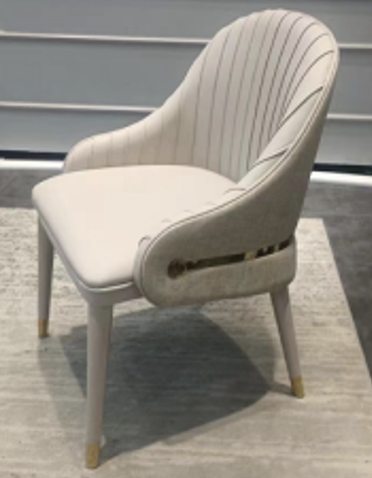
Shipping and Logistics
Restaurant furniture is bulky and damage-prone in transit. Plan for these factors:
Container Loading
A 40-foot HC container holds roughly 150–200 chairs or 60–80 tables. Booth sections are less space-efficient due to irregular shapes. Work with the factory on a loading plan that balances density and protection.
Packaging
Specify PE foam wrap, corner protectors, and carton or crate packing. Upholstered items need breathable wrapping (not plastic) to prevent mildew during ocean transit.
Lead Time Planning
From factory selection to arrival: allow 14–22 weeks for custom orders including samples, production, inspection, shipping, and customs clearance. Stock or standard items reduce this to 8–12 weeks.
Why Work with a China-Based Procurement Partner
Managing a restaurant furniture project remotely carries risk. A local partner with audit experience adds specific value:
- Factory communication — Direct access to factory decision-makers, not just sales staff. Language and cultural barriers managed professionally.
- Verification — Factory audits, production monitoring, and inspections are done by someone on the ground.
- Multi-supplier coordination — If your project includes furniture plus kitchen equipment, one coordinator manages all suppliers.
- Certification management — We maintain compliance documentation for US (CAL 117, BIFMA, CARB), UK (BS 5852, UKCA), EU (EN 1021, EN 16121, EUDR), and GCC (SASO 2885) markets. Your shipment documentation is prepared during production, not after.
- Problem resolution — When an issue arises, someone visits the factory the same day instead of waiting for email replies across time zones.
At Skyline Trading Co., LTD, we have completed factory audits across China’s major manufacturing regions. Our team works directly with restaurant furniture factories in Foshan, Zhongshan, and Guangzhou — not through third parties. We handle supplier verification, production monitoring, and pre-shipment inspection for restaurant, hotel, and hospitality projects across the Middle East, Africa, and Europe. Our certifications include BIFMA, CAL 117, BS 5852, EN 1021, EN 16121, CARB Phase 2, and SASO 2885 compliance packages — verified through our factory audit program for every project. Follow us on LinkedIn for weekly factory audit reports and procurement data.
If you have an upcoming restaurant project and want to verify your shortlisted suppliers, contact our procurement team.
Frequently Asked Questions
How do I find reliable restaurant furniture manufacturers in China?
Search on Made-in-China or Alibaba and shortlist 5–10 factories. Verify each business license on NECIPS (gsxt.gov.cn), request export records (bills of lading from past 12 months), ask for client references from non-competing markets, and book a third-party factory audit before committing to a large order. Based on our audit data, only ~15–20% of shortlisted factories pass all checks without requiring corrective action.
How much does restaurant furniture cost from China?
An upholstered dining chair ranges from $18–90 FOB depending on materials and specifications. A dining table ranges from $40–300 FOB. The landed cost (including freight, duties, delivery) is typically 40–60% higher than the FOB price. For GCC destinations, add 5% customs duty and 15% VAT on the total landed value.
What is the minimum order quantity for restaurant furniture?
Most factories require 20–50 pieces per design for standard items and 100–200 for custom designs. Some accept lower MOQs at a higher unit price. Confirm MOQ in writing before requesting a quote. For chain restaurant rollouts, negotiate volume pricing across all locations in a single contract.
How long does it take to manufacture restaurant furniture in China?
Standard production (no sample stage) takes 30–45 days from order confirmation. Custom orders with pre-production samples take 10–16 weeks from design approval to port departure. Add 3–6 weeks for ocean freight to the GCC, plus 1–2 weeks for customs clearance at destination.
What fire safety standards apply to imported restaurant furniture?
It depends on your market. US requires CAL 117, UK requires BS 5852, EU requires EN 1021, GCC follows BS 5852 with SASO 2885 and additional documentation requirements. Specify the standard in your RFQ and request third-party test reports from SGS, Intertek, or TÜV for your exact material combination — not a generic certificate.
Can Chinese factories make custom booth seating?
Yes. Factories in Foshan and Zhongshan specialize in custom booth and banquette seating. Provide a floor plan with dimensions and they produce shop drawings and a mock-up. Custom booths have the longest lead time (12–16 weeks) due to upholstery complexity and the need for precision fitting.
What is the best material for restaurant dining tables?
HPL (high-pressure laminate) is the most practical for high-turnover restaurants — durable, stain-resistant, cost-effective, and available in many finishes. Solid wood with catalyzed lacquer is preferred for fine dining. Sintered stone is growing in premium projects for heat and scratch resistance but costs 2–3x more than HPL.
Do I need a third-party inspection for restaurant furniture from China?
Yes. A pre-shipment inspection by an independent inspector ($300–600 per container) catches finish flaws, dimensional errors, and packing defects before the container leaves. Based on our inspection records, approximately 35% of restaurant furniture orders have at least one non-conformity requiring correction before shipment. This is the best $500 you will spend on your order.
How do I verify a Chinese factory is real and not a trading company?
Check the business license on NECIPS (gsxt.gov.cn) and compare the registered address with Baidu Maps satellite view — a high-rise building means a trading desk, not a factory. Request a live video call from the production floor. Ask for bills of lading from the past 12 months showing their company name as the shipper. In our audits, approximately 35% of companies listing “restaurant furniture” are actually trading companies, not manufacturers.
Need Help Sourcing Restaurant Furniture?
We help buyers source commercial restaurant furniture from verified Chinese manufacturers. Services include supplier verification, factory audits, DUPRO, and pre-shipment inspection. Send us your requirements for a free project assessment.
Last updated: July 11, 2026. Part of the China Procurement Hub. Written by Angie Sami, General Manager at Skyline Trading Co., LTD. Follow our procurement insights on LinkedIn.