
Hotel FF&E vs OS&E: Complete Procurement Guide for Hotel Projects From China
Written by Angie, Hospitality & Furniture Project Specialist at Skyline Trading Co., Ltd. — 15 years in hotel furniture and custom manufacturing from China.
Every hotel project eventually splits into two budgets that most first-time development teams treat as one. Furniture, Fixtures & Equipment (FF&E) and Operating Supplies & Equipment (OS&E). They sit next to each other in a project budget, share the same abbreviation style, and are frequently lumped together in a single line item. That habit is the source of a predictable chain of problems: items classified in the wrong category, budgets that look correct on paper and run short in execution, and opening dates that slip because one of the two packages was planned weeks later than it should have been.
For developers sourcing a property from China, the stakes are higher than for a purely domestic build. The goods travel by container, production happens thousands of kilometres from the site, and the entire project timeline depends on orders being consolidated, inspected and shipped in the right sequence. Get the FF&E and OS&E distinction right before you engage suppliers, and the procurement process becomes a set of manageable decisions. Get it wrong, and you discover the error at exactly the moment it is most expensive to fix.
This guide is written for hotel owners, real estate developers, hospitality investors, architects and procurement managers who are planning a property and weighing China as a sourcing base. It explains what FF&E and OS&E actually cover, how they differ across budget, timeline and risk, and how a hotel project sourced from China should be procured—from requirement analysis through to installation coordination.
The short version first: FF&E is the long-life, design-led, capitalised furniture, fixtures and equipment that define how a hotel looks and feels. OS&E is the operational layer—the consumable and reusable supplies that let staff run the property from day one. Both are sourced from China, but they follow different timelines, different supplier logic and different budget treatment, and they should be consolidated into a single coordinated plan. The rest of this guide shows you exactly how.
Quick Answer: What Is the Difference Between FF&E and OS&E in a Hotel?
| FF&E (Furniture, Fixtures & Equipment) | OS&E (Operating Supplies & Equipment) | |
|---|---|---|
| Meaning | The movable, long-life assets that furnish and equip the property | The supplies and small equipment used to operate the property daily |
| Examples | Beds, headboards, case goods, seating, lighting, mirrors, artwork, carpets, TVs, minibars | Linens, towels, amenities, glassware, tableware, flatware, housekeeping supplies, uniforms |
| Financial treatment | Capital expenditure, depreciated over years | Operating expenditure, consumed or replaced on a cycle |
| Replacement cycle | 5–10+ years (brand-dependent, often 7–9 years between renovations) | Continuous—weekly, monthly, or seasonal replenishment |
| Typical source | Contract-grade furniture factories | Textile, ceramics, plastic and supply manufacturers |
| Stop-the-opening risk | Long lead times (months); order early | Shortage risk at opening; thousands of SKUs to balance |
If a guest interacts with it and it stays in the building for years, it is probably FF&E. If staff use it up, replace it, or replenish it as part of daily operations, it is most likely OS&E.
1. What Is FF&E in Hotel Projects?
FF&E is Furniture, Fixtures & Equipment—the capitalised, long-life assets that make up the physical design and guest experience of a hotel property.
In a hotel budget, FF&E covers every movable and semi-permanent item that furnishes the building: the furniture guests sit and sleep on, the lighting that sets the mood, the fixtures that repeat the design language through the corridors, and the equipment that supports the room product such as televisions, minibars and safes. These are items designed once, specified tightly, produced to a brand or design standard, and expected to last for years under commercial abuse.
The common rule of thumb used by owners, lenders and accountants: if it is part of the building’s physical presentation and is depreciated as a capital asset, it belongs in the FF&E budget.
Examples of Hotel FF&E
Guest room package (per room type, repeated in volume):
- Bed frames, box springs, mattresses and upholstered headboards
- Nightstands, wardrobes, desks, media units and luggage benches (case goods)
- Desk chairs, lounge chairs, benches and ottomans
- Table lamps, floor lamps, wall sconces and feature lighting
- TVs, minibars, safes, hairdryers and in-room equipment
- Window treatments, sheer and blackout layers
- Artwork, mirrors and décor accessories
- Bedding-adjacent soft goods that are designed-in, such as custom cushions and bed runners
Public areas and back-of-house:
- Lobby seating, reception desks, concierge counters and feature furniture
- Restaurant and bar tables, dining chairs, bar stools and banquette seating
- Meeting room tables and stackable event chairs
- Corridor furniture, gym equipment, spa loungers and treatment beds
- Pool and outdoor furniture (powder-coated aluminium, marine-grade materials)
- Commercial kitchen equipment—cooking lines, refrigeration, dishwashing and ventilation systems
- Custom millwork and joinery where it is part of the fit-out
The line between FF&E and the construction scope is practical and worth agreeing on early: built-in joinery that is fixed to the building is sometimes classified as construction, while the same design executed as loose pieces falls under FF&E. Every project needs one written classification so that the owner, the architect, the contractor and the accountant all work from the same list.
Why FF&E Determines Hotel Quality
Guest perception of a hotel is formed largely by the FF&E package. A room can have perfect lighting, silent plumbing and flawless service, but if the bed is uncomfortable, the desk chair wobbles, or the bedside table shows finish failure after six months, the reviews will say so. FF&E quality is not decoration; it is the guest-facing product.
For developers, FF&E quality also decides three harder numbers:
- Brand compliance. Franchise and management brands enforce standards for materials, fire ratings, durability and finish. Missing a brand-mandated specification means approval delays, rework or PIP penalties.
- Lifecycle cost. Hospital-grade furniture is specified for commercial-use cycles—higher rub-count fabrics, denser foams, sturdier joinery. The cheapest quote that meets the letter of the specification rarely survives daily guest turnover for the full renovation cycle.
- Asset value. Capitalised FF&E depreciates on a schedule and contributes to the property’s replacement value. Under-specified furniture that fails early forces off-cycle replacement spending that belongs in a much later budget year.
Because FF&E is produced from drawings and samples, sourced in volume, and shipped by container, the China sourcing decision is usually decided weeks before the first purchase order—and it is where the rest of this guide is concentrated.
2. What Is OS&E in Hotel Projects?
OS&E is Operating Supplies & Equipment—the consumable, reusable and department-level supplies a hotel needs to open and to run from day one.
While FF&E shapes what the guest sees and touches as the physical product, OS&E is what makes the operation actually function. Everything a housekeeping team loads onto a cart, a kitchen brigade pulls from a shelf, and a restaurant server carries to a table falls into this category. The distinction is permanence and usage cycle: OS&E items are used, laundered, refilled or replaced on a continuous rhythm.
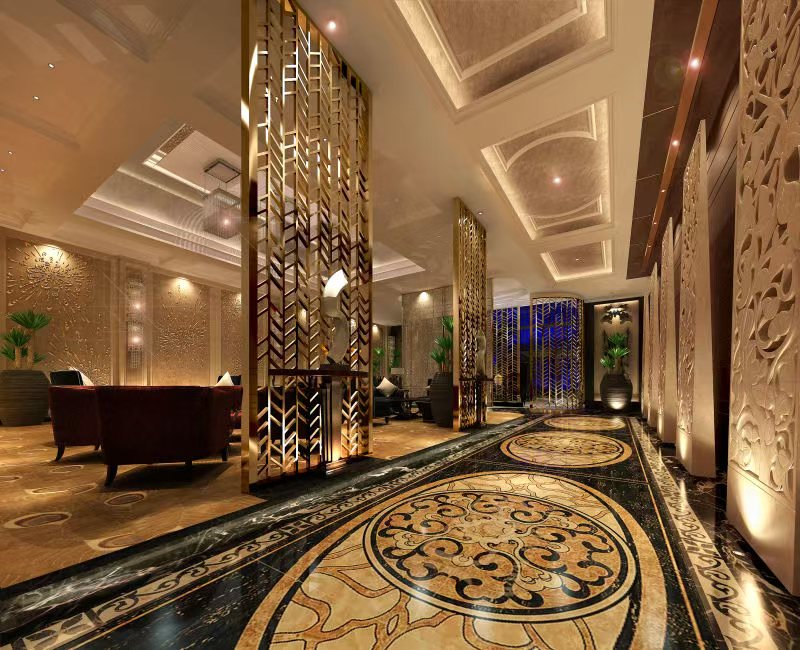
Examples of Hotel OS&E
Guest room and bathroom:
- Bed linens, sheets, pillowcases, duvet covers, mattress protectors and pillows
- Bath towels, hand towels, washcloths and bath mats
- Guest amenities—shampoo, conditioner, body wash, soap, dental kits and slippers
- Hangers, laundry bags and door signage
- In-room consumables—coffee, tea, stationery and printed collateral
Food & beverage and kitchen:
- Table ware, glassware, flatware and serveware
- Table linens, napkins and runners
- Kitchen smallwares—cookware, knives, utensils, containers and prep tools
- Buffet equipment and service tools
- Bar tools, coffee systems and beverage equipment
Housekeeping and back-of-house:
- Cleaning chemicals, dosing systems, paper products and waste liners
- Housekeeping carts, vacuums and room-attendant tools
- Staff uniforms, name badges and protective kit
- Front office supplies, key cards, luggage carts and guest-service equipment
- Engineering and maintenance consumables, PPE and safety stock
- Spa, gym and pool operating items such as treatment linen, robes and slippers
Why OS&E Matters Operationally
OS&E matters because a hotel cannot open its doors without it, and cannot hold service standards with it. The failure mode for OS&E is not design failure—it is shortage at the wrong time. A property runs on pars: defined multiple-of-use quantities stored so that laundry cycles, breakage and unexpected demand are absorbed. If the opening OS&E order undercounts par levels, guests in week one experience missing towels, empty amenity bottles and restaurant tables without the right flatware.
Two characteristics make OS&E fundamentally different from FF&E in procurement terms:
- The SKU problem. A mid-size property commonly opens with hundreds to over a thousand OS&E line items, many of them sourced from different factories. Each line needs a specification, an order, a QC check and a delivery slot. The risk is not in any single item—it is in the aggregate coordination.
- The replenishment reality. OS&E is never a one-time procurement exercise. Breakage, staining, shrinkage and guest usage force continuous reordering. The supplier decision made at opening therefore becomes a long-term operating relationship, not a single transaction.
For projects sourced from China, OS&E has a quieter advantage that is often underestimated: huge parts of the category—textiles, ceramics, glassware, amenities, plastics—are manufactured at scale and quality in the same sourcing ecosystem as FF&E, which makes consolidated sourcing and shipping genuinely practical. The challenge is that OS&E follows a different production and lead-time logic, as the comparison below shows; the structure of the category—par levels, volume per department and the opening package—is covered in our Hotel OS&E Procurement Guide.
3. FF&E vs OS&E: Complete Comparison
The two categories differ across every dimension that shapes a procurement plan: purpose, examples, procurement process, lead time, budget impact and supplier requirements. The table below consolidates the differences a project team needs before it builds a budget or a schedule.
| Dimension | FF&E | OS&E |
|---|---|---|
| Purpose | Define the physical design, guest experience and property image | Enable daily operation and service delivery |
| Financial classification | Capital expenditure (CapEx); depreciated over years | Operating expenditure (OpEx); expensed against operations |
| Budget share (indicative) | The larger package—typically the majority of a furnishing budget | Meaningful, usually a single-digit to mid-teens share; varies heavily by property type |
| Items count | Tens to hundreds of line items, repeated in volume | Hundreds to thousands of SKUs across departments |
| Typical lead time from China | 5–8 months end-to-end from specification freeze to goods on site; production alone 3–6 months; custom case goods longer | A few weeks to a few months; branded or custom items longer; reorders much faster |
| Procurement trigger | Design sign-off | Operating standard and par-level planning |
| Supplier model | Contract-grade manufacturers, often custom from drawings | Specialised mills and factories, catalogue-plus-branding |
| Quality control focus | Sampling, prototypes, batch consistency, durability and fire ratings | Specification compliance, material certifications, packaging, batch consistency |
| Failure mode | Design drift, finish failure, long-lead delays, delayed opening | Shortages, wrong pars, spec drift, breakage, missed opening stock |
| Replacement cycle | Years; typically refreshed at renovation cycles | Continuous; pars replenished weekly to seasonally |
| Decision speed needed | Slow, deliberate—every approval is detailed | Fast, volume-based—decisions cannot stall the operation |
The Three Places the Categories Cross
A clean split on paper is harder at the edges, and experienced teams mark the gray zones before they allocate budgets.
- Mattresses and box springs. Depending on owner, brand, lender and tax jurisdiction, a mattress is either FF&E or OS&E. Some operators classify mattresses as FF&E because they are long-life assets; others treat them as operating stock because they are replaced frequently and hygienically. The answer matters to depreciation schedules and to which supplier owns the order—agree and write it down.
- In-room equipment like minibars, kettles and irons. These are physically small but long-life, and are classified as FF&E in most projects because they are capitalised. Confirm with the project accountant rather than assuming.
- Custom versus branded OS&E. Uniforms embroidered with the brand, logo amenities and printed tableware are OS&E but behave like FF&E in the schedule: they need longer lead times, sample approval and higher minimums. Plan them in the OS&E timeline with a FF&E mindset.
A Worked Convention for Budgeting
Most projects use one of two conventions, and consistency matters more than either choice:
- Owner/operator convention. FF&E = all capitalised assets; OS&E = all expensed supplies. This aligns with management agreements and annual accounts.
- Buyer-convenience convention. FF&E = the design package sourced once; OS&E = everything bought for opening plus the replenishment pipeline. This aligns with how a sourcing program is actually managed.
Whatever the convention, the same principle applies: classify before you budget, and make sure the owner, the accountant, the designer and the procurement partner all use the same list. Disputes over whether a mattress is FF&E or OS&E have derailed more than one otherwise well-run project—never because the item was expensive, always because the people classifying it disagreed.
4. Hotel Procurement Process From China
The procurement process for a hotel project sourced from China follows a defined sequence. Skipping or compressing a stage does not save time; it moves the risk to the end of the project, where corrections are most expensive. This sequence is the same discipline Skyline applies when we coordinate projects for developers who cannot run a ground operation in Guangdong themselves.
4.1 Requirement Analysis
Everything downstream depends on what gets written down first. Requirement analysis turns the project brief into a deliverable package: the room matrix (how many keys of each type), the public-area scope, the design intent, the brand standards that apply, the target opening date and the destination market’s compliance requirements. For a typical project this produces the FF&E schedule and the OS&E list—the two documents that act as the single source of truth for every quotation, inspection and shipment that follows.
The most common mistake at this stage is starting supplier conversations before this package exists. Without a written schedule, every factory interprets the same idea differently, and the quotations that come back are not comparable.
4.2 Design Confirmation
Design confirmation freezes the specification against which everything is measured. Dimensions, materials, finishes, hardware, fire-safety standards and quantities are locked per room type. For custom pieces, this is also where shop drawings are reviewed and approved against the interior designer’s intent.
Two documents matter almost as much as the design itself here:
- The golden sample. One physical piece (or a mock-up room for larger projects) that seals the look, the finish and the comfort standard. Every production unit must match it.
- The specification sheet. Written reference with material codes, finish references and construction details, attached to every purchase order and used as the inspection criteria.
Design confirmation is also the moment to specify destination-market compliance: fire-retardancy for upholstered and soft goods (common references are BS 5852 for the UK, CAL 117 / TB 133 for the US, EN 1021 for the EU), food-contact approvals for tableware and kitchen items, and textile safety standards such as OEKO-TEX where the brand requires it. Specifying compliance at this stage—rather than discovering it at customs—is the difference between a routine shipment and a held container.
4.3 Supplier Selection
Supplier selection matches each product category to a producer whose actual capability fits it. A hotel project commonly draws on several specialists: case goods and hotel furniture plants in and around Foshan, Guangdong’s furniture cluster; mattress and bedding manufacturers; upholstery and sofa workshops; ceramic and tableware producers; textiles and linens mills; amenities and toiletries manufacturers; and commercial kitchen equipment suppliers.
Shortlisting should weigh production capacity, hospitality project history, export documentation experience and quality systems—never unit price alone. Hospitality-grade work is a different standard from residential production, and a factory that has never delivered a commercial project is a different risk profile from one that has.
4.4 Factory Verification
Verification confirms that the factory described in sales materials is the factory on the ground. It starts with desktop checks—business license, credit records, tax standing and legal entity status—and proceeds to an on-site review of production lines, machinery, quality control procedures, material storage and, critically, whether the plant actually produces the goods or subcontracts them.
For international developers, verification is the step that most consistently separates projects that run smoothly from projects that consume months of corrective work. It should happen before any deposit moves. Our China factory audit guide and supplier verification checklist cover the specific checks in detail; the principle is simple—verify the factory you are paying, not the factory you have been shown in a brochure.
4.5 Quotation Comparison
Quotations are only comparable when they are quoted against the same specification, the same Incoterms and the same packing standard. A quote that excludes export packing or quotes ex-works when a competitor quotes FOB is not cheaper—it is simply quoting less.
The comparison that matters is total landed cost, not factory invoice: unit price, plus export packing, inland transport in China, ocean freight, insurance, duties and taxes at destination, port handling and delivery to site. When multiple categories come from different suppliers, quotations also need to be judged on schedule compatibility—a furniture factory that can deliver in ten weeks is not automatically the right choice if it cannot load on the date that keeps the consolidation window intact.
4.6 Production
Once production starts, it has to be monitored against the approved specification and the agreed calendar. For custom work, agree milestones with the factory: frame-up, finishing, upholstery, assembly and packing—and require progress updates with dated photographs at each one. A mid-production inspection is the highest-value intervention on any custom-heavy order, because systematic errors (a veneer batch off-tone, a substituted fabric grade, hardware swapped for a cheaper equivalent) are cheap to correct when they affect the first units and expensive once they have spread across the whole run.
The single most important production discipline is change control. Any change—a dimension, a finish, a material—goes through written approval and is re-priced formally. Verbal instructions to the production line are how specifications drift.
4.7 Quality Inspection
Quality inspection has to happen on the full production batch before it is loaded, not only on the approved sample. Pre-shipment inspection (PSI) checks the actual goods being shipped against the specification, the golden sample and the packing list: dimensions, colour and finish match, structural soundness, drawer and door operation, upholstery seams and foam recovery, hardware completeness, packaging condition and quantity accuracy.
Sampling follows an agreed acceptance quality limit (AQL 2.5 is a common default) on large runs, with major and minor defect classifications and remedies agreed in advance—repair, remake, replace or reject. The structural protection in the whole process is timing: the inspection report precedes the balance payment, so the leverage to fix problems exists while it still matters.
4.8 Shipping
Shipping a hotel project is the art of consolidation. FF&E and OS&E cargo from different factories is staged at a warehouse, checked against the packing list, and loaded into containers in a planned sequence—heavy and fragile separated, room-coded groups positioned so that the rooms installed first unload first. Room-code labelling on every carton lets the installation team stage by floor without opening everything on the way in.
Incoterms decisions happen here, not at the dock. FOB keeps freight and insurance with the buyer; CIF and CFR shift them to the seller; DDP pushes responsibility through to the destination at a price. Also arrange marine insurance, prepare the full documentation set early (invoices, packing lists, bills of lading, certificates of origin, test certificates and any destination compliance documents), and factor in seasonal freight pressure on the schedule.
4.9 Installation Coordination
The final stage aligns the shipping schedule with the construction schedule. Furniture arriving before rooms are ready creates a storage problem; furniture arriving after the opening date creates a much larger one. The answers are phasing and sequencing: delivery coordinated to a floor-by-floor handover schedule, slow-moving or custom items scheduled first, and an installation partner confirmed before the container sails.
Installation logistics also means the path of entry. Gate widths, elevator cabins, stair turns and door openings should be measured against the largest assembled pieces before production—a notional detail that has delayed more projects than most teams expect. Pieces engineered to knock down should be confirmed as such on the shop drawings.
5. Common Mistakes When Buying Hotel FF&E From China
These are the patterns we see repeated across hotel and resort projects, regardless of property size or budget. Each one is a process failure, which is the good news—process can be fixed before money moves.
- Selecting suppliers on price alone. The lowest quote usually reflects a lower material grade, thinner construction or a factory unfamiliar with hospitality specifications. The gap surfaces during inspection—or worse, after installation.
- Skipping factory verification to save two weeks. A factory that looks credible in a video call is not the same as a factory that has been physically verified to have the capacity and quality systems it claims. This is the most expensive corner to cut in the entire process.
- Approving a sample against the wrong standard. A sample that looks right in a showroom is not the same as a sample that survives commercial cleaning chemicals, daily guest turnover and the destination market’s fire tests. Approve samples the way you will use the product.
- Comparing quotations on different bases. When one factory quotes CIF and another ex-works, the cheap quote is usually just quoting less. Compare total landed cost on identical specifications.
- Underestimating total landed cost. Budgeting around the factory invoice alone, without freight, duties, insurance and inland transport, creates a gap that surfaces mid-project—at the worst time.
- Freezing compliance too late. Fire ratings, food-contact approvals and textile standards must be specified at design confirmation, not discovered at customs. A held container costs money and schedule at the same moment.
- Ignoring the consolidation schedule. When FF&E and OS&E come from different factories with different lead times, each category’s delivery date matters only in relation to the others. Without a shared master timeline, delays in one category are discovered only when they affect another.
- Managing by scattered messages. Decisions spread across emails and messaging apps evaporate. One document set, one thread, one approver.
- Cancelling the pre-shipment inspection. The PSI is the last moment a defect is the factory’s problem. After loading, it is entirely yours.
- Starting too late. FF&E lead times run from design sign-off, not from construction handover. Projects that start procurement at four months before opening routinely pay for it with compressed sampling, air freight and slipped dates.
Every item on this list is visible in the process before money moves—none of them is a factory problem or a market problem, which means each can be prevented on the buyer’s side. The wider set of hidden-cost and risk patterns that surface later in sourcing, from freight and duty surprises to specification drift, is mapped in our China procurement risks guide.
6. How To Choose the Right China Supplier for Hotel Projects
Choosing a supplier for a hotel project is different from choosing one for a residential purchase, because the consequences are measured in hundreds of identical units, not in one sofa. The criteria that matter:
Proven hospitality production. The factory should show comparable hospitality work: contract-grade furniture, brand-standard pieces or hotel OS&E lines. Residential production is not a substitute—the durability, fire and finish requirements are different engineering problems, and the practical gaps between the two grades are examined in our commercial vs residential furniture comparison.
Production capacity against your volume. A project order might run to hundreds of beds and thousands of chairs. The supplier must demonstrate it can hold consistency at that volume within the required window—and, crucially, that it will keep your slot in production when other orders compete for the same capacity.
Export experience. Documented export history to your region or similar markets signals familiarity with export packing, documentation, container loading and destination compliance. A first-time exporter is a schedule risk regardless of how good its products look.
Quality systems that exist on the floor. Ask for a written quality plan with inspection checkpoints and sampling rates, then verify it exists by visiting. ISO certificates on a wall are not a functioning quality process.
Communication discipline. English-speaking project management, written answers to technical questions, and honest status updates matter more on a six-month project than they do on a sample order. A supplier that is evasive on technical detail is usually telling you something about the rest of its process.
Willingness to be verified and inspected. A genuine factory welcomes audits and third-party inspections as a contract condition. Refusal is the dealbreaker. We have seen some of the most professional presentation materials come from suppliers who could not survive an auditor walking their production floor.
The practical shortlisting method: build a written specification package first, shortlist two or three candidates per category, verify each factory before any deposit, and compare quotations on total landed cost against identical specifications. A structured comparison of how to build that shortlist, including the direct-factory versus agent decision, is covered in our China factory audit guide and supplier verification checklist. For the selection criteria applied room type by room type—materials, construction, guest-proofing and durability—our hotel furniture buying guide walks through the decision in detail.
7. Factory Manufacturing vs Trading Companies
A factory owns production—machines, workers and control over quality, materials and schedule. A trading company owns nothing on the production floor; it buys from factories and resells, adding a margin and a coordination layer. Both are legal, both can deliver a successful hotel package, and both can fail in ways that are easy to misread from abroad.
The practical trap is misidentification. Many entities present themselves as factories while actually trading, and some genuine factories subcontract part of an order without saying so. Verification resolves the question faster than any sales conversation—but it helps to know what you are looking for.
| Dimension | Manufacturing Factory | Trading Company |
|---|---|---|
| Production control | Owns machines, workers and the production line | None—schedules depend on the factories behind it |
| Price | Closest to ex-works cost on its own products | Adds a margin layer; can sometimes access better volume pricing |
| Product range | Limited to its own machinery and skills | Broad—can assemble a full hotel package from many plants |
| Quality control | One floor, one accountability | Depends entirely on the trader’s diligence and honesty |
| Best fit | Large single-category volumes (e.g., guest room case goods) | Multi-category packages when the buyer lacks ground management |
For a hotel project, there is a third option that sits between these two: a sourcing partner based inside China who does not replace factories but manages them—matching each category to a verified specialist, holding one specification across all of them, running inspections and consolidating cargo. On projects that span furniture, kitchen equipment and supplies, this is usually the pragmatic structure.
The decision framework is simple: buy direct from a verified factory when one producer can genuinely make the whole scope to a consistent standard. Use a coordinating partner when the scope spans multiple specialisms—which, for a full hotel, it almost always does. The related question of whether to work with an agent or buy direct is examined in our Alibaba vs direct factory analysis.
8. Quality Control During Hotel Furniture Production
Quality control for a hotel FF&E order works as three sequential gates, each catching a different class of failure while it is still correctable. The production stages these gates are built around are described step by step in our custom hotel furniture manufacturing guide.
Gate 1—Pre-Production: Material and Specification Verification
Before cutting starts, the materials arriving at the factory are verified against the approved specification: wood species and moisture content, veneer or laminate grades, foam densities, fabric rub counts, hardware brands and finish samples. This is where material substitutions are easiest to catch, because production has not begun. It is also where the golden sample is sealed and recorded so that every later comparison has a physical reference.
Gate 2—In-Production: Milestone Checks
During production, checks happen at defined milestones against the approved sample: frame-up (joinery quality, structural integrity), finishing (colour and sheen match, coating consistency), upholstery (seam work, foam comfort, pattern alignment) and final assembly. The highest-value moment is the first article off the line—reviewing the first completed unit catches calibration errors while they affect one piece, not fifty.
For custom-heavy orders, a mid-production inspection by an independent party on the ground in China is the most effective single intervention available to an overseas buyer. It catches systematic errors before they multiply across the run and provides the photographic evidence a buyer needs to act early.
Gate 3—Pre-Shipment Inspection (PSI)
Before the container closes, the finished goods are inspected against the specification, the golden sample and the packing list:
- Quantity and item codes match the purchase order and packing list
- Dimensions within tolerance on every inspected piece
- Colour and finish match the approved samples under neutral light
- Doors, drawers and mechanisms operate cleanly
- Upholstery seams, foam recovery and fabric pattern alignment pass
- Glass, stone and mirror items are free of chips and cracks
- Hardware packs, feet and assembly instructions are complete per carton
- Room-code labels correct and export packing intact
Findings are classified as critical, major or minor with photographic evidence, and remedies are agreed before the container closes. The discipline that protects the buyer is payment sequencing: the majority of the balance releases only after the PSI report is accepted. That single condition keeps the factory’s incentives aligned with the buyer’s standards through the final weeks of production.
9. Cost Factors Affecting Hotel FF&E Procurement
FF&E pricing for a hotel project is driven by seven factors, layered over one governing principle: price follows specification. Two quotations for “the same hotel” can sit far apart because one specifies veneer-matched case goods with imported hardware and the other specifies laminate with standard fittings. Cost comparisons are meaningless against different specifications.
1. Specification and material grade. The dominant lever. Solid wood versus engineered board, veneer versus laminate, fabric rub counts, foam density, hardware brands, finish depth. Each step up the material ladder multiplies unit cost across hundreds of identical pieces.
2. Degree of customization. Custom pieces built from drawings cost more than catalogue items because they carry engineering, sampling and one-off setup costs. For a hotel, customization pays off where it touches the design language—headboards, lobby seating, reception desks—while standard item categories can be bought off-the-shelf at far better prices.
3. Volume and repetition. Repetition lowers unit cost. The more identical units a room type produces, the better the factory can price materials and line time. This is why standardizing room types before pricing is the cheapest decision in a hotel project.
4. Production conditions in China. Raw material prices, labour availability in manufacturing regions, and peak-season capacity all move quotations across the year. Chinese New Year disrupts production schedules and capacity for several weeks, and factories build that into lead times.
5. Destination compliance. Fire ratings, textile standards, food-contact approvals and packaging/labelling rules add testing and documentation costs. Specifying them in the RFQ keeps compliance costs inside the quotation rather than appearing as surprises later.
6. Logistics and Incoterms. Freight, duties, insurance and inland transport usually add a meaningful percentage over the factory invoice. Consolidating FF&E and OS&E into full containers and planning freight against the schedule controls this.
7. Installation. Whether the supplier installs, or a local crew does, installation scales with piece count and site complexity. Phased delivery aligned to the fit-out schedule keeps installation labour efficient.
For early planning, indicative 2026 ranges for a guest room FF&E package sourced from China run from roughly USD 4,000–7,000 per key for a budget property, USD 8,000–13,000 for midscale, USD 15,000–25,000 for upscale, and USD 30,000–55,000+ for luxury and full-service hotels. These ranges are planning references only—ex-works figures before freight, duties and installation—and the only reliable number for a specific project comes from a quotation against its own specification. Public-area furniture, kitchen equipment, OS&E and construction carry entirely separate budgets, which is why exact wording of what a “cost per key” includes matters so much when comparing figures between suppliers. Our hotel furniture budget guide, hotel procurement guide and hotel PIP cost guide expand the budget questions in detail, and the five-star furnishing cost guide isolates the luxury end of the range.
10. Timeline: How Long Does Hotel FF&E Procurement From China Take?
The realistic answer: typically five to eight months from approved specification to goods on site for a standard hotel FF&E package, with custom-heavy projects running longer. The number that matters is not the total, though—it is the sequence. The critical-path logic of the schedule is worth understanding category by category.
| Phase | Typical Duration | What Gates the Next Stage |
|---|---|---|
| 1. Specification and supplier matching | 2–4 weeks | A frozen FF&E schedule and shortlist |
| 2. Quotation and factory verification | 2–4 weeks | Verified factories and comparable quotes |
| 3. Samples, prototype and mock-up approval | 3–8 weeks | Signed-off golden sample, sealed specification |
| 4. Full production (parallel across categories) | 8–16 weeks | Approved goods awaiting inspection |
| 5. Inspection and container consolidation | 1–2 weeks | Passed PSI, booked freight |
| 6. Ocean transit and customs to destination | 3–8 weeks (region-dependent) | Goods on site |
| Total: spec to site | ~20–36 weeks | Plan from design sign-off, not construction handover |
Categories do not run in sequence—they run in parallel, and the longest-lead category sets the completion date. In practice:
- Custom case goods and joinery: 8–12 weeks in production
- Upholstered seating: 6–10 weeks
- Mattresses and bedding: 4–8 weeks
- Lighting and accessories: 4–8 weeks
- OS&E (linens, tableware, amenities): a few weeks to 2–3 months for stock or lightly branded items; branded or custom OS&E needs 8–16 weeks
The scheduling rule that matters more than any individual number: release the longest-lead packages into production first, and time the shorter-lead categories to finish in the same window so everything arrives at the consolidation warehouse together. A mattress factory that can produce in five weeks is irrelevant if the case goods plant needs twelve—the case goods plant was always on the critical path, and the mattress should have been scheduled to match it, not ordered first in a panic.
11. When Should Developers Start Procurement?
The short answer: procurement for a hotel project should start at design sign-off, not at construction handover—typically at least six months before the planned opening date, and earlier for custom-heavy or luxury projects.
The reason is structural. FF&E lead times run from the moment the specification is frozen, and construction handover is not that moment. A project that begins procurement six months before opening has time for a mock-up room, two sample revision rounds, full production, inspection and ocean freight. A project that begins four months before opening is compressed into a schedule where sampling is shortened or skipped, factory selection is made on availability rather than fit, and air freight substitutes for ocean freight at a multiple of the cost.
Work backwards from the opening date, as hotel procurement teams do on every serious project:
- On-site date needed: target opening minus installation lead time
- Minus ocean transit and customs for your destination (3–8 weeks)
- Minus consolidation and loading (1–2 weeks)
- Minus production for your longest-lead, most complex category (8–16 weeks)
- Minus sample and mock-up approval (3–8 weeks)
- Minus factory matching and quotation (2–4 weeks)
The date you land on is the latest safe start. Then add buffer—two to three weeks per stage is prudent, because sample revisions and freight rate movements routinely consume slack. In practical terms this usually lands at starting the conversation with suppliers at least seven months before opening for a full hotel package, with custom joinery projects earlier still.
Two calendar factors deserve explicit mention. Chinese New Year closes many factories for several weeks and crowds production capacity in the weeks before and after; a project scheduled across this window should assume a longer production phase. Peak shipping seasons in the second half of the year can add weeks to ocean transit and raise freight rates, which is a schedule and budget consideration for a project targeting a specific opening month.
Phasing is the standard answer for projects that cannot meet the ideal lead time. Furniture for the first floors and public areas can be consolidated into an early shipment while later rooms follow—the discipline that matters is keeping room-coding and packing aligned so staged arrivals install in sequence rather than in chaos.
12. How Skyline Trading Supports Hotel Procurement Projects
Skyline Trading Co., LTD. operates from Foshan, Guangdong—at the centre of China’s hospitality furniture and commercial supplies manufacturing ecosystem. Our role in hotel projects is to act as a single coordination point on the China side, so the developer, architect and procurement team do not need a ground operation of their own to run a project correctly.
We work across the full hotel scope: hotel furniture and case goods, public-area furniture, commercial kitchen equipment, outdoor and resort furniture, and the OS&E layer of linens, textiles, tableware and supplies. Depending on the project, our involvement covers:
- Requirement and specification review—checking that the FF&E schedule and OS&E list are complete and comparable before any quotation is issued
- Factory selection and verification—shortlisting production capacity against the project volume, and verifying factories on the ground before any deposit moves
- Quotation comparison—comparing suppliers on identical specifications and total landed cost, not just invoice price
- Sample and mock-up coordination—managing material samples, prototypes and the golden-sample approval against the sealed specification
- Production monitoring and quality control—milestone checks on the production floor and pre-shipment inspection on the full batch before loading
- Consolidation and shipping coordination—staging multi-factory cargo, container planning and documentation from China through to the destination port
- Installation coordination—phasing deliveries against the construction handover schedule so goods arrive when rooms are ready
Because the scope of a hotel project spans multiple specialisms, we coordinate separate verified factories under one project plan rather than pretending a single plant can make everything well. The client’s design decisions stay with the client; the China-side execution—verification, specification control, inspection and logistics—is handled as a managed program under a single point of accountability. This is the same sourcing discipline covered throughout this guide, applied to the specific realities of a hotel project.
FAQ: Hotel FF&E vs OS&E and China Procurement
What is FF&E in a hotel?
FF&E stands for Furniture, Fixtures & Equipment—the capitalised, long-life assets that furnish a hotel property and define its design and guest experience. It includes guest room furniture (beds, headboards, case goods, seating), lighting, mirrors, artwork, carpets, TVs, minibars, public-area furniture, commercial kitchen equipment and outdoor furniture.
What is OS&E in a hotel?
OS&E stands for Operating Supplies & Equipment—the consumable, reusable and operational items a hotel needs to open and run from day one. It includes linens, towels, guest amenities, glassware, tableware, flatware, housekeeping supplies, staff uniforms, front office supplies and kitchen smallwares.
Is a mattress FF&E or OS&E?
Neither universally—mattress classification depends on the owner’s accounting policy, brand standards and lender requirements, and properties differ. Some treat it as FF&E because it is a long-life asset; others expense it as OS&E because it is replaced frequently for hygiene. Agree the classification with the project accountant and write it down before budgeting.
Can FF&E and OS&E both be sourced from China for one hotel project?
Yes. China’s manufacturing base covers both categories—furniture and case goods from the Foshan cluster, textiles and linens, ceramics and tableware, amenities and commercial kitchen equipment—which makes consolidated sourcing and shipping practical. They follow different timelines and supplier logic, and should be planned as separate packages within one coordinated program.
How long does hotel FF&E procurement from China take?
Typically five to eight months from approved specification to goods on site for a standard hotel package, including sampling, production, inspection and ocean freight. Custom-heavy or luxury projects run longer. The schedule runs backwards from the opening date, and the longest-lead category sets the completion date.
When should hotel FF&E procurement start?
At design sign-off—at least six months before the planned opening date, and earlier for custom or luxury projects. Procurement must never start at construction handover, because FF&E lead times run from specification freeze, not from the building being ready.
What is the difference between FF&E and OS&E budgets?
FF&E is capital expenditure, depreciated over years and refreshed at renovation cycles; it is the larger of the two packages. OS&E is operating expenditure, consumed and replaced continuously, with par levels replenished weekly to seasonally. They are planned separately, sourced differently and reviewed by different stakeholders.
How much does hotel FF&E cost per room from China?
Indicative 2026 planning ranges for a guest room FF&E package (ex-works China, excluding freight, duties and installation) run from roughly USD 4,000–7,000 per key for budget properties, USD 8,000–13,000 for midscale, USD 15,000–25,000 for upscale, and USD 30,000–55,000+ for luxury and full-service hotels. Public areas, kitchen equipment, OS&E and construction are separate budgets.
How do I find a reliable hotel furniture supplier in China?
Build a written specification package first, shortlist two or three candidates per category, and verify each factory through desktop checks and an on-site audit before any deposit. Look for proven hospitality production, sufficient capacity for your volume, documented export experience, a real quality process on the floor and willingness to accept third-party inspection.
Is the pre-shipment inspection really necessary?
Yes. The pre-shipment inspection on the full production batch is the last moment a defect remains the factory’s problem. It catches material substitution and quality drift between sample approval and the goods loaded into the container. Projects that skip it discover their problems after loading, when correction is most expensive.
Related Guides
This guide covers the FF&E and OS&E distinction and the China procurement process for hotel projects. Related topics on the Skyline site:
- Complete Hotel Project Procurement Guide from China—the end-to-end pillar for furniture, aluminum, windows and kitchen equipment
- Hotel OS&E Procurement Guide—the OS&E opening package, par levels and costs in full
- Hotel Furniture Projects—guest room and public-area furniture sourcing
- China Factory Audit Guide—how to read and run a factory audit
- China Supplier Verification Checklist—17 red flags before paying a deposit
- Hotel PIP Cost Guide—renovation and FF&E budget benchmarks
- Hotel Furniture Budget Guide—per-room cost reference behind the ranges in this guide
- Commercial Kitchen Equipment for Restaurants—back-of-house equipment sourcing
- Luxury Villa Furniture Procurement—custom villa furnishing programs
Everything else—verification tools, glossaries and project resources—lives in the China Procurement Hub.
Next Step for Hotel Owners and Developers
If you are planning a hotel or resort property and weighing how to structure FF&E and OS&E sourcing from China, the conversation does not require a finished specification. Share your project scope—property size, room types, target opening date and which categories you need sourced—and Skyline’s team will review the requirements and respond with initial feasibility and next steps. The review carries no obligation; it exists to give you a straight answer on whether China sourcing fits the project before you invest time in specifications.
Running the procurement process correctly—verification, specification control, inspection and consolidation—is what turns China’s manufacturing advantage into a reliable project, rather than a container full of beautiful surprises.