
Hotel Aluminum Doors and Windows From China: Complete Procurement Guide for Developers
Written by Anna, Architectural Products Specialist at Skyline Trading Co., Ltd. — doors, windows, curtain wall systems and building materials sourcing from China.
Every hotel building has one exterior investment that carries the highest combination of cost, technical risk and opening-date sensitivity: the aluminum doors and windows that seal the envelope. A wrong specification, an unverified factory or a single missed measurement surfaces as field leaks, held containers at customs or a delayed opening — and a hotel cannot open without a sealed building envelope. For developers sourcing these systems from China, the difference between a smooth project and an expensive one is decided before production starts: in the specification, the factory selection and the procurement process.
This guide is written for hotel owners, resort developers, real estate investors, architects, contractors and procurement managers. It explains how to define hotel-grade aluminum door and window specifications, where in China the right manufacturing is located, how to verify a factory, and the exact step-by-step procurement process that protects a project schedule. The supplier-selection and cost questions are covered here at the decision level; the deeper verification and pricing detail lives in dedicated guides linked throughout.
The short version first: hotel aluminum doors and windows from China work reliably when a developer specifies like a commercial facade engineer, verifies like an auditor, and procures like a program manager. Skip any one of the three and the other two cannot save the project.
Quick Answer: Why Hotels Source Aluminum Doors and Windows From China
The global hospitality construction market depends heavily on the aluminum fenestration industry in Guangdong, China — particularly Foshan and Guangzhou — because that region builds complete window and door systems at a scale and cost that most domestic markets cannot match. The same cluster that extrudes architectural profiles also produces the glass, hardware, coatings and engineered sealing materials within a small radius, which compresses lead times and makes highly customized, high-volume orders practical.
That depth of integration is the real advantage — not unit price alone. When the specification is frozen correctly and the factory is verified, a developer typically gets:
- Structural customization at scale: custom extrusions, finishes, glass configurations and opening types produced for hundreds of identical hotel units at industrial pricing.
- Complete system supply: profiles, tempered and laminated glass, thermal break strips, hardware, gaskets and installation accessories coordinated under one supplier instead of five.
- Schedule control through port proximity: Foshan and Guangzhou sit within reach of Shenzhen and Guangzhou ports, which keeps inland freight short and consolidation reliable.
- Cost efficiency that survives the comparison: total landed cost for hotel-grade systems is usually the strongest value, provided the quality is specified on paper first.
The caution is equally important. China sourcing is only an advantage when it is managed as a procurement program rather than a catalog purchase. Sections below give the specification matrix, the verification method and the 12-step process that make it work.
1. What Are Hotel-Grade Aluminum Doors and Windows?
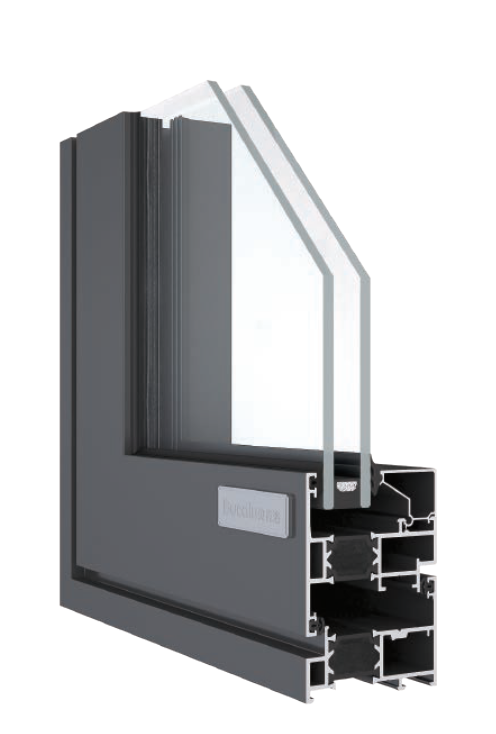
An aluminum door or window system is not a single product — it is an engineered assembly of extruded aluminum profiles, glass panels, thermal break components, hardware, gaskets and sealants designed to work as one unit against wind, water, air, heat, noise and repeated guest use.
“Hotel-grade” means the system is designed for commercial performance: higher structural capacity, heavy-duty hardware rated for tens of thousands of opening cycles, finishes that survive cleaning chemicals and coastal UV, acoustic glazing for guest-room quiet, and thermal performance that protects both guest comfort and the building’s energy cost. This is a different engineering standard from residential windows, and the differences are detailed in the dedicated comparison section below.
For a hotel project, aluminum systems typically appear in several forms: guest-room and balcony windows, sliding or lift-slide terrace doors, curtain walls on tower facades, storefronts at public entrances, and automatic or revolving commercial entrance doors. Each type is a separate engineering decision within the same procurement program.
2. Why Hotels Source Aluminum Doors and Windows From China
The structural and economic reasons hotels source these systems from China are:
- Supply chain concentration. In the Foshan–Nanhai cluster, aluminum extrusion lines, glass tempering and insulating-glass plants, anodizing and coating lines, and hardware suppliers operate within miles of each other. A hotel fenestration order — often thousands of square meters — can be produced, finished and consolidated in one region.
- Customization that residential buyers cannot justify. Hotel designs demand custom extrusion profiles, brand-specific finishes and unusual glass configurations. Chinese system manufacturers treat this as normal work and price it at industrial scale, while many Western suppliers treat custom work as a premium engineering service.
- A single point of coordination. Because the whole system — frame, glass, thermal break, hardware, seals — can be sourced from one verified factory, the developer’s procurement team manages one technical specification and one inspection instead of five suppliers and five quality streams.
- Integrated hotel procurement. When glazing is bought alongside the hotel’s other China-sourced packages — furniture, kitchen and supplies — the same consolidation logic applies. Our hotel property procurement guide and hotel furniture projects pages show how glazing sits inside a coordinated hotel program.
The advantage disappears when a developer treats aluminum like a commodity: buys on the cheapest catalog price, skips factory verification and starts production from unfinished drawings. Sections 6 and 8 explain how to prevent that.
3. Types of Aluminum Systems Used in Hotels
| System | Where it is used in a hotel | Typical specification notes |
|---|---|---|
| Sliding windows | Guest rooms, corridor windows | Low-cost, low-maintenance; specify heavy-duty rollers and multi-point locking for high cycle counts |
| Casement windows | Guest rooms, balconies, back-of-house | Best sealing performance; specify egress compliance and safe cleaning access |
| Tilt-and-turn windows | Premium guest rooms, suites | Dual-mode operation; strong thermal and acoustic performance; specify hardware rated for repeated cycles |
| Sliding and lift-slide doors | Terrace, balcony and pool-facing rooms | Large glazing; lift-slide reduces roller wear and improves sealing on big panels |
| Pivot and folding doors | Restaurant terraces, lobbies, premium suites | Wide openings and design statements; specify structural reinforcement and water management at the sill |
| Curtain wall systems | Tower facades, public-area glazing | Designed by a facade engineer; wind-load engineering, unitized or stick systems, and glass performance are decided here |
| Storefront and entrance systems | Lobby entrances, retail, F&B outlets | Heavy traffic and security; specify commercial door hardware, panic egress and impact glazing where required |
| Automatic / revolving doors | Main hotel entrance | Motorized hardware, sensors and safety certifications; usually a separate specialist supply |
The common link across all types: for a hotel, the moving parts are the risk. Hardware cycles, gasket durability and glass performance under coastal or urban conditions decide whether a system still works properly in year five — which is why the specification section below treats hardware and finishes as structural decisions, not accessories.
4. Key Specifications Developers Must Define Before Buying
A quotation is only meaningful against a written specification. The items below are the minimum an RFQ for hotel glazing must contain, and they are exactly the parameters that separate a hotel-grade system from a residential one.
- Aluminum alloy and temper. Industry-standard for architectural profiles is 6063-T5; where large spans or heavy wind loads require higher strength, specify 6063-T6, which delivers roughly 50% higher yield strength. The alloy and temper should be stated in the contract and backed by mill certificates.
- Profile wall thickness. Residential profiles commonly run 1.2–1.8 mm (the Chinese national standard is often quoted at 1.4 mm). Hotel and commercial systems should specify 1.8–3.0 mm depending on span and wind load. A thinner cheaper profile is the most common hidden downgrade in a “low price” offer.
- Thermal break system. Where energy codes or condensation control apply, require polyamide thermal break strips such as PA66 GF25 mechanically inserted between the interior and exterior aluminum sections. Ask for the strip material certificate — substitution with PVC or loose strips is a known downgrade that fails in heat and sun.
- Glass specification. Specify the full glass build-up: tempered or laminated safety glass, Low-E coating on the correct surface (typically surface #2 or #3), insulating-glass unit thickness, argon fill for thermal performance and heat-soak-tested tempered glass where impact risk is high. For hurricane or impact zones, specify laminated impact glass (typically 5+5 mm or 6+6 mm with PVB or ionoplast interlayer).
- Acoustic performance. Guest-room quiet is a rating factor. Laminated acoustic glass commonly achieves Rw 35–45 dB, and high-performance systems reach up to about 50 dB. State the target Rw (or STC) in the RFQ so the factory prices the correct glass, not a generic double glazing.
- Wind load and design pressure. The required design pressure (DP) comes from the project’s structural engineer per the destination code (for example ASCE 7-22 in the US, with severe coastal zones such as Miami-Dade HVHZ requiring tested, approved assemblies). Never let a factory “pick” the wind load.
- Water resistance and air infiltration. Specify performance classes under the destination standard (for example EN 12208/12207 classes in Europe, or AAMA/WDMA/CSA NAFS performance class in North America). Test evidence for the exact configuration is required, not a general brochure claim.
- Hardware quality. Specify commercial-grade hardware — multi-point locking, stainless-steel sliding rollers, hinges rated for high cycles. Established brands used on hotel projects include Roto, Siegenia, Maco, Sobinco and Giesse, with HOPO a common premium domestic option. Ask which hardware is in the quote; this is a large hidden cost difference.
- Surface finishing. Specify the coating standard explicitly: anodizing (ISO 7599), powder coating or PVDF/fluorocarbon (in North America, AAMA 2603 for standard powder and AAMA 2605 for the more durable PVDF used on coastal and UV-exposed facades). Coastal hotels should require the higher durability class because salt air attacks finishes.
- Seals, gaskets and setting blocs. EPDM gaskets, correct glazing beads and drainage/weep detailing are spec items too — water entry is usually a sealing failure before it is a profile failure.
Destination certification matrix (define which applies to your project)
| Market | Key standards to specify or request evidence for |
|---|---|
| United States | NAFS / AAMA 101, AAMA 2605 (finish), NFRC (thermal), ANSI Z97.1 / SGCC impact glazing, ASCE 7-22 wind loads |
| Florida coastal / HVHZ | Miami-Dade NOA or Florida product approval, TAS 201/202/203 impact testing, high design pressures |
| Europe | EN 14351-1 (CE marking), EN 12207/12208 (air / water), EN 12211 (structural) |
| Australia / New Zealand | AS 2047, AS/NZS 2208 (safety glazing) |
| Canada | CSA A440, NFRC |
| Gulf / Middle East | SASO and local municipal approvals for coastal and dust environments, high solar gain performance |
| China (domestic reference) | GB/T 8478 aluminium doors and windows, GB/T 7106 (air / water / wind) |
The principle: the destination market’s building code defines the specification, not the factory’s catalog. The project architect and engineer decide the required classes before the RFQ is issued. Verification of certification documents — which must be for the exact tested configuration, not general company certificates — is covered in the factory-verification section.
5. China Aluminum Manufacturing Clusters: Foshan, Guangdong, Guangzhou
Location matters in Chinese fenestration sourcing more than in most categories, because a window system is assembled from multiple specialist inputs. The strongest cluster for hotel-grade aluminum is the Foshan–Nanhai district of Guangdong province, with Guangzhou and Shenzhen as the other pillars of the same regional ecosystem.
- Foshan (Nanhai): the historic heart of the architecture aluminum industry, with one of the world’s largest concentrations of extrusion plants, thermal break and system manufacturers, glass processors and hardware suppliers. Most serious export-oriented fenestration brands in China are based here or nearby.
- Guangzhou and Shenzhen: sit on the same ecosystem with strong engineering and trading strengths, and provide direct access to two of the largest container ports in the world — Southern China’s logistics advantage for any hotel project shipped internationally.
- Why the cluster matters: factory selection is not only about the plant itself. A Foshan fabricator draws on local extrusion houses, tempering plants, coating lines and hardware suppliers within the same region — which shortens sampling, keeps quality controls feasible on-site, and makes consolidated multi-supplier container loading practical (the same geographic logic that makes Foshan the furniture capital).
| Cluster | Positioning | Best fit |
|---|---|---|
| Foshan / Nanhai, Guangdong | Largest and most export-focused architecture aluminum cluster; full system ecosystem | Premium hotel systems, thermal break, custom extrusions, curtain wall |
| Guangzhou / Shenzhen, Guangdong | Complementary engineering, trading and port strength | Mixed hotel packages, large volumes, export logistics |
| Jiangsu (Suzhou area) | Strong energy-efficiency and EU-aligned system engineering | Projects targeting strict European thermal standards |
| Zhejiang | Mid-range systems and competitive pricing, more PVC-oriented | Cost-sensitive commercial projects |
| Shandong | Budget aluminum and mass production | Low-cost jobs where quality risk is accepted |
For a hotel project with serious performance and brand requirements, the practical advice is to center factory shortlists on Guangdong — most premium, export-compliant hotel fenestration in China comes from that province.
6. How To Choose a Reliable Aluminum Door and Window Factory in China
Choosing a fenestration factory is different from choosing any other supplier, because the product must be engineered, tested and site-installed. The criteria that matter:
- Genuine manufacturer vs trading company. Confirm the business is a fabrication plant, not a reseller. Check the business license, the production floor and who actually owns the extruders, CNC cutting and assembly lines. The dedicated aluminum door supplier verification guide walks through the specific documents to ask for.
- Production capability, not production claims. Verify the plant has enough capacity for your volume window in the season you need it, and that it owns or controls its coating, glass and hardware supply rather than assembling random bought-in parts.
- Export experience. Documented export history to your region or similar markets is the strongest signal of compliance and documentation competence. A first-time exporter is a schedule risk even with a beautiful factory.
- Certifications. Request test reports for the exact configurations you will buy: air, water and wind performance per your destination standard, plus finish and glass certifications. Certificates in the company profile are not proof; model-specific test reports are.
- Previous hotel and commercial projects. Ask for completed hotel or hospitality references with photos and, where possible, project contacts. The engineering difference between residential and hotel work is visible in their portfolio.
- Quality systems that exist on the floor. Ask for the written quality plan, then verify it on the audit: incoming material inspection, dimensional checks, water-test stations, glazing standards and rework procedures.
- Willingness to be inspected. A genuine factory accepts third-party pre-shipment inspection as a normal contract term. Refusal is a decisive warning.
The supplier-specific deep-dive — including how to shortlist, compare and price — is covered in our aluminum windows supplier guide for hotels, and the audit methodology in the China factory audit guide. The supplier verification checklist gives the pre-payment red-flag list.
7. Aluminum Doors and Windows Procurement Process From China: Step by Step
The process below is the discipline that separates a managed hotel package from a lucky one. Each step gates the next; skipping one moves the risk to a more expensive place.
- Requirement analysis. Define the scope: window and door types, quantities per floor and room type, glass and performance requirements, destination codes, and the installation sequence tied to the construction schedule.
- Drawings review. Have the architect’s and facade engineer’s drawings reviewed for fenestration feasibility — opening patterns, glazing spans, mullions, and coordination with structure and finishes. This stage decides whether the design can be manufactured as drawn.
- BOQ preparation. Convert drawings into a clean bill of quantities: per unit type, size, glass configuration, hardware, finish and accessories. The BOQ is the document every quotation is compared against.
- Supplier matching. Shortlist two or three candidates per system type based on capability and hotel experience, then issue the identical RFQ to all of them. Do not compare quotes that started from different documents.
- Factory audit. Verify the shortlisted factories before any deposit: legal status, real production capacity, quality systems, export history and the hotel references. Audit methodology is in the China factory audit guide.
- Technical confirmation and shop drawings. Freeze the working drawings: exact unit dimensions, profiles, glazing build-up, hardware, colors and performance requirements. Sign-off here is the point at which the specification becomes the contract. Critical detail: agree the rough-opening versus finished-unit dimension logic with the installer before production.
- Sample approval. Produce and approve physical samples — profile cross-section, finish color, glass build-up and a working door or window unit — and seal the approved sample as the benchmark for the whole order.
- Production and milestone checks. Release production with written milestones (extrusion, coating, fabrication, glazing, assembly) and verify each with dated photographic progress reports. Change control: any deviation requires written approval.
- Inspection. Run a mid-production inspection on custom-heavy work and a pre-shipment inspection (PSI) on the finished batch before loading, against the approved sample, the BOQ and the drawings, using an agreed acceptance level (AQL 2.5 is the common default for this category).
- Packing. Verify the export packing standard: protective film and foam on profiles, edge protection on glass, crate structure, steel strapping and marking. Fenestration arrives at site with more packaging damage than any other architectural product.
- Shipping. Consolidate and load containers in the correct sequence, prepare the full document set (commercial invoice, packing list, bill of lading, certificates of origin, test reports, certificates of conformity) and choose the Incoterm that matches your control level — FOB, CIF, DAP or DDP each move responsibility and documentation differently.
- Installation coordination. Align delivery with the site schedule, confirm the installer’s method and tolerances, and pre-order spare glass, gaskets, hardware and panic parts. Damage and field corrections are cheaper when spares are on site.
8. Common Mistakes When Buying Aluminum Windows From China
These are the failure patterns that appear repeatedly across hotel and resort glazing projects:
- Buying on price alone. A quote far below the market input cost almost always means thinner profiles, cheaper alloy, lighter glass or substitution in the thermal break. The gap is discovered at inspection or after installation.
- Wrong profile thickness. Accepting residential 1.4 mm profiles for a commercial facade guarantees deflection, hardware failure and water entry under wind.
- Poor glass specification. Generic double glazing instead of the Low-E surface, gas fill, impact or acoustic build-up the project actually needs.
- Choosing certified glass without verified reports. Glazing marks must be on the physical glass and the test report must match the exact configuration you ordered.
- Ignoring local building codes. Not confirming the destination’s wind-load, energy, safety-glazing and impact requirements before quoting — then discovering a non-compliant shipment at permit or customs stage.
- No factory verification. Booking a deposit against a digital storefront without confirming the real plant, capacity and export record.
- No inspection before shipment. Skipping the mid-production check and the PSI, relying on the factory’s promise, and finding defects after containers leave China.
- Incorrect measurements. Manufacturing from provisional dimensions or conflicting rough-opening drawings; in fenestration there are no field fixes for wrong sizes.
- Freezing drawings too late. Approving production while specifications are still changing; every late change costs schedule and money.
- No coastal or UV finish. Using standard powder coatings on a coastal hotel where salt air demands a higher-durability finish class.
- Scheduling production too late. Ignoring the extrusion and glass lead times that gate the whole envelope.
- No contingency spares. No spare glass, hardware or gaskets on site when damaged units arrive or field adjustments are needed.
The wider set of sourcing risk patterns — duties, freight surprises, spec drift and substitution — is mapped in our China procurement risks guide, and the verification process against the top failures in our aluminum door supplier verification guide.
9. Cost Factors That Affect Hotel Aluminum Fenestration Pricing
Pricing for hotel aluminum doors and windows is driven by the inputs below. There is no honest fixed price per square meter for this category — the spread between a basic sliding window and a hotel-grade thermal break, laminated and Low-E system with commercial hardware is large, which is exactly why the specification section came first. Directionally, the major factors are:
- Aluminum profile and alloy. Higher wall thickness, 6063-T6 temper and larger profile sections increase material weight and cost. Extrusion quantity per profile shape also matters: custom profile shapes carry a one-time die cost (a typical MOQ pressure is on the order of 500 kg to 1 ton per profile shape).
- Thermal break system. Adding certified polyamide thermal break strips, plus the extra processing step, adds cost over standard profiles — and prevents a much larger energy and condensation problem in service.
- Glass type. The largest single cost driver after the profile. Tempered versus annealed, laminated versus monolithic, Low-E coating selection, argon fill, impact-rated interlayers and acoustic glass each step up the unit cost. A hotel’s glass spec often dominates the system price.
- Hardware. Commercial multi-point locking, stainless rollers and high-cycle hinges cost several times more than basic hardware — and are the difference between five years and fifteen years of working windows.
- Size and span. Larger panels need heavier profiles and thicker glass, and large balcony or terrace doors are priced per unit complexity, not only per square meter.
- Quantity and standardization. Repetition lowers unit cost. Standardizing window types across floors is the biggest pricing lever available to a developer.
- Finish. Powder coating to AAMA 2603 is cheaper than PVDF/AAMA 2605 or high-grade anodizing; coastal and UV-exposed projects should plan for the premium.
- Custom design and engineering. Custom sections, unusual opening patterns and facade engineering add one-off design and tooling work.
- Freight, duties and Incoterms. Container freight, insurance, destination duties and any trade remedies — including tariff measures applied to aluminum imports in some markets — must be part of the landed-cost comparison. FOB quotes and DDP quotes are priced to different responsibility levels.
For actual real-world ranges, our dedicated aluminum door and window import cost guide breaks down the cost structure in detail rather than publishing numbers that would mislead a specific project.
10. Timeline: How Long Does an Aluminum Order From China Take?
A realistic planning schedule for a hotel fenestration order runs backward from the opening date. The phases below are indicative planning ranges for a standard package; custom-profile projects and peak shipping seasons run longer.
| Phase | Typical duration | Gate |
|---|---|---|
| Drawings and BOQ finalization | 1–2 weeks | Approved shop drawings |
| Custom extrusion die (only if new profile) | 3–6 weeks | Die-tested profile |
| Sampling and approval | 2–4 weeks | Approved sealed samples |
| Production (extrusion, coating, fabrication, glazing) | 4–10 weeks | Goods ready for inspection |
| Inspection and rework buffer | 1–2 weeks | Passed PSI |
| Packing, consolidation and loading | 1–2 weeks | Containers loaded |
| Ocean transit to destination | 3–8 weeks, region-dependent | Arrival at port |
| Customs and inland delivery | 1–2 weeks | Goods on site |
The practical total is typically four to seven months from approved drawings to goods on site for a standard hotel package, with custom-extrusion and curtain-wall projects longer. Two calendar factors matter: Chinese New Year, which closes many factories for weeks and crowds capacity before and after; and peak shipping seasons in the second half of the year, which add weeks to transit and raise freight rates.
The scheduling rule that matters more than any individual number: the longest-lead item gates the envelope. Window and door production should be phased against the construction schedule, and guest-room floors scheduled to arrive in the order they will be installed.
11. Hotel Aluminum Doors vs Residential Aluminum Doors
| Dimension | Residential | Hotel / commercial |
|---|---|---|
| Profile wall thickness | Typically 1.2–1.8 mm | 1.8–3.0 mm for structural and wind-load performance |
| Alloy/temper | 6063-T5 common | 6063-T5 or T6 where spans and loads require |
| Glass | Standard double or single glazing | Low-E, argon, laminated impact and acoustic build-ups as specified |
| Hardware | Basic handles, low cycle rating | Commercial multi-point locking, stainless rollers, high-cycle hinges |
| Usage cycle | A few openings per day | Dozens of cycles per day across thousands of units |
| Wind load | Local residential values | Engineered design pressures per destination code |
| Acoustic performance | Not usually rated | Targeted Rw/STC for guest-room quiet |
| Finish durability | Standard powder coating | Higher-durability anodizing or PVDF for coastal/UV, cleaning chemicals |
| Maintenance access | Homeowner convenience | Egress, security and staff-access requirements, safety glazing near corridors |
| Fire and emergency | Basic egress | Hotel-specific egress, panic hardware and fire compartment requirements in some jurisdictions |
| Warranty and support | Short, local | Longer-term operational expectations and spare-parts planning |
The practical translation: a residential window is engineered for convenience use in a stable environment. A hotel system is engineered for continuous, varied, high-cycle use in a building where a failed window means an unsatisfied guest and an energy problem — and where the consequences of failure are measured across hundreds of identical units. Specifying residential profiles to save money on a hotel almost always produces a cost in rework, performance or reputation instead.
12. How Skyline Trading Supports Hotel Aluminum Procurement
Skyline Trading Co., LTD. operates from Foshan, Guangdong — at the center of the exact cluster this guide describes — and works as a China-side coordination partner for hotel glazing and the wider hotel procurement program. For developers and contractors who do not run a ground operation in China, the areas where we typically support aluminum door and window projects are:
- Factory sourcing and matching — shortlisting fenestration factories against your volume, profile, glass and certification requirements.
- Factory verification — confirming genuine manufacturing, production capacity, export history and the compliance documents behind each shortlisted supplier.
- Technical coordination — managing drawings, the BOQ, shop-drawing approval and specification freeze between your architect-engineer team and the factory.
- Quality inspection — milestone checks during production and pre-shipment inspection of the finished batch before loading.
- Shipping and consolidation coordination — packing verification, container planning and documentation through to the destination port, aligned with your other hotel packages.
Because glazing procurement overlaps with the furniture, kitchen and supplies packages of the same hotel, we coordinate it under one project plan rather than as an isolated order.
FAQ: Hotel Aluminum Doors and Windows From China
What is the standard profile thickness for hotel windows?
Hotel and commercial systems should specify a nominal wall thickness of roughly 1.8–3.0 mm, depending on span and wind load. Residential profiles at 1.2–1.8 mm (often quoted at 1.4 mm) lack the stiffness for high-cycle commercial use and wind conditions.
Do I need thermal break aluminum in a hot climate?
For any exposed facade where HVAC is a major cost — which includes most hotel markets — yes. A polyamide thermal break such as PA66 GF25 stops heat conduction through the frame, reduces condensation risk and lowers the energy load. Verify the strip material in the certificate; substitution with PVC is a known downgrade.
Why do Chinese quotes for the “same” window differ so much?
They are rarely the same window. Profile thickness, alloy, glass build-up, hardware brand, finish class and thermal break quality account for most of the spread. Compare quotes on an identical written specification and total landed cost, not on a thumbnail or description.
How do I make sure Chinese windows pass my country’s building code?
Define the destination requirements first (wind load, energy, safety glazing, impact, fire where applicable) and put them in the RFQ. Then require model-specific test reports — for example NAFS/AAMA in North America, EN 14351-1 in Europe, AS2047 in Australia, or Miami-Dade NOA in Florida HVHZ — issued for the exact configuration you are buying. Certificates in a company brochure are not evidence.
What is the difference between a curtain wall and a window system?
A curtain wall is a facade glazing system spanning between floors and supported by the structure, engineered as part of the building envelope. Windows are installed into openings in the wall. Hotels use both; the curtain wall carries the facade engineering, and windows carry the operable openings and unitized performance.
How much does hotel aluminum glazing cost?
There is no honest fixed rate — it is a specification question. The spread driven by profile, glass, hardware and finish is large, so prices are best handled as a landed-cost comparison against a written specification. The detailed cost structure is covered in the import cost guide.
What is the MOQ for aluminum doors and windows from China?
Standard-size products in existing profile shapes can start from small quantities. Custom profile extrusions carry a one-time die cost, and factories typically want an order on the order of 500 kg to 1 ton per profile shape to justify the tooling. For a hotel order, this is usually not the constraint — volume is large enough that the die cost amortizes quickly.
How long does an order from China take?
Indicatively four to seven months from approved drawings to goods on site for a standard package, including production, inspection and ocean freight. Custom-extrusion and curtain-wall projects run longer; Chinese New Year and peak shipping seasons add time. Plan backward from the opening date.
Can I use residential profiles for a hotel?
Not for anything structural or guest-facing. Residential profiles lack the wall thickness, hardware cycles and finish durability that hotel use demands. The difference shows up as wind deflection, hardware failure and finish breakdown in service.
How important is the pre-shipment inspection?
It is the last moment a defect is inside the factory’s cost — after loading, it becomes yours. With glass, frames, packing and quantities at stake, the PSI against the approved sample and BOQ is one of the highest-value steps in the entire process.
Related Guides
- Complete Hotel Project Procurement Guide from China — the end-to-end pillar for hotel sourcing from China
- Aluminum Windows Supplier Guide for Hotels — supplier selection, shortlisting and comparison
- How to Verify Aluminum Door Suppliers in China — the verification documents checklist
- Aluminum Door and Window Import Cost Guide — the landed cost breakdown
- Import Aluminum Doors and Windows from China — general import overview
- Hotel Furniture Projects — the furniture side of the same hotel program
- China Factory Audit Guide — how to read and run a factory audit
- China Supplier Verification Checklist — red flags before paying a deposit
Everything else — verification tools, glossaries and project resources — lives in the China Procurement Hub.
Next Step for Hotel Developers: Request a China Hotel Procurement Assessment
If you are planning a hotel or resort and weighing how to structure the aluminum doors and windows package from China, the conversation does not require finished drawings. Request a China hotel procurement assessment: share your project scope — property type, tower or low-rise, room count, target regions and opening date — and Skyline’s team will review the requirements and respond with initial feasibility, recommended specification steps and a verification plan. The review carries no obligation; it exists to give you a straight answer on whether China fenestration sourcing fits the project, and what the specification and verification plan should look like if it does.
A correctly managed glazing package is what turns China’s manufacturing scale into a sealed, code-compliant, on-schedule envelope. The process — specification, verification, inspection and logistics — decides that outcome long before any glass is cut.
Aluminium Windows for Commercial Projects: How to Choose the Right Specifications