
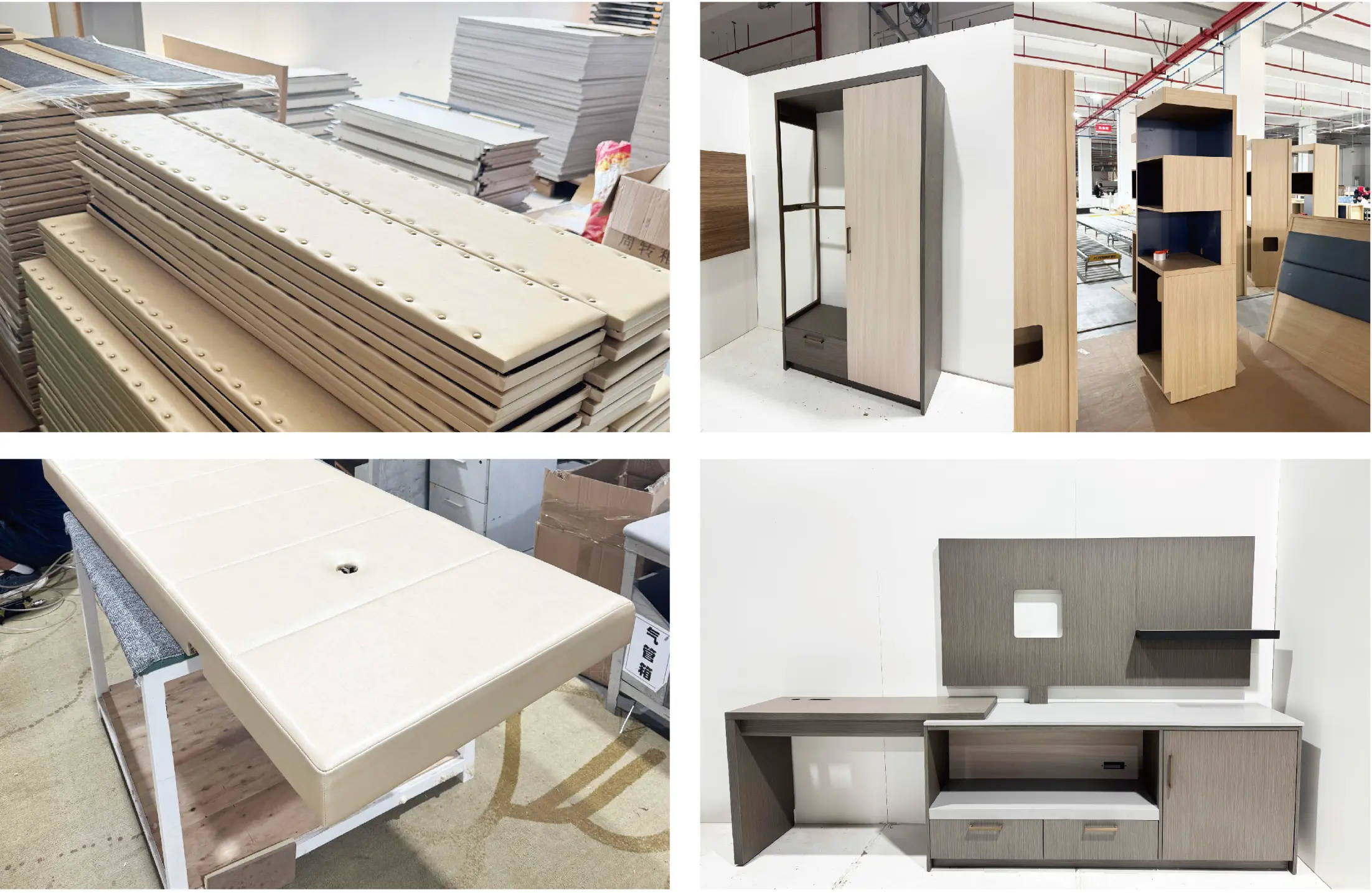
How to Source from Commercial Furniture Manufacturers in China Without Costly Mistakes
Sourcing directly from reliable commercial furniture manufacturers in China can significantly reduce project costs while providing access to large-scale manufacturing and custom production capabilities. When developers, hotel owners, and architects look to balance aesthetic ambition with strict budgetary realities, this procurement strategy almost always leads to the manufacturing hubs of Asia. Sourcing your layout assets directly from a vetted contract supplier offers unparalleled advantages. However, the path between a designer’s initial rendering and the final installation of contract-grade furniture in a luxury hotel lobby or high-traffic restaurant is filled with structural, logistical, and communication risks. Without a systematic procurement framework, a project intended to save capital can quickly succumb to structural failures, customs delays, and blown contingency funds.
This guide is built from real-world project experience managing large-scale procurement programs for hotels, serviced apartments, and corporate workspaces. It strips away the generic sourcing advice and provides an analytical, boots-on-the-ground look at how to navigate the complex Chinese supply chain, mitigate engineering liabilities, and execute your project on time and within budget.
Why Businesses Work with Commercial Furniture Manufacturers in China
The decision to partner with leading commercial furniture manufacturers in China is often driven by a basic comparison of upfront unit costs. While the financial arbitrage remains significant, the true value for large-scale projects lies in the country’s highly integrated industrial ecosystems. In manufacturing clusters like Shunde (Foshan) in Guangdong province, an entire infrastructure is built specifically around contract furniture manufacturing. Within a thirty-mile radius, factories have direct, frictionless access to specialized raw material suppliers, automated wood-kiln facilities, high-precision CNC machinery, hardware fabricators, and independent testing laboratories.
This deep industrial concentration grants international buyers three distinct advantages:
- Unmatched Customization at Scale: Unlike Western manufacturers that rely on standardized catalog inventory to maintain profitability, premier commercial furniture manufacturers in China treat custom engineering as their standard operating procedure. They can execute unique, designer-specified shapes, bespoke veneer grain matching, and custom metal alloy extrusions smoothly across production runs of thousands of pieces. If you want to know more about navigating these specialized options, read our guide on how to choose the perfect hotel furniture.
- Advanced Industrial Capabilities: The major manufacturing hubs house some of the most technologically advanced woodworking and upholstery machinery globally. This allows for precision cutting, computerized wood moisture monitoring, and automated fabric cutting that reduces material waste and guarantees structural uniformity across multiple container loads.
- Consolidated Supply Chains: Sourcing from an established hub allows developers to procure casegoods, upholstered seating, custom millwork, decorative lighting, and outdoor structural furniture within the same geographic region, making the logistics of shipping and quality management far more manageable.
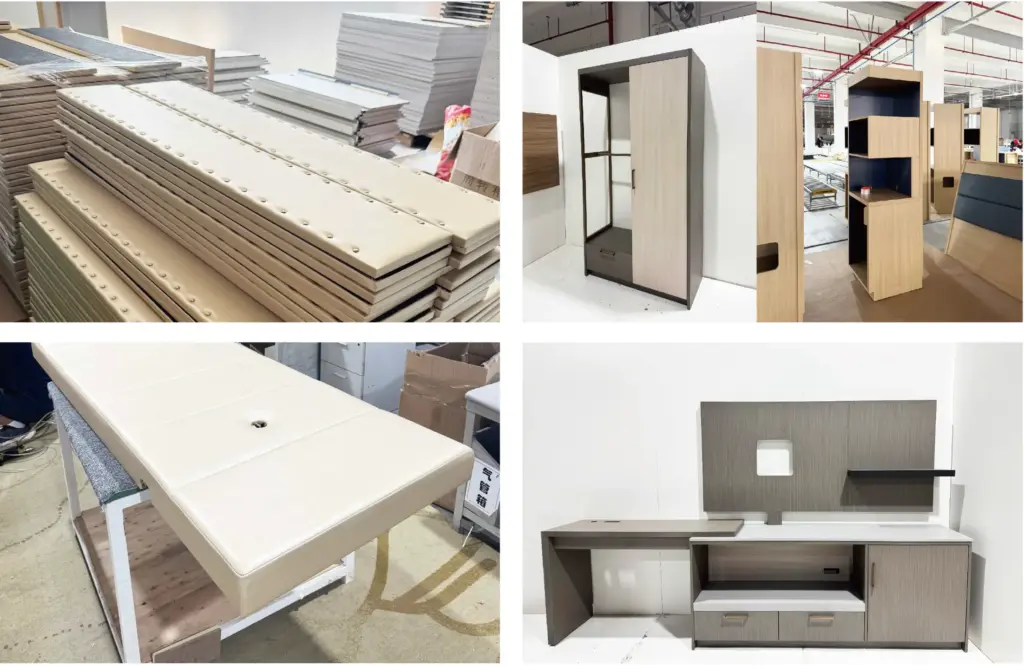
Common Mistakes Buyers Make During Sourcing
Most costly procurement failures do not stem from bad intentions; they stem from structural gaps in communication or even hotel furniture cost planning, and engineering oversight. Experienced sourcing consultants frequently see the same systemic errors disrupt multi-million dollar projects.
1. Confusing B2C Platforms with Certified B2B Contract Manufacturers
One of the most frequent missteps is initiating a major commercial procurement program via standard public digital marketplaces or by visiting retail-facing consumer showrooms. A factory that produces thousands of dining chairs for consumer homes every month lacks the engineering DNA required to build a certified contract chair. They do not use the same internal joinery, their foams are not rated for high resiliency, and their finishes will degrade rapidly under industrial cleaning agents. Working with retail vendors instead of verified commercial furniture manufacturers in China inevitably results in structural breakdowns within the first year of operation.
2. Neglecting Wood Moisture Content (WMC) Dynamics
Wood is an organic, hygroscopic material that continuously balances its internal moisture with the surrounding atmosphere. The southern manufacturing regions of China are inherently humid, often seeing ambient humidity levels well above 70%. If a factory uses timber that has not been properly kiln-dried and conditioned to match the target climate of your project—such as a dry desert climate in Riyadh or a heavily HVAC-controlled hotel tower in Chicago—the wood will rapidly lose its internal moisture post-installation. This causes the wood fibers to shrink, warp, crack, and pull apart at the joints, destroying expensive casegoods and wardrobes.
3. Skipping the Mock-Up (Grooming Room) Phase
In the urgency to meet strict grand-opening deadlines, project managers often authorize full mass production based solely on 2D CAD drawings or 3D digital renderings. This is a high-risk approach. A digital file cannot communicate the true comfort of a seat cushion, the subtle texture of a wire-brushed oak veneer, or the ease of access for a housekeeping team trying to change the integrated wiring inside a custom headboard. The mock-up phase is the single most effective insurance policy against mass manufacturing defects.
4. Lack of Independent, On-the-Ground Quality Representation
Relying on the internal quality control reports provided by the factory itself is a fundamental conflict of interest. When a production deadline approaches and shipping containers are waiting at the loading bay, a factory’s natural incentive is to clear the goods for export. Without an independent, technically skilled third-party inspector physically standing on the production floor to review internal frames, raw joinery, and finish consistency before the packing boxes are sealed, you lose all your leverage.
How to Evaluate Commercial Furniture Manufacturers in China
When executing your corporate strategy, you will encounter hundreds of entities claiming to be direct factories. In reality, the market is composed of direct manufacturers, specialized trading companies, and hybrid broker agencies. To protect your project, you must look past the polished marketing material and systematically evaluate their actual physical operations.
First, determine if the facility specializes in your specific product typology. A factory that excels at fabricating structural stainless steel and tempered glass for modern offices will generally struggle with the delicate hand-carving or multi-layered lacquering techniques required for premium hotel guestrooms. Many of the most advanced production lines are located in Guangdong; find out how to tap into this network through our insight on sourcing custom hotel furniture in Foshan.
Second, look into their historical export footprints. A facility that primarily serves domestic residential real estate markets or low-regulation regions will likely struggle to comprehend the strict documentation, testing protocols, and lab certifications required for international commercial projects. Trusted commercial furniture manufacturers in China must be intimately familiar with international regulatory standards, such as ANSI/BIFMA for structural safety, British Standards (BS 5852) or California Technical Bulletin 117/133 for advanced fire retardancy.
Factory Audit Checklist
Before wire-transferring any initial deposits or signing binding manufacturing agreements, an experienced procurement consultant or an independent third-party audit firm should execute a physical site evaluation. Use this granular technical framework during your factory audits:
- Material Integrity and Storage Management: Are raw lumbers stored in covered, temperature-regulated zones, or are they exposed to ambient outdoor moisture? Does the factory possess industrial kiln-drying machinery, and do technicians use digital pin-meters to verify and record the moisture content of lumber inputs throughout the production timeline?
- Machinery and Tooling Standards: Does the facility utilize modern multi-axis CNC routers for cutting tenons and mortises, or do they rely on manual bandsaws? High-precision machinery directly influences the structural consistency of joints across massive production runs.
- Upholstery and Finishing Lines: Is the lacquering and staining area a completely enclosed, pressurized, dust-free clean room? Dust contamination during the drying phase is the leading cause of surface roughness and premature finish peeling. Are compliance certificates for foams and fabrics systematically tracked and kept up to date?
- Internal Quality Architecture: Is there a clear separation between the production management team and the internal quality assurance inspectors? Are there dedicated inspection stations placed at critical milestones along the assembly line (e.g., raw frame assembly, post-sanding, pre-packaging)?
Quality Inspection Process
Quality control cannot be treated as a single event that happens right before loading shipping containers. It must be an ongoing process integrated directly into the manufacturing timeline. An effective procurement strategy relies on a three-phase gatekeeping inspection protocol.
Phase 1: Pre-Production Inspection (PPI) & Material Verification
This phase takes place before the factory begins mass cutting. The inspection team physically reviews all raw material inputs against the approved project specification documents. Technicians verify wood species grades, check metal wall thicknesses using digital calipers, verify batch colors for specified fabrics, and confirm that the wood moisture content is stable and meets target levels.
Phase 2: During Production Inspection (DPI) & Structural Audit
Once roughly 20% to 30% of the production run is assembled, inspectors audit the un-upholstered raw frames. This is the only point in the process where you can physically inspect the internal engineering of seating and casegoods. The inspector checks the depth of the mortise-and-tenon joints, verifies the placement of solid wood corner blocks, checks the quality of metal welds, and ensures that the internal adhesives match commercial specifications.
Phase 3: Pre-Shipment Inspection (PSI) & Container Loading Supervision
This final step occurs when production is 100% complete and at least 80% of the goods are securely packed. Using standard statistical sampling methods (such as the international AQL standard), inspectors pull random boxes to run final checks. They verify exact finish colors under standardized lighting, check hardware functionality, measure overall dimensional tolerances, and execute drop tests.
Finally, the inspection team stays on-site to supervise container loading. They confirm that the internal container walls are completely dry, that moisture-absorbing desiccant bags are distributed properly throughout the load, and that the cartons are stacked tightly to prevent crushing and shifting during ocean transport.
Shipping and Logistics Considerations
The job isn’t finished once the furniture passes inspection. International shipping and customs logistics require careful management, as unexpected delays at this stage can stall a construction site and result in steep financial penalties. If your company is developing complex overseas pathways, managing the full process of importing from China correctly remains a top compliance priority.
Most contract factories prefer to quote on an FOB (Free on Board) basis, meaning their price covers everything up until the containers are loaded onto the vessel at a Chinese port (e.g., Yantian or Nansha). From that point onward, your chosen freight forwarder handles ocean transit, customs clearance, and inland trucking. If your organization lacks international logistics experience, partnering with an experienced intermediary to manage the supply chain on a DDP (Delivered Duty Paid) basis can eliminate significant stress by consolidating all shipping, import duties, and local delivery into a single billing line.
Furthermore, design your packaging specifically for international transit. Standard residential bubble wrap and flimsy single-wall cardboard boxes will not survive ocean transport and subsequent handling on-site. Commercial projects require heavy-duty five-layer double-corrugated export cartons, reinforced hard-cardboard edge protectors, high-density foam blocks to isolate delicate corners, and vacuum-sealed plastic bags to protect upholstered items from salt air and humidity. For fragile stone tops, oversized glass panels, or delicate architectural millwork, custom wooden crates are non-negotiable.
Cost Breakdown and Hidden Costs
When sourcing from established commercial furniture manufacturers in China, looking exclusively at the factory’s initial Ex-Works or FOB price quote creates an inaccurate picture of the actual required investment. To understand the true financial commitment, you must calculate the Landed Cost.
The table below illustrates a typical budget allocation and estimated landing metrics for a containerized commercial furniture procurement project:
| Cost Item | Percentage Allocation |
|---|---|
| Furniture Production (FOB) | 65% |
| Shipping & Port Logistics | 15% |
| Import Duties & Customs Clearance | 10% |
| Independent Inspections & Lab Audits | 5% |
| Local Delivery & Unpacking Contingency | 5% |
Beyond these visible percentages, procurement teams must budget carefully for hidden operational costs that frequently appear during execution. Port Demurrage and Detention Fees can quickly add up to thousands of dollars per day across a multi-container order if your delivery site is delayed and cannot receive shipping containers on time. Additionally, furniture pieces are subject to varying tariff rates based on their exact material breakdown. Misclassifying these items on your import paperwork can lead to customs holds, fines, and retroactively applied tariffs.
How to Choose the Right Contract Furniture Partner
An experienced procurement partner functions as an extension of your project’s development team. They act as a collaborative partner capable of speaking the language of international interior designers while enforcing strict manufacturing discipline directly on the factory floors of various commercial furniture manufacturers in China.
When evaluating your options, prioritize providers who demonstrate true value-engineering capabilities. A top-tier partner won’t simply look at a complex rendering and say yes; they will actively analyze the structural design. They might suggest changing an internal joint configuration to improve stability, or recommend a specific performance fabric that maintains the designer’s desired aesthetic while offering the high rub counts and stain resistance required for commercial spaces.
Furthermore, look for suppliers who provide comprehensive, end-to-end management. A true procurement partner coordinates the entire timeline: they manage factory production schedules, handle independent quality assurance teams, navigate international customs documentation, and coordinate final site deliveries. This level of comprehensive oversight protects your capital investment and ensures your project stays on schedule.
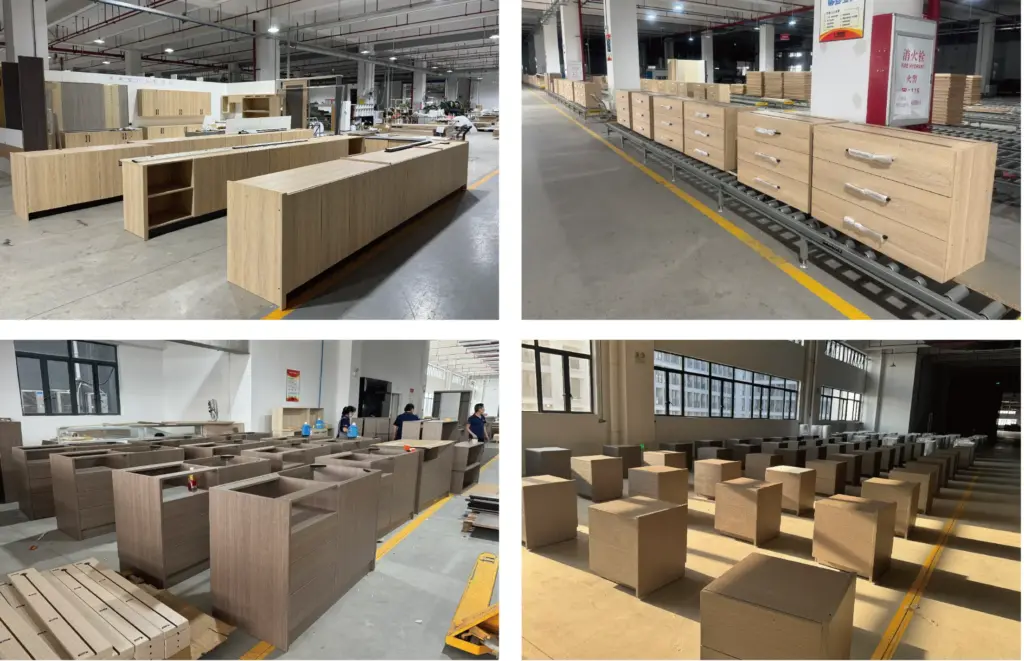
Procurement Landscape: Choosing Your Sourcing Model
The table below compares the three primary operational channels you can utilize when executing your international procurement plan:
| Sourcing Channel | Core Advantages | Primary Risks & Operational Requirements |
|---|---|---|
| Direct-to-Factory Procurement | • Eliminates intermediary margins. • Direct communication with engineers. | • Requires a dedicated internal procurement team fluent in the local language. • Offers limited leverage if a dispute occurs post-payment. |
| Standard Retail/Wholesale Brokers | • Access to ready-made designs. • Low minimum order quantities (MOQs). | • Brokers frequently lack deep technical engineering knowledge. • High risk of receiving consumer-grade instead of contract furniture items. |
| Integrated Contract Procurement Partners | • Managed value engineering. • Independent QC and consolidated logistics. • Regional factory leverage. | • Requires partnering with established firms upfront during the design phase. • Higher initial service fees that are offset by long-term maintenance savings. |
Frequently Asked Questions About Sourcing Furniture From China
Is sourcing commercial furniture from China safe?
Yes, provided that factory audits, quality inspections, and supplier verification processes are completed carefully before payments are transferred.
How do I verify a furniture factory in China?
Verify official business licenses, inspect the production facility in person or through independent third-party auditors, and closely review their historic export experience and international certifications.
What is the typical lead time for hotel furniture production?
Most custom hotel furniture projects require between 6 and 12 weeks for production, depending on structural complexity and overall order volume, plus transit time.
Should I work directly with a factory or a sourcing company?
It depends on your procurement experience and project size. An integrated sourcing company reduces risk by managing quality control, multi-category consolidation, and complex shipping logistics on your behalf.
What certifications should commercial furniture have?
Common commercial benchmarks include ANSI/BIFMA standards for structural safety, localized public fire safety certifications (e.g., CAL 117/133 or BS 5852), and project-specific compliance requirements.
About Skyline Trading Co., LTD
Skyline Trading Co., LTD has supported hotel, restaurant, office, and hospitality furniture sourcing projects across the Middle East and Africa. Our team works directly with furniture manufacturers in Foshan and other major production hubs in China, helping clients manage supplier selection, quality inspections, factory audits, production follow-up, and international shipping coordination.
Conclusion
Sourcing your project’s layout assets from premium commercial furniture manufacturers in China is an effective way to balance architectural vision with strict financial realities. However, managing this process successfully requires moving past a basic transactional mindset and embracing a disciplined, engineering-focused procurement methodology. Protecting your capital investment demands thorough factory audits, active value-engineering reviews, and independent quality control at every phase of production. To secure your property’s primary structural design, choosing reliable, high-traffic hotel furniture items or sourcing bespoke configurations directly from a custom hotel furniture Foshan facility remains a vital operational step.
Planning a hotel, restaurant, office, or commercial furnishing project? Contact Skyline Trading Co., LTD today to discuss sourcing, manufacturing, quality control, and international delivery solutions directly from China.