
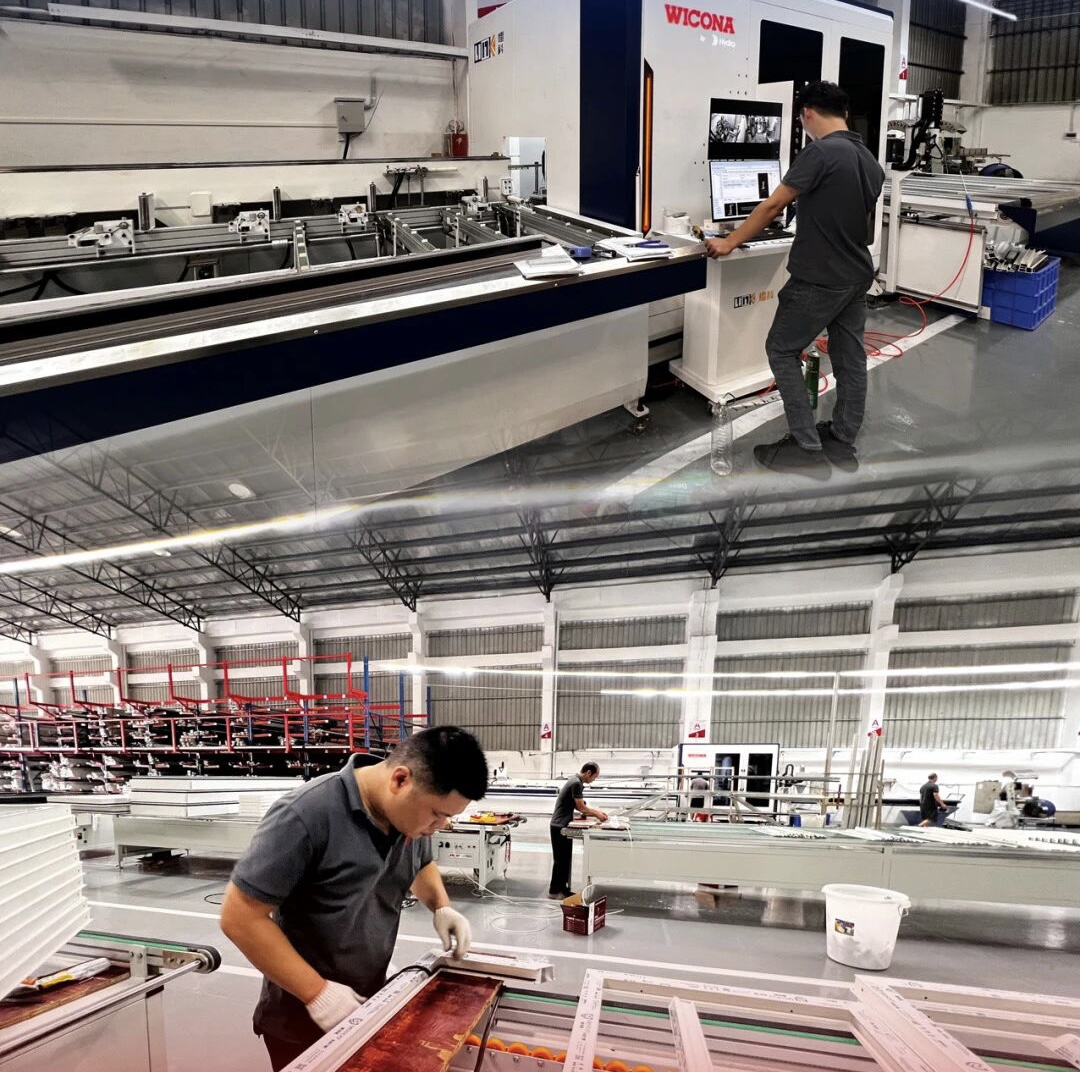
China Sourcing Agent vs Direct Factory: Which Procurement Model Fits Your Project?
Quick answer: a direct factory relationship is a single manufacturing contract; a sourcing agent is a coordination layer across suppliers and stages. The factory model can be cheaper and faster when you have a proven supplier, a stable specification and your own China-based quality team. The agent model is better when the order is multi-category, the specification is still moving, the factory base is unverified, or the cost of a failed shipment is much larger than the cost of coordination. Neither model removes the need for a written specification, an inspection regime and a clear owner of the import file.
This article is about the procurement model, not the platform. It explains who does what in each model, how factory communication and quality control actually work on a project, where the hidden responsibilities sit, and how to decide which model fits a hotel, commercial or residential order — whether the package is hotel aluminum doors and windows, fitted casegoods, commercial kitchen equipment, building automation or loose furniture; for architectural glazing, see selecting an aluminum windows supplier for hotels. If you are specifically comparing Alibaba.com with a direct factory, that is a different question and is covered in the Alibaba vs direct factory guide.

The two models are not variants of the same thing
A direct factory relationship is a commercial relationship with one manufacturer. The buyer contracts with the factory, agrees the price and specification, pays the deposit, monitors production and arranges export and shipping. The factory’s job is to make the product it agreed to make. Everything else — inspection, documentation, consolidation, conformity, delivery — belongs to someone else, and in the direct model that someone is usually the buyer.
A sourcing agent is a service relationship. The agent may contract with factories on the buyer’s behalf or coordinate contracts the buyer signs directly. The work is the space between the purchase order and the finished installation: supplier selection, specification translation, sampling, production follow-up, inspection, consolidation, documentation and logistics. The agent does not manufacture, and a good agent does not pretend to.
The confusion starts when buyers compare the two on unit price alone. The factory quote and the agent quote rarely cover the same scope. One may include export packing and FOB handling; the other may include inspection, consolidation and a project coordinator. Until the scope is normalised, the comparison is meaningless.
Who does what: a responsibility map
| Activity | Direct factory model | Sourcing agent model |
|---|---|---|
| Specification | Buyer writes it; factory quotes and may suggest alternatives | Agent translates the design package into a factory-ready specification and reconciles discrepancies |
| Supplier selection | Buyer finds and vets the factory | Agent shortlists, verifies and recommends; buyer approves |
| Contract | Buyer contracts directly with the factory | Either the buyer contracts directly or the agent contracts and back-to-backs the terms; this must be explicit |
| Sampling and mock-up | Buyer coordinates with the factory | Agent coordinates across suppliers, consolidates comments and tracks approvals |
| Production follow-up | Buyer chases the factory | Agent follows the production schedule and flags slippage early |
| Quality control | Factory QC, plus any inspection the buyer books | Agent runs defined inspection gates, or books independent inspectors and reviews the reports |
| Multi-supplier coordination | Buyer manages each factory separately | Agent manages the interfaces, the master schedule and the consolidation plan |
| Export and shipping | Buyer or forwarder, unless the factory exports in its own name | Agent coordinates export documents, booking, consolidation and handover to the forwarder |
| Conformity file | Buyer and importer of record | Agent supplies product evidence; the importer of record still owns the destination file |
| Installation | Buyer’s contractor | Normally outside the agent’s scope unless separately contracted; clarify before award |
| After-sales | Buyer deals with the factory | Agent may coordinate the claim, but the remedy depends on the factory contract |
The most important column in that table is the contract column. Many disputes about “the agent should have fixed it” trace back to an unclear answer about who signed the factory contract, who holds the export licence and who is the importer of record. Put those three answers in the appointment letter before work starts.
What a sourcing agent actually does across a project
The value of an agent is not a single task. It is the continuity between stages that would otherwise be handed between parties. A project order typically runs through the following gates.
| Stage | Deliverable | What the agent should control | What the buyer must approve |
|---|---|---|---|
| 1. Brief and budget | Procurement plan, category split, target budget, responsibility matrix | Scope definition, supplier market map, risk register | Budget, specification intent, acceptance criteria |
| 2. Supplier shortlist | Verified supplier list with capability notes | Business-licence checks, factory visits, references, capacity | Shortlist and any sole-source decision |
| 3. RFQ and comparison | Like-for-like quotation matrix | Normalised scope, Incoterm, packaging, tooling, lead time, payment terms | Supplier award and commercial terms |
| 4. Sample and mock-up | Approved sample record, signed off against the specification | Sample tracking, defect log, revision control, photo record | Golden sample and any deviation |
| 5. Pre-production | Approved drawings, bill of materials, production schedule | Drawing reconciliation, material confirmation, no-substitution clause | Drawing release and production start |
| 6. Production | Weekly status, issue log, schedule forecast | Milestone tracking, early warning, capacity and sub-supplier visibility | Any change that affects cost, quality or date |
| 7. Inspection | Inspection plan, reports, defect disposition | AQL selection, inspector booking, photo evidence, rework follow-up | Pass, rework or reject decision |
| 8. Packing and loading | Packing list, loading plan, container photos, VGM | Carton count, protection, loading sequence, seal record | Loading release |
| 9. Shipping documents | Invoice, packing list, bill of lading, certificate of origin, conformity evidence | Document checklist and consistency check | Document release to the broker |
| 10. Close-out | Defect log, spares list, warranty contacts, final account | Claim coordination and lessons learned | Final acceptance and retention release |
Not every project needs all ten gates at the same depth. A repeat order of standard casegoods may need four. A first-time hotel package with custom finishes and a fixed opening date needs all ten, with named owners.
Factory communication: the part that decides quality
Most quality failures are not caused by a factory that cannot read a drawing. They are caused by a drawing that was never resolved, a question that was answered “yes” without being understood, or a change that was agreed in a chat message and never reached the production floor.
In a direct model, the buyer owns that communication. In an agent model, the agent owns it — but only if the agent has the technical capability and the authority to stop production. A coordinator who forwards emails is not controlling communication; they are adding a delay.
What good communication looks like in practice:
- One controlled specification. A drawing register with revision numbers, and a rule that only the latest approved revision can be used in production.
- One question log. Every technical query, the answer, the owner and the date. Verbal answers are not closed items.
- One change route. Any change to material, finish, dimension or hardware goes through a written change note with a cost and schedule impact.
- One language. The factory’s production team may not read English. The specification that reaches the line should be in the language the line uses, with the drawings dimensioned in the units the factory works in.
- One cadence. A weekly call or written update with the same agenda: schedule, open questions, risks, inspection dates, decisions needed.
- One escalation route. A named person on the buyer side and a named person on the factory side who can resolve a deadlock without waiting for the next weekly call.
The agent’s value here is not translation alone. It is the discipline of closing questions before they become production assumptions.
Quality control: what “the agent handles QC” should mean
“QC included” is one of the least specific phrases in a sourcing proposal. It can mean a factory visit, a final inspection, a full AQL programme or a phone call. Before appointing an agent, agree the inspection regime in writing.
| Gate | Purpose | Typical evidence | Who should attend |
|---|---|---|---|
| Pre-production meeting | Confirm drawings, materials, tolerances, packing and schedule | Signed minutes, approved drawings, material samples | Factory production lead, agent, buyer or designer |
| First-article / golden sample | Freeze the reference standard before mass production | Signed sample, photos, measurement record | Buyer or authorised representative |
| In-process inspection | Catch systematic errors before the batch is finished | Checklist, photos, defect log | Agent or independent inspector |
| Pre-shipment inspection | Verify quantity, specification, finish, function, packing and marks | AQL report, measurements, carton check, photo set | Independent inspector, agent review |
| Loading supervision | Confirm the right goods, protection and container condition | Loading photos, seal number, VGM record | Agent or nominated supervisor |
| Arrival check | Record condition before installation | Photo log, shortage/damage report | Buyer’s site team |
Two details make the difference between a real inspection and a ceremonial one. First, the inspection criteria must come from the approved specification, not from a generic checklist. Second, the inspector must have the authority to fail a batch. If the agent’s fee depends on shipping on time regardless of defects, the incentive is misaligned.
For a more detailed inspection framework, see the pre-shipment inspection and AQL guide for furniture and the China factory audit guide.
The cost comparison buyers should actually make
The factory quote and the agent quote are not directly comparable. Normalise both into a landed-cost model with the same scope, then compare. The table below is the structure; the numbers come from your own quotes.
| Cost line | Direct factory model | Sourcing agent model | What to confirm |
|---|---|---|---|
| Product price | Factory ex-works or FOB price | Factory price plus agent fee, or an all-in price | Is the agent fee disclosed? Is the factory price the same as the direct quote? |
| Tooling and sampling | Paid separately or amortised | Often coordinated and consolidated | Who owns the tooling? Is the sample cost credited against production? |
| Inspection | Buyer books and pays | Included or billed at cost | How many inspections, what AQL, who attends, what happens on failure? |
| Consolidation | Buyer arranges across factories | Agent arranges warehouse and loading | Is warehousing included? What is the free period? |
| Export documents | Factory or buyer’s forwarder | Agent coordinates | Who is the exporter on the declaration? Who holds the export licence? |
| Freight | Buyer’s forwarder | Agent’s forwarder or buyer’s nomination | Is the quote line-itemised? What is excluded? |
| Duty and VAT | Importer of record | Importer of record; agent supplies evidence | Who is the importer? Who owns the conformity file? |
| Project management | Buyer’s internal time | Agent fee or retainer | What is the scope, the reporting cadence and the escalation route? |
| Failure cost | Buyer carries replacement, delay and site cost | Shared or capped only if the contract says so | What is the remedy for a defective batch? Who pays for rework, freight and delay? |
A lower product price can be erased by a single failed inspection, a missed sailing or an uninsured defect. That is why the comparison should include the cost of the risk, not only the cost of the order.
If any part of the order is placed through Alibaba.com, the platform’s Terms of Use and the Trade Assurance Services Rules govern the platform protection. They do not replace the factory contract, the specification or the inspection plan.
When the direct factory model is the right choice
Direct sourcing can be the better model when most of the following are true:
- You have an established relationship with the factory and a history of acceptable quality.
- The product is a stable, single category with a specification you have already industrialised.
- You have a China-based team, or a trusted inspection partner, who can visit the line.
- Your order volume gives you real leverage on price, priority and scheduling.
- You can handle export documents, freight and destination clearance yourself.
- The factory has the export licence, conformity evidence and financial stability to support the order.
- The cost of a failed batch is manageable within your contingency.
Direct sourcing is not a shortcut. It is a model that works when the buyer has built the capability to supervise it.
When the sourcing agent model is the right choice
- The order spans several categories or factories, and someone has to own the interfaces. Hotel and restaurant solutions are a typical example.
- The design intent is still being translated into a manufacturable specification.
- The supplier base is new, or the buyer has no way to verify it independently. Start with China supplier verification and, for architectural products, how to verify aluminum door suppliers in China.
- The destination requires conformity documentation that needs a document owner.
- The installation date is fixed and a delay would trigger liquidated damages.
- The buyer’s team is small, remote or already fully loaded.
- The project needs a single reporting line across sampling, production, inspection, consolidation and shipping.
The agent model is not automatically better. It adds a layer, a fee and a dependency. It is justified when the coordination work is real and the agent has the technical capability to do it.
How to evaluate a sourcing agent
Ask for evidence, not adjectives. A credible agent should be able to answer the following without deflecting:
- Scope. Which tasks are included, which are excluded, and which are billed at cost?
- Fee structure. Is the fee a percentage of order value, a retainer, a fixed project fee, or a mix? Is the factory price disclosed?
- Contracting party. Does the agent contract with the factory, or does the buyer? Who is liable for a factory default?
- Export status. Does the agent handle export in its own name, or through a nominated export agent? In either case, who appears as seller, exporter and payee, and how are those roles documented?
- Quality staff. Who inspects, where are they based, and what authority do they have to stop a shipment?
- Reporting. What does the weekly report contain, and what happens when a milestone slips?
- References. Can the agent provide references from comparable projects, not only from small orders?
- Conflict of interest. Does the agent own or have a financial interest in any recommended factory? If so, is it disclosed?
- Insurance and liability. What insurance does the agent carry, and what liability does it accept in the contract?
- Exit. What happens to drawings, tooling, samples and supplier relationships if the engagement ends?
What the agent’s scope of work should say
“End-to-end sourcing” is not a scope. It describes an intention, not a set of deliverables. Before appointing an agent, ask for a scope of work that answers the following in writing.
- Parties and contracting model. Who signs the factory purchase order, who invoices the buyer, who appears as seller on the commercial invoice, who handles export and who is the importer of record. Third-party export arrangements are common, but the roles must be consistent across the contract, invoice, declaration and payment instruction.
- Category and supplier scope. Which product categories, how many factories, whether the agent may use a sole source, and whether the buyer must approve each factory.
- Deliverables. The RFQ comparison matrix, sample and mock-up record, inspection plan and reports, packing and loading record, and the shipping document set.
- Inspection regime. The gates, the AQL, who attends, who has authority to fail a batch, and who pays for rework and re-inspection.
- Reporting cadence. The weekly status format, the open-question log, the change log, and the named escalation contacts on both sides.
- Exclusions. Design liability, installation, destination clearance, duty and VAT, and warranty administration, unless they are separately contracted.
- Fee and costs. Whether the fee is a percentage, a retainer, a fixed project fee or a mix; what is billed at cost; whether the factory price is disclosed; and the payment schedule.
- Change control. A written change note with cost and schedule impact before any change is implemented. Verbal changes should have no effect.
- IP and confidentiality. Who owns the drawings, moulds and samples; how technical files are protected; and what is returned or destroyed at the end.
- Exit and handover. The document set, supplier introductions, tooling transfer and warranty contacts if the engagement ends.
If the agent will not put these points in writing, the appointment is not ready. A short scope that is specific is more useful than a long proposal that promises everything.
How to run an RFQ through an agent
An agent’s value in the quotation stage is not access to a secret supplier list. It is the discipline of sending the same brief to several suppliers, normalising the responses and showing the buyer what is behind each number. Run the process as follows.
- Write one brief. Include drawings, bill of materials, finishes, packaging, destination, required date and the documentation you need. The brief is the basis for every quote.
- Send it to direct factories and to the agent. Ask the agent to identify which supplier quoted each line, so the comparison is not a black box.
- Require a line-item response. A single all-in number cannot be compared. Ask for product, tooling, sample, packaging, inspection, freight and documentation as separate lines.
- Ask for the legal role. Manufacturer, trading company or export agent. Any of the three can be legitimate, but the buyer should know which one is quoting and which factory will produce.
- Normalise the Incoterm and payment terms. Convert every quote to the same delivery point and the same payment schedule before comparing.
- Separate one-off and recurring costs. Tooling, samples and certification should not be hidden in the unit price, and the unit price should not assume a quantity you will never order.
- Compare the inspection plan. Who inspects, at which gates, at what AQL, and who pays for a failed batch? A low price with no inspection is not the same offer.
- Test the team. Ask a technical question that requires a drawing reference or a material answer. The specificity of the response tells you more than the presentation.
- Check references. Speak to a buyer from a comparable project, not only to a buyer who placed a small repeat order.
- Award in writing. Confirm the scope, the responsibility matrix, the fee, the schedule and the remedy in one document.
The point of the exercise is not to find the lowest number. It is to find the offer whose scope, evidence and responsibility are clear enough to compare. That is also the test to apply when the agent is the one doing the comparing.
Contract and payment structure
The commercial structure should make the responsibility visible. Four points matter more than the rest:
- Who signs the factory contract. If the agent signs, the buyer needs back-to-back rights and a clear remedy. If the buyer signs, the agent’s role is coordination, not warranty.
- Who handles export. The seller on the commercial invoice, the exporter on the customs declaration and the party receiving payment do not have to be the same company — third-party export arrangements are common — but the contract, invoice, declaration and payment instruction must tell a consistent story, and each party’s role should be recorded in writing. Inconsistency is what creates delay and can affect the VAT refund.
- Who is the importer of record. The importer owns the destination declaration, duty, VAT and conformity liability. An agent in China cannot ordinarily hold a Saudi or UAE import file; that role sits with the importer or a licensed local representative.
- How payment is released. Milestones should be tied to verifiable events: sample approval, production start, inspection pass, loading, document release. Avoid a single large balance payment before inspection.
Write the boundary down line by line: unless the agreement says otherwise, the buyer carries design liability and remains the importer of record, the Chinese seller or its licensed export agent holds the export licence, and warranty administration sits with the party that signed the factory contract. If the agent is asked to take on any of these, it should be a separate, priced obligation rather than an assumption.
On the export VAT rebate, be precise. China’s export VAT refund is not a single rate. The refund rate depends on the HS code and the current refund schedule, and some products are not eligible. A factory or agent with export rights may be able to claim a refund, but the benefit is not automatically 13%, and it should not be assumed in a price comparison without a written explanation of how the price treats it.
Red flags in either model
| Signal | Why it matters |
|---|---|
| A price that is materially below every other quote with no scope explanation | Usually means a missing cost, a substituted material or a misunderstanding of the specification |
| No written specification, only a chat history | There is nothing precise to inspect or enforce |
| Payment to a personal account or a third-party account | Creates recovery and fraud risk; the legal entity is unclear |
| Reluctance to allow inspection or to name the factory | Suggests a trader, a subcontracted line or a capability gap |
| “Certificate included” without a certificate number or issuing body | The document may not cover the product or may not be a conformity certificate at all |
| A schedule with no milestones or dependencies | Cannot be monitored, and slippage is discovered late |
| An agent who will not disclose the factory price or the fee | Makes the commercial comparison impossible and the conflict of interest invisible |
| A contract with no remedy for late or defective goods | The buyer carries the project risk without a corresponding right |
A decision framework for project buyers
Score the order against the following questions. The more answers fall on the right-hand side, the more the agent model is justified.
| Question | Direct factory fits | Agent model fits |
|---|---|---|
| How many categories are in the package? | One | Several |
| How stable is the specification? | Frozen and previously produced | Still being developed or translated |
| How well do you know the factory? | Audited and used before | New or unverified |
| Who can visit the line? | Your own team | Nobody on the buyer side |
| What is the cost of a failed batch? | Manageable | Material to the project |
| Who owns the conformity file? | You, with factory evidence | You still own it, but the agent coordinates the evidence |
| How fixed is the installation date? | Flexible | Fixed, with penalties |
| How much coordination can your team absorb? | High | Low |
Most hotel and commercial projects land in the middle. A hybrid is common: direct relationships for proven categories, an agent or coordination partner for the custom package and the multi-supplier interfaces. The important thing is that the responsibility map is written down, whichever mix you choose.
Frequently asked questions
Is a sourcing agent cheaper than dealing with a factory directly?Not always. An agent adds a fee, but may reduce the total cost through supplier selection, consolidated freight, inspection and avoided rework. Compare the landed cost and the risk allocation, not the unit price. A direct factory quote that excludes inspection, consolidation and project management is not the same scope as an agent quote that includes them.
Does the sourcing agent buy from the factory or does the buyer?It depends on the contract. Some agents contract with the factory and resell to the buyer; others coordinate a contract the buyer signs directly. The difference affects who is liable if the factory fails. Ask which model applies and make sure the remedy is written into the agreement.
Who is responsible for quality control?The factory is responsible for making the product to the specification. The buyer is responsible for defining the specification and deciding what evidence is required. The agent is responsible for the inspection regime it has agreed to run. “QC included” is not enough; the inspection gates, AQL, evidence and failure route should be in the appointment letter.
Can a sourcing agent handle Saudi SABER or UAE conformity?The agent can coordinate product evidence, test reports and document consistency. It cannot hold a Saudi or UAE import file in its own name unless it is the importer of record or an authorised representative in that country. The destination file belongs to the importer and the appointed certification body. See the SASO and GCC conformity guide.
How are sourcing agents paid?Common models are a percentage of order value, a fixed project fee, a monthly retainer, or a combination. Some agents also earn a margin on the factory price. The structure matters less than the disclosure: you should know what the factory is paid, what the agent is paid, and what is included. Ask for a written fee schedule before appointing anyone.
What should a sourcing agent’s weekly report contain?At minimum: production status against the master schedule, open technical questions, inspection dates and results, risks and decisions needed, and any change that affects cost or date. A report that only says “in production” is not a management report.
Can I use a sourcing agent for a small order?It can be hard to justify a full project fee on a small order. For standard items, a sample or a small replacement batch, a direct factory or a platform order may be sufficient. An agent is more likely to add value when the order is custom, multi-category or difficult to inspect.
What happens if the factory is late or the goods are defective?It depends on the contract. The buyer’s remedy may be against the factory, the agent, or both, depending on who signed what. The time to establish that is before the deposit, not after the container has sailed. A clear inspection gate, a retention or balance payment tied to inspection, and a written rework or replacement clause are the practical protections.
Does a sourcing agent replace a freight forwarder?No. A forwarder arranges carriage, customs and delivery. An agent coordinates sourcing and production. Some agents have in-house logistics, but the roles are different. Keep the freight quote line-itemised and make sure one party owns the booking and the document handover.
How do I avoid a conflict of interest with an agent?Ask whether the agent owns or has a financial interest in any recommended factory, whether it earns a commission from the factory, and how the factory price is disclosed. Put the answer in the agreement. A transparent agent will not object to a disclosure clause.
This guide is part of the China procurement hub. Skyline Trading Co., LTD is a China-based B2B procurement and manufacturing coordination company working with factories across Guangdong, with headquarters in Foshan. We work as the coordination layer between a project’s design intent and the factories that execute it: supplier verification, specification translation, sampling, inspection, consolidation and shipping documents. If you are deciding between a direct factory relationship and a coordinated model, contact our project team with your scope and destination.