
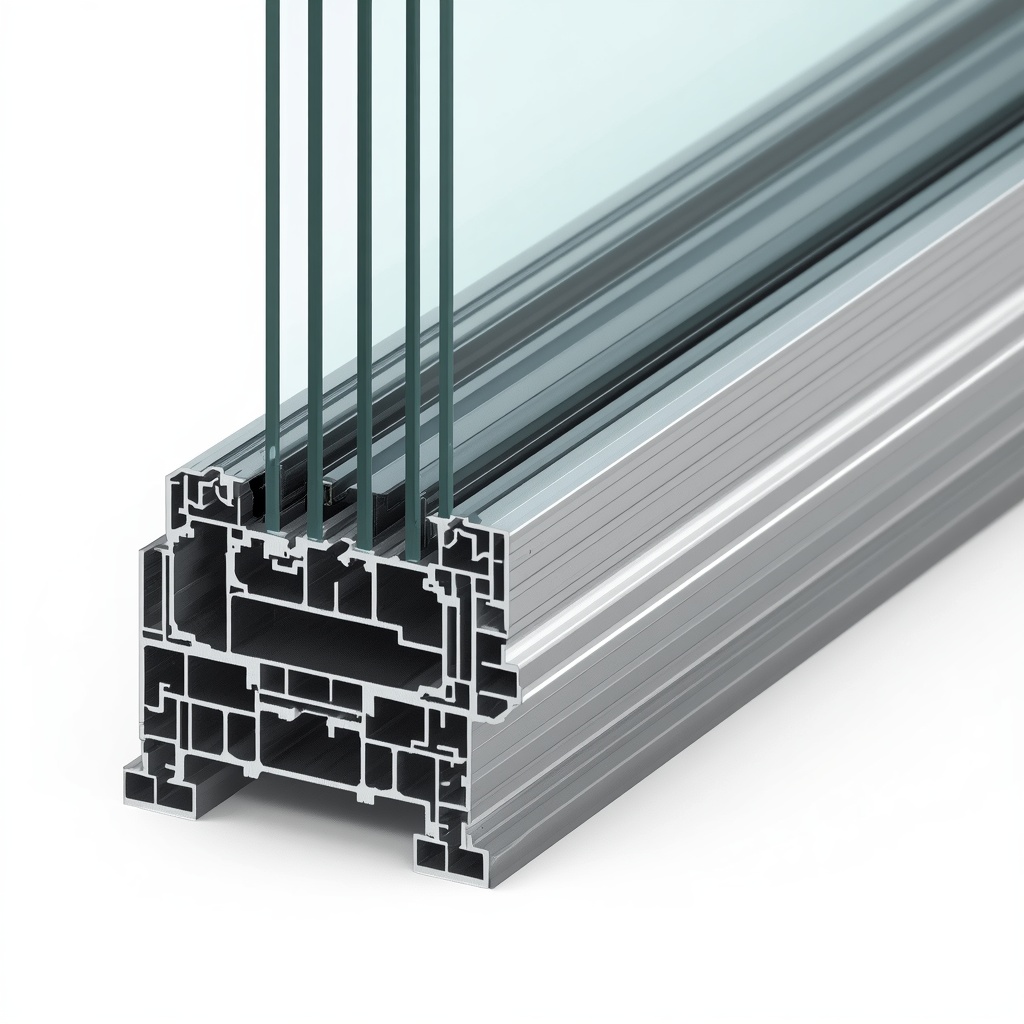
Curtain Wall From China: Complete Procurement Guide for Developers
Written by Anna, Architectural Products Specialist at Skyline Trading Co., Ltd. — doors, windows, curtain wall systems and building materials sourcing from China.
A curtain wall is the most engineered single system on a hotel or commercial building — and the one a developer can least afford to buy like a commodity. It is a non-structural glass-and-metal skin that wraps the building, transfers wind loads to the structure and keeps weather out across thousands of square meters and dozens of floors. Every failure mode — water ingress, coating degradation, glass stress, noise, thermal bridging — is decided before a single panel is produced, in the specification, the engineering and the procurement process. Get those right in China sourcing and a curtain wall performs like a domestic-engineered facade at a fraction of the cost. Get them wrong and the corrections happen on a finished tower, where they are measured in millions.
This guide is written for hotel developers, resort investors, general contractors, procurement managers and facade-focused architects who buy curtain wall systems from China. It walks through the system types, the specifications that must be frozen before a quote, the testing and certification the destination market demands, where in China the real engineering and manufacturing live, how to verify a factory that can genuinely engineer a facade, the step-by-step procurement process, the mistakes that cost millions, honest cost logic and a realistic planning timeline.
The short version first: a curtain wall from China is a facade engineering package that ships material — you are not buying glass panels, you are buying an engineered system, inspection discipline and a compliance chain. Treat it that way and China delivers remarkable value. Treat it as a catalog purchase and the envelope will leak, deflect, or fail certification on a building you already scheduled to open. The rest of this guide is the method for buying it correctly.
Quick Answer: Can You Source a Curtain Wall From China?
Yes. China is the world’s largest production base for curtain walls, and the decision for a developer is rarely whether the quality can be met — it is whether the procurement is handled like engineering work rather than a product order. The country’s facade industry is split into two useful levels, which explains why the answer depends so much on how you buy:
- Tier-one design-build groups with in-house engineering institutes, full-scale test labs and landmark track records — Shenyang Yuanda, Guangzhou Jangho and Shenzhen Fangda are the names developers encounter first — deliver skyscraper-grade curtain walls worldwide.
- Provincial specialized fabricators (most concentrated in Guangdong, led by the Foshan–Guangzhou axis) offer strong value for mid-rise hotels and commercial towers, with proper engineering and export disciplines when the buyer demands them.
- B2B marketplace “suppliers” selling curtain wall at very low square-meter prices are usually component resellers — the single most common source of failed curtain wall projects.
A developer who sources from China gets the design and manufacturing strength of the world’s largest facade industry, unitized prefabrication that compresses site assembly, and industrial pricing for glass, aluminum and engineered systems — provided the project is run as a facade program with performance criteria, mock-up testing and factory verification. The hotel and property procurement framework on our China procurement hub and the hotel procurement guide show where a curtain wall package sits inside a full hotel sourcing program.
1. What Is a Curtain Wall, and When Does a Building Actually Need One?
A curtain wall is an exterior wall system that carries no building vertical load. It hangs from the structure, spans between floors, and resists wind and atmospheric loads while providing light, views, thermal performance and weather protection. Its defining engineering trait is that it is designed as a continuous system across the whole facade, with joints, gaskets, drainage and movement accommodation engineered as one unit — not as individual windows installed in openings.
The distinction that confuses many RFQs is between a curtain wall, a window wall and a storefront:
- Curtain wall: spans multiple floors and spans continuously past the slab edges; the structure is usually set back, and the wall is designed as an engineered facade system. Used on towers, atria, lobbies and large glazed halls.
- Window wall: fills the opening between slabs (often called slab-edge glazing); each floor is an independent window system. Cheaper and simpler, but creates a jointed, less continuous facade.
- Storefront: a low-rise glazed framing system used at ground-floor shopfronts and entrances — essentially a taller glass door-and-window system, not a facade engineering product.
Hotels need a genuine curtain wall when the design demands one system across many floors — tower facades, grand atrium walls, ballroom and lobby glass fronts, and pool-facing resort elevations where the glazing becomes the architecture. For everything simpler, a window wall or storefront is the correct, cheaper call, and it is covered separately in our aluminum doors and windows import guide. Part of good procurement is refusing to buy a curtain wall where a window wall satisfies the design — the reverse mistake costs even more.
2. Types of Curtain Wall Systems and When to Use Each
| System | How it is made | Where it fits | Procurement notes |
|---|---|---|---|
| Stick (mullion and transom) | Profiles, glass and gaskets assembled on site piece by piece onto an on-site framing grid | Low- to mid-rise, irregular geometry, projects with limited crane access | Lowest upfront cost; site labor and weather risk are the buyer’s problem; works well for complex shapes |
| Unitized | Factory-assembled panels, typically one floor high by one bay wide, shipped ready to crane into position | High-rise towers, repetitive facades, tight schedules | Higher factory cost, far faster and more reliable site erection; interlocking gaskets improve weather performance |
| Semi-unitized | Hybrid — some components pre-assembled, others field-installed | Mid-rise where speed and flexibility both matter | Middle cost; a pragmatic compromise when site labor is available |
| Point-fixed / structural glazing (SSG, spider glass) | Panels fixed with spider fittings or structural silicone for a frameless look | Lobbies, atria, showpiece and retail facades | Higher engineering and fabrication cost; spectacular glass; small tolerance for weak engineering |
| Panel and rainscreen (aluminum, stone, terracotta) | Non-glass skins fixed to a subframe grid — often combined with glass vision areas | Mixed-use and hotel exteriors, cladding-heavy designs | Often sourced alongside cladding packages; different suppliers than glazed facade systems |
| Double-skin | Two curtain wall skins with a ventilated cavity | Premium climate-controlled towers | Highest cost; strong energy performance; advanced engineering only |
The system choice is an economic decision as much as an architectural one. For a hotel tower above roughly seven stories with a repetitive facade, unitized almost always wins total project cost once schedule and installation reliability are counted; for a low-rise resort with complex geometry, stick is frequently the correct and cheapest answer. This decision must be made by the facade engineer and agreed with the procurement team before any RFQ — the factory will happily build either, but the two are priced and scheduled very differently. Our aluminum window and door supplier selection guide explains the supplier-side selection logic that applies to facade fabricators too.
3. Key Specifications Developers Must Define Before Any Quote
A curtain wall RFQ without a performance specification is a blank check. Everything below must be fixed, with values, before factories quote. Without them, every quote assumes different inputs and the comparison is meaningless.
- Wind load and design pressure. The required design pressure comes from the project structural engineer per the destination code (for example ASCE 7-22 in the US, or the applicable national code elsewhere). The factory does not choose the wind load — the engineer does. For high-rise towers, design pressures scale sharply with height; a 40-story tower can demand several times the performance of a 4-story building.
- Deflection limits. Standard aluminum framing deflection limits are commonly in the range of L/175 for wind and L/240 for glass supporting conditions; the engineer states the required limits, and the profile sizes are sized accordingly.
- Thermal performance. U-value and condensation resistance targets drive the thermal break specification, glass coating and frame design. Hotel guest comfort and energy cost depend on keeping this explicit.
- Acoustic performance. For hotels, target the facade Rw/STC for the facade zones — guest rooms versus atrium versus street-facing elevations — so the engineer picks the right glass build-up rather than the cheapest.
- Glass and spandrel build-up. Specify the full glass schedule: tempered or laminated safety glass, Low-E coating surface, insulating-glass unit thickness, argon fill where thermal targets demand it, laminated impact glass for hurricane or impact zones, heat-soak testing where appropriate, plus spandrel panel and ceramic-fritted vision configurations for the aesthetic rhythm of the facade.
- Finish durability. Specify the coating standard explicitly — typically powder coating or PVDF/fluorocarbon, with AAMA 2605 as the higher-durability class for coastal and UV-exposed hotels.
- Structural silicone and sealants. For structural glazing (SSG) or certain unitized interlocking systems, structural silicone engineering is a documented, engineered joint — not a glue seam. Specify structural silicone to the system’s tested specification, and require the engineer’s certifications for its use.
- Fire protection at floor slabs. In most codes, the curtain wall must include fire containment at the slab edge — fire-rated seals, fire-stopping and compartmentation so flames and smoke cannot travel floor to floor through the facade void. This is a frequently forgotten, code-critical item.
- Seismic and differential movement. The system must accommodate building movement — thermal, wind sway, seismic drift and slab settlement — through its joint design. The structural engineer supplies the movement values; the facade engineer designs the accommodation.
- Substrate coordination. Curtain wall attaches to the structure at specific points; the relationship between the net edge of slab (NER), embedded anchors and the facade grid is a coordination item with permanent consequences. It belongs in the spec and the drawings, not discovered on site.
The destination certification matrix in the next section defines which test evidence make these performance claims real. Without tests behind the values, the specification is a sales document.
4. Testing and Certification: What the Destination Market Requires
The universal rule for curtain wall: performance is proven by test, not by brochure. A general ISO certificate is marketing. The document that matters is a test report for a specimen matching the configuration you are buying — same system, same glass, same profiles — issued by an accredited laboratory under the standard your destination market enforces.
| Market | Key standards and certifications to request |
|---|---|
| United States | NAFS / AAMA 101 (performance classification); ASTM E283 air leakage; ASTM E330 structural (wind) performance; ASTM E331 / E547 water penetration; ASTM E1105 field water testing; AAMA 503 site testing; ANSI Z97.1 safety glazing; AAMA 2605 finish; ASCE 7-22 wind loads |
| Florida coastal / HVHZ | Miami-Dade NOA or Florida product approval; TAS 201/202/203 impact and cyclic pressure testing; high design pressures — factory and system must be pre-approved for this region |
| Canada | CSA A440 series (windows) and project-specific facade engineering; note: unitized wall modules from China have been the subject of anti-dumping proceedings in Canada — confirm duty treatment with your broker before pricing |
| Europe | EN 13830 curtain wall product standard and CE marking; EN 12152 (air tightness) and EN 12154 (water tightness) classifications; structural glazing to ETAG 002 |
| Australia / New Zealand | AS 2047 basis for glazing performance; AS/NZS 2208 safety glazing; project-specific facade engineering and site wind assessment |
| Gulf / Middle East | Local municipal approvals, high solar-gain and dust/coastal performance expectations; SASO and market-specific certification as applicable |
Tests the buyer should make part of the contract, beyond the certificate set:
- Full-scale performance test of a production sample (air, water and structural) under the destination standard — this is typically run off-site at a qualified facade test facility and is the single strongest evidence package a buyer owns.
- Mock-up site test (ASTM E1105 water, and re-seal testing) after installation on the building, to prove the installed system, not just the factory specimen.
- Field inspection of the erected wall against the approved shop drawings and finish samples.
A correct approach: put the required standard, the test laboratory requirements and the acceptance criteria into the RFQ itself, then require the factory to propose a test regime in the quotation. The verify-your-aluminum-supplier guide shows how to check that test reports are real, current and configuration-matched — the same discipline applies to curtain wall suppliers.
5. Where Curtain Walls Are Made in China: The Factory Landscape
Understanding the industry’s structure helps a developer separate real engineering capacity from marketplace noise. China’s curtain wall industry has three tiers:
- Tier-one design-build groups. Companies with their own engineering institutes, structural design teams, full-scale test laboratories and international landmark portfolios. Shenyang Yuanda and Guangzhou Jangho are the best known; Shenzhen Fangda and the state-backed facade businesses in the China State Construction group follow. These are the suppliers for signature towers and demanding facades, and they operate internationally, including Middle East and US markets.
- Provincial specialized fabricators. Thousands of facade and fenestration companies, heavily concentrated in Guangdong, with the Foshan–Guangzhou–Shenzhen axis as the export heartland. These fabricators can engineer, test and deliver mid-rise and commercial curtain walls at much lower cost than tier-one — and they are the realistic partners for most developer projects, provided the buyer enforces engineering, testing and inspection discipline.
- Component and marketplace vendors. Aluminum extruders, glass processors and coating houses that sell curtain wall “packages” on B2B marketplaces. Prices are tempting and capability is often close to zero on the engineering side; this is where failed projects come from.
| Cluster | Anchor suppliers | Strength for developers |
|---|---|---|
| Shenyang (Liaoning) | Yuanda and its group bases | The largest curtain wall production base in China; full-scale test lab; landmark and high-rise experience |
| Guangzhou / Shenzhen (Guangdong) | Jangho, Fangda, state-backed facade groups | Engineering institutes, major test facilities, deep export experience, proximity to Southern China ports |
| Foshan / Nanhai (Guangdong) | Specialized window-and-curtain-wall fabricators | Integration with the world’s aluminum extrusion and glass cluster; the most cost-effective credible source for mid-rise hotel facades |
| Shanghai / Chengdu | Bases of the tier-one groups | Local coverage for Chinese mega-projects; less relevant as standalone sourcing hubs |
The practical guidance for a developer: for a hotel tower or any facade with serious engineering content, center the shortlist on Guangdong-fabricator majors with real engineering departments and, where the design warrants it, one tier-one group comparison. For signature or supertall work, a tier-one design-build group is the credible choice. Whatever the tier, the verification process in the next section decides whether the “engineering” is real.
6. How to Select and Verify a Curtain Wall Factory in China
Selecting a curtain wall factory is selecting an engineering team as much as a manufacturer. The checks that separate a real facade partner from a components seller:
- Engineering capability, not assembly capability. Ask who runs the structural calculations and shop drawings: an in-house engineering department, or a third-party engineer the buyer must supervise. For a curtain wall, the buyer is essentially relying on the factory’s engineering the moment the anchor drawings are approved.
- Test capability and history. Does the factory operate or have access to a full-scale facade test facility? Which standards have they actually tested to (ASTM E283/330/331, EN 13830, TAS)? Ask for the test reports of past comparable projects — not a certificate wall.
- Completed hotel and landmark references. Curtain wall is portfolio-proof. Request three references with facades in your system type and height band, with photos before and after glazing, and — where possible — project contacts.
- Export documentation competence. Unitized curtain wall exports require careful engineering of crating, container utilization and documentation. A factory that has exported glass curtain walls repeatedly to your region is a different supplier from one that has never seen port documentation.
- Willingness to be tested and inspected. A credible facade factory accepts a full-scale performance test and a third-party pre-shipment inspection as normal contract terms. Resistance to either is the clearest red flag available.
- The 2026 verification toolkit. The deep verification steps — legal-status checks, capacity claims, sample verification and pre-payment checks — are covered in our China supplier verification checklist and the China factory audit guide, which apply to facade suppliers exactly as to any factory. The verify-an-aluminum-supplier guide adds the component-level document checks (profile, glass, coating certificates) that a curtain wall package inherits.
Red flags to reject immediately: no engineering department, refusal of a mock-up test, only ISO/general certificates, no export references, and a requirement that the buyer pay the full balance before inspection. Each of these correlates with the project failures described in the mistakes section.
7. Curtain Wall Procurement Process From China: Step by Step
The process below is the sequence that makes a curtain wall project manageable. Each step gates the next; skipping forward moves risk to an exponentially more expensive place.
- Define performance requirements. Wind load, deflection, thermal, acoustic, glass schedule, finish class, fire, seismic and movement accommodation — in writing, with the structural engineer’s values.
- Decide the system. Stick, unitized, semi-unitized or point-fixed, agreed between architect, facade engineer and procurement team — including the rough cost and schedule implications.
- Prepare facade documents. Facade drawings, zone breakdown, spandrel/vision schedule, NER and anchor coordination, and the destinations’ code requirements.
- RFQ with a performance specification. Issue the identical RFQ — spec, drawings, test regime and delivery terms — to every shortlisted factory. Compare like for like.
- Shortlist and audit. Verify engineering, capacity, references and export record before any RFQ commitment or deposit.
- Shop drawings and structural calculations review. The factory’s engineering output is reviewed by your engineer: profile calculations, deflection compliance, glass structural evidence, anchor and NER coordination.
- Sample approval. Approve profile finishes, glass specimens and a representative joint detail, and lock the approved sample into the contract as the benchmark.
- Full-scale mock-up and performance test. A production representative specimen is tested (in a facade test facility or the factory’s rig) to the destination standard. This is the moment the specification is proven. Pass/fail becomes a gate.
- Production with milestone checks. Milestones for profile supply, glass, fabrication, assembly and surface treatment — with progress evidence and a mid-production check on custom-heavy work.
- Pre-shipment inspection. A third-party PSI of the finished batch: dimensions, glass, coating, hardware, joint quality, seals, packing — against the approved sample, BOQ and shop drawings, at an agreed acceptance level (AQL 2.5 is the common default).
- Packing and consolidation. Unitized panels ship in engineered steel stillages or timber crates with edge and corner protection, protective film, moisture barriers and full marking. Containers load in the order panels will be erected — sequence matters more in curtain wall than in any other product.
- Shipping and installation coordination. Documents (invoice, packing list, bill of lading, test reports, certificates of origin/conformity) complete and correct; delivery aligned to the site erection sequence; storage conditions agreed so crates and panels stay dry and flat; installation tolerance and anchorage method confirmed with the local installer.
8. Common Mistakes When Buying a Curtain Wall From China
These failure patterns recur across developer curtain wall projects and each one is avoidable with the process above:
- Buying panels instead of an engineered system. The cheapest offer is almost always a component sale with no engineering. The structure was not calculated, the anchors do not coordinate, and the “system” leaks at the first joint.
- No performance specification. Quotes were compared on square meter price with different assumed inputs — a comparison that is meaningless and reliably leads to the wrong system.
- Skipping the full-scale mock-up test. The single highest-value check in the process is the one buyers under pressure to save money cut. There is no faster route to a leaking tower.
- Accepting brochure certificates. General ISO certificates and company claims are not test reports for the configuration being purchased. Certification evidence must be configuration-matched.
- Choosing the wrong system level. Paying unitized premium on a 4-story low-rise, or stick construction on a 30-story tower — both costly errors made without a facade engineer on the decision.
- Ignoring destination compliance. Discovering that Miami-Dade NOA, TAS impact approval, EN 13830 certification or local municipal approval was not satisfied — after manufacture, when it is unaffordable to fix.
- Overlooking duty and anti-dumping treatment. Curtain wall from China attracts ordinary duties plus, in specific product-market combinations, anti-dumping measures (unitized wall modules to Canada have been subject to these). Confirm with a broker before pricing the project.
- Poor packing and sequence. Unitized panels arriving damaged or out of erection order multiplies site cost and schedule risk. Packing verification is part of inspection, not an afterthought.
- Forgetting slab-edge fire containment. Fire-rated seals at floor slabs are a code requirement in most markets and a persistent omission in budget RFQs.
- Assuming overseas installation. Most Chinese curtain wall suppliers sell design and supply; installation is a local specialty. Confirm the supply/installation scope split before contracts, not during site mobilization.
- No spare panels or glass. Every curtain wall project needs spare vision glass, spandrel panels and sealant stock on site before erection starts.
- Weak payment milestones. Large prepayments or full balance before inspection remove every lever when defects appear.
The wider set of China-sourcing risk patterns — substitution, spec drift, document errors and freight surprises — is mapped in our China procurement risks guide.
9. Cost Factors: Why “Price per Square Meter” Is the Wrong Number
Curtain wall price is an output of the specification and the system, not an input. A per-square-meter range quoted before the specification is fiction, and the spread between a bare stick system and a fully engineered unitized hotel facade with impact glass is enormous. The honest way to plan cost is by components:
- Aluminum framing. The profile content and weight (commonly on the order of 8–12 kg of aluminum per square meter depending on system and wind load) plus alloy, temper and extrusion quantity. Thermal break and heavier sections add weight and cost.
- Glass and spandrel. Glass is typically around a quarter of total curtain wall cost and the second-largest driver after aluminum. A standard insulated unit with clear tempered glass costs a fraction of a Low-E, argon-filled, laminated impact build-up. The glass schedule dominates the material spread.
- System type. Stick systems carry the lowest upfront cost but push assembly labor, weather risk and schedule onto site. Unitized systems cost more in the factory but compress and de-risk installation; industry reporting for 2026 puts fully installed stick systems in the range of roughly $60–120 per square foot and unitized systems $90–180 per square foot in the US market, with the global installed average for stick systems around $225 per square meter — while supply-only factory values sit meaningfully lower. These are planning ranges from 2026 industry reporting, not quotes, and the single biggest decision input is the stick/unitized choice above roughly seven stories.
- Engineering and testing. Performance testing, structural review and an engineering team are real costs — and the cheapest line to cut, and the most expensive to cut. Budget for them as line items.
- Mock-up and samples. Full-scale performance testing and sample fabrication are one-off costs owned by any serious project.
- Packing and logistics. Unitized curtain wall is heavy and must ship in engineered stillages or crates; freight, container utilization and insurance are meaningful and rise with distance.
- Duties, anti-dumping and taxes. Aluminum-curtain-wall imports face ordinary tariff treatment plus, in identifiable product-market combinations (for example unitized modules from China into Canada), anti-dumping measures. Broker confirmation is part of the landed cost, not an afterthought.
A cost comparison is only meaningful as a total landed cost — factory price, packing, freight, duties, engineering and inspection — against a single fixed specification, and then against the schedule value of the erection method. The aluminum door and window import cost guide walks through the same landed-cost method at the fenestration level; the curtain wall version is the same discipline with heavier materials and bigger test bills.
10. Timeline: How Long Does a Curtain Wall Order From China Take?
Curtain wall is the longest-lead facade package in a building, and the timeline is governed by engineering and testing more than by production. A realistic planning schedule for a hotel tower, from project freeze to panels on site:
| Phase | Indicative duration | Gate |
|---|---|---|
| Performance definition and system selection | 2–4 weeks | Approved facade concept |
| Facade engineering, shop drawings and calculations | 4–8 weeks | Approved shop drawings and structural review |
| Full-scale mock-up and performance test | 4–8 weeks | Passed performance test |
| Sample and production | 10–20 weeks (glass, profiles, fabrication, assembly) | Goods ready for inspection |
| Pre-shipment inspection and rework buffer | 1–2 weeks | Passed PSI |
| Packing, consolidation and loading | 1–2 weeks | Containers loaded in erection order |
| Ocean transit | 3–8 weeks, regional | Arrival at destination port |
| Customs and inland delivery | 1–2 weeks | Goods and crates on site |
The practical total for a tower envelope is typically six to ten months from performance definition to panels on site, with unitized systems slightly heavier in the factory phase and dramatically lighter on the site phase. Two external factors matter: the Chinese New Year holiday window, which closes factories for weeks and crowds capacity around it, and peak shipping seasons, which add transit time and freight cost in the second half of the year. The procurement rule that dominates everything is that curtain wall is a critical-path envelope item — it must be scheduled backward from the opening date and phased to arrive in erection order, not “as soon as the factory is ready.”
11. Curtain Wall vs Aluminum Door and Window Systems: What to Buy Where
The curtain wall decision sits next to a sister decision: what part of the glazing is a curtain wall and what part is windows and doors. The two packages share suppliers, glass and coating technology but are different procurement objects.
| Dimension | Curtain wall | Aluminum doors and windows |
|---|---|---|
| Scope | Continuous engineered facade spanning floors | Operable units and fixed panels in openings |
| Engineering | Facade engineering, structural calculations, system-level testing | System engineering per unit type |
| Testing | Full-scale performance tests (ASTM/EN/TAS), field water tests | Per-unit classification tests |
| Installation | Specialized facade contractor, crane and scaffolding regime | Window/door installer in openings |
| Packing | Engineered stillages and crates, erection-order sequence | Standard crates and protective packaging |
| Cost logic | System, engineering and testing dominate | Unit types, glass and hardware dominate |
| Exporter | Tier-one groups and specialized facade fabricators | Deep Guangdong fabricator pool |
Many hotels buy both in one program — a curtain wall for the tower and atrium, window wall or window systems for guest-room floors. Because they share glass, coating and even suppliers, they are best procured through one coordination plan. The hotel aluminum doors and windows procurement guide covers the window-side of that combined envelope, and a single procurement structure keeps the two packages technically consistent.
12. How Skyline Trading Supports Curtain Wall Procurement
Skyline Trading Co., LTD. is based in Foshan, Guangdong — in the center of the exporter cluster this guide describes — and works as the China-side coordination partner for curtain wall and broader hotel procurement. For developers who do not run a ground operation in China, the areas where we support a facade program are:
- Facade supplier sourcing and matching — identifying tier-one and Guangdong fabricator candidates against your system type, height band, glass schedule and destination market; running the twin shortlists.
- Engineering review coordination — bridging the shop-drawing and structural review between your engineer and the factory, and managing the freeze on the specification and drawings.
- Verification and audits — applying the supplier verification, audit and configuration-matched test-report checks to each shortlisted facade factory.
- Testing coordination — facilitating the full-scale performance test and mock-up approvals as contract gates rather than afterthoughts.
- Quality inspection — milestone checks during production and a third-party pre-shipment inspection of the finished batch before loading, with packing and erection-order verification.
- Logistics coordination — stillage/crate packing control, container planning in erection sequence and documentation through to the destination port, aligned with the hotel’s other packages.
Because a curtain wall slot overlaps with the windows, cladding, glass and wider envelope decisions of the same building, we coordinate them under one facade plan instead of separate orders.
FAQ: Curtain Wall From China
What is the difference between a curtain wall and a window wall?
A curtain wall is a continuous facade system spanning multiple floors that connects back to the structure at slab edges and carries no building load, engineered as one weather-tight system. A window wall fills the opening between slabs floor by floor like a large window system. Curtain walls are used for towers, atria and large glazed halls; window walls for slab-edge glazing where a single generic system is sufficient.
Stick or unitized: which should a hotel use?
Choose with a facade engineer. For a tower with a repetitive facade above roughly seven stories, unitized almost always wins total project cost once schedule and installation reliability count. For low-rise or geometrically complex buildings with available site labor, stick is frequently cheaper and sufficient. The decision belongs to engineering, not to the factory.
How much does a curtain wall cost per square meter?
There is no honest fixed rate: price is an output of specification and system. As a planning frame, 2026 industry reporting puts fully installed stick systems in the range of roughly $60–120 per square foot and unitized systems $90–180 per square foot in the US market, with the global installed average for stick around $225 per square meter; supply-only factory values are lower. Treat any flat quote given before a specification as a fiction, and compare total landed and installed cost.
Where are the best curtain wall factories in China?
The credible supply sits in two levels: tier-one design-build groups (Shenyang Yuanda, Guangzhou Jangho, Shenzhen Fangda and state-backed groups) for signature work, and specialized Guangdong/Foshan fabricators for the majority of developer projects at better value. Marketplace “suppliers,” by contrast, are usually component sellers and the most common source of project failure.
Do Chinese curtain walls meet US, European and local codes?
Yes, when the destination standard is written into the RFQ and verified with configuration-matched test reports — NAFS/AAMA and ASTM E283/330/331 in the US, EN 13830/CE in Europe, TAS and Miami-Dade NOA in Florida HVHZ, and the applicable national codes elsewhere. Compliance is a requirement you enforce, not a promise you assume.
How long does a curtain wall order from China take?
Indicatively six to ten months from performance definition to panels on site, driven by engineering, the full-scale mock-up test and production; ocean transit adds 3–8 weeks. Plan backward from the opening date, schedule around Chinese New Year, and phase delivery in erection order.
Is a full-scale mock-up test really necessary?
Yes. It is the highest-value check in the entire process — the moment the specification is proven on a production-representative specimen under air, water and structural testing. Cutting it to save money is the fastest route to a leaking tower, and factories that resist it should be excluded.
What certifications should I request in the RFQ?
Configuration-matched test reports to your destination standard, not general certificates: the performance classification (NAFS/AAMA or EN 13830), air/water/structural test reports (ASTM E283/E330/E331 or EN equivalents), impact approval where required (TAS/Miami-Dade), finish certification (AAMA 2605 for coastal), ANSI Z97.1 / AS/NZS 2208 safety glazing, and the test laboratory’s accreditation. Specify the regime in the RFQ and require the factory to quote it.
Will the Chinese factory install the curtain wall overseas?
Rarely. Most Chinese curtain wall companies sell design and supply; installation is normally a local specialist. Confirm the supply/installation scope split in the contract, plan the field mock-up and erection by a qualified local facade contractor, and verify storage and sequence at handover.
How large must a curtain wall order be?
Curtain wall is project-driven, and credible Chinese suppliers ship from the low thousands of square meters upward; engineering and mock-up costs amortize best at and above that scale. For anything smaller, a window wall or bespoke glazing package is usually the better product — another reason the system decision belongs to a facade engineer.
Related Guides
- Complete Hotel Project Procurement Guide from China — the pillar for sourcing a hotel project from China
- Aluminum Windows and Doors Supplier Guide for Hotels — supplier selection for the window-side of the envelope
- How to Verify Aluminum Window and Door Suppliers in China — the document-level verification checklist
- Aluminum Door and Window Import Cost Guide — landed-cost method for the fenestration package
- Import Aluminum Doors and Windows from China — the general fenestration import overview
- China Factory Audit Guide — how to read a facade factory’s real capability
- China Supplier Verification Checklist — red flags before paying a deposit
- China Procurement Risks — substitution, duty and expediting risk patterns
- Hotel Furniture Projects — the rest of the same hotel program
Every verification tool, glossary and project resource sits in the China Procurement Hub.
Next Step for Developers: Request a China Facade Procurement Assessment
If you are evaluating a full glass facade for a hotel or commercial tower and want a straight answer on how to source the curtain wall from China, the conversation does not require finished drawings. Request a China facade procurement assessment: share the project scope — building type and height, glass and system preference, target markets and opening date — and Skyline’s team will review the facade engineering requirements and respond with shortlist direction, specification and testing steps, and a verification plan. The review carries no obligation; it exists to tell you whether China curtain wall sourcing fits the project, and what the engineering, testing and inspection gates should be if it does.
A curtain wall is bought once and performs for decades. The process that decides whether it performs — specification, engineering, mock-up testing, inspection and logistics — is exactly the process this guide exists to protect, and it is decided long before any glass is cut.