

Angie Sami
Procurement Manager at Skyline Trading Co., LTD · Last updated: July 16, 2026 · Q3 2026 pricing
Skyline Trading delivers tailored smart home solutions and enterprise building automation systems designed for hospitality properties, luxury estates, corporate offices, and commercial real estate. Our engineering scope spans centralized architectural lighting, advanced access management, integrated HVAC automation, facility energy monitoring, commercial security synchronization, motorized window treatments, and unified building management systems (BMS) built around actual operational workflows. Whether you are sourcing automation components from China for a hotel project or integrating Matter-compatible smart devices into a residential development, Skyline provides factory-direct procurement and technical consultation across the full automation stack.
A robust automation infrastructure should optimize facility operations and simplify user interaction. If a system merely introduces redundant control panels, fragmented applications, and operational complexity, it fails to deliver true value to the property.
This pragmatic approach defines how Skyline Trading Co., LTD handles structural automation. Established in 2012, the firm has executed projects across automated building systems, commercial contract furniture, industrial kitchen fit-outs, factory solutions, and specialized global sourcing. Explore our corporate history and project deployment experience on the Skyline About page.
In commercial architecture, automation cannot operate in a vacuum. Electrical engineering, HVAC zones, access protocols, interior space layouts, and daily facility management procedures all directly impact one another. This comprehensive guide outlines the core components of facility automation, our engineering evaluation process, proven real-world methodologies, integration risks, and the technical documentation a client should prepare to receive an accurate project tender.
What Defines Enterprise Building Automation?
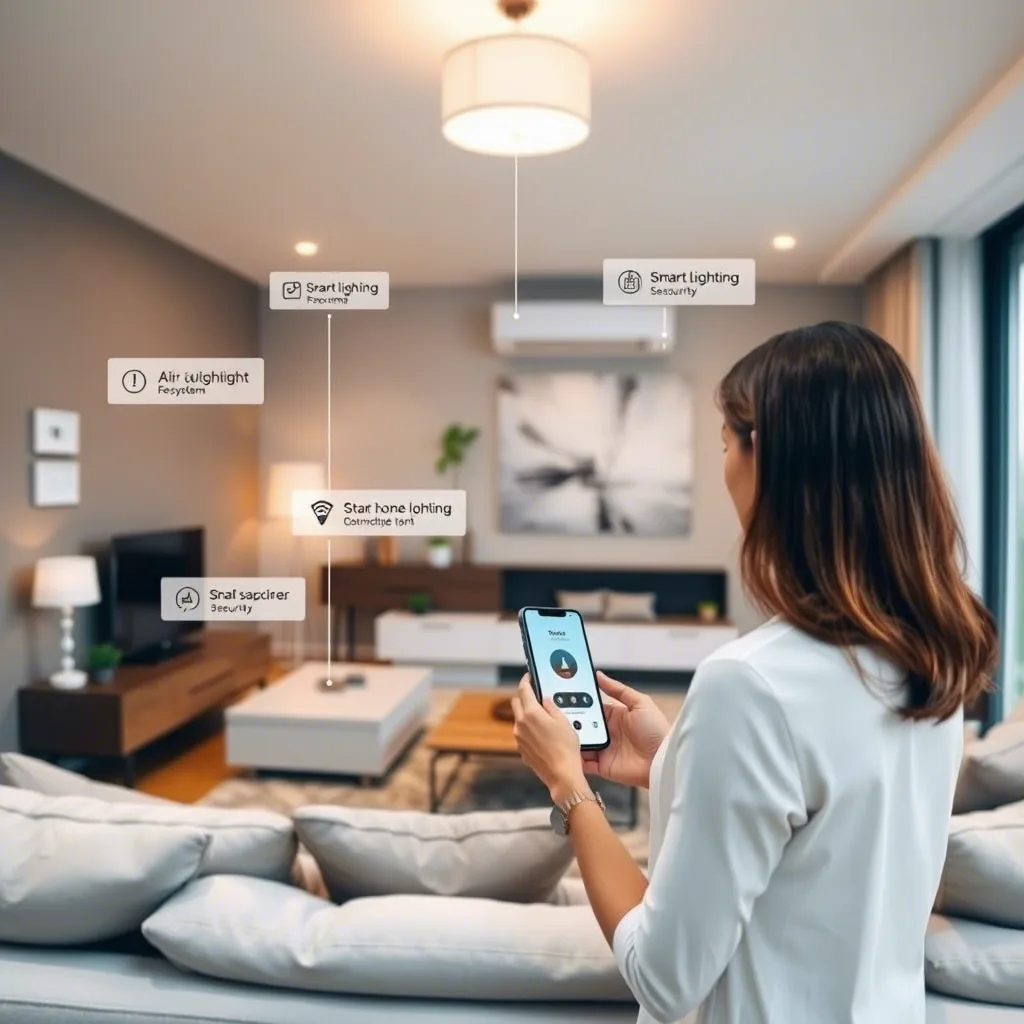
Commercial automation solutions consolidate disparate mechanical and electrical building subsystems into a unified ecosystem. This allows facility managers and users to monitor and control operations via centralized touch panels, dedicated software interfaces, occupancy sensors, or automated master schedules. Depending on the venue, this integrates architectural lighting networks, heavy-duty motorized shading, electronic access control, surveillance arrays, climate control, and preset operational scenes.
While a luxury estate focuses on absolute privacy and bespoke comfort, a commercial hospitality property targets distinct operational KPIs: frictionless guest-room interaction, minimized utility waste, granular staff audit trails, and reduced manual facility inspections by maintenance teams. If your enterprise involves hospitality infrastructure or guest-facing commercial spaces, consider reviewing Skyline’s hotel and restaurant solutions.
Skyline’s Engineering Evaluation & Project Methodology
Prioritize Operational Workflows: A frequent pitfall in large projects is selecting hardware components before mapping out the facility’s daily usage patterns. A resort guest should intuitively manage room settings without instructional guides; culinary staff must be able to adjust restaurant lighting profiles instantly prior to service; and estate owners require streamlined remote oversight rather than an overwhelming array of switches.
Assess Infrastructure and Electrical Stages: Greenfield construction offers maximum flexibility for routing control lines, positioning main distribution boards, and placing system gateways early in the architectural cycle. Retrofitting existing properties requires meticulous site audits; in these scenarios, wireless mesh networks or hybrid topologies are often specified to prevent cost-prohibitive structural remediation or rewiring.
Evaluate Protocol Compatibility and Lifecycle Maintenance: Sourcing individual smart devices is straightforward, but achieving seamless interoperability is the real engineering challenge. System vulnerabilities typically stem from blending disparate hardware brands without verifying communication protocols (such as KNX or BACnet), gateway data throughput, software reliability, or long-term component availability.
Execute Rigorous Commissioning and Pre-Installation Testing: For contract-based procurement, core system integrations must undergo staging tests before full-scale deployment. This includes verifying bus response times, motor torque and alignment for motorized shades, credential propagation across access points, surveillance frame rates, system behavior during network degradation, and fail-safe operations.
For instance, in a commercial hospitality setup, Room Management Systems (RMS) dynamically curb HVAC runtime when rooms are vacant. The net efficiency gain, however, remains contingent upon guest occupancy curves, standard operating procedures, local thermal loads, and the underlying mechanical plant. Automation acts as a powerful operational leverage, but it works in tandem with competent property management.
Supported Automation & Engineering Services
Skyline scales its engineering and procurement support to match the specific asset type, capital expenditure budget, and construction phase. Our technical scope ranges from standalone subsystem deployments like automated access control to fully integrated master control layers for high-rise commercial developments.
| Architectural Lighting Networks | Centralized circuit control, dimming loops, automated scheduling, and spatial scene setting. |
| Commercial Touch Panels & Switches | Tactile and digital control interfaces engineered for high-traffic zones, offices, and suites. |
| Access Control & Credential Management | Electronic lock integration, RFID/mobile access paths, staff auditing, and restricted zone security. |
| Hospitality Room Automation (RMS) | Integrated guest room management combining climate, lighting, and shading with occupancy logic. |
| HVAC System Integration | Modbus/BACnet integration, thermal zone optimization, scheduling, and demand-controlled climate. |
| Motorized Window Treatments | Automated heavy-duty drapery, blinds, and shading solutions for corporate spaces, suites, and common areas. |
| Utility & Energy Monitoring | Sub-metering networks providing real-time consumption analytics for operational cost reduction. |
| Integrated Surveillance & Security | CCTV arrays, sensor matrices, and localized alarm management systems unified into one panel. |
| Centralized Facility Platforms (BMS) | Unified facility software dashboards, master scheduling, asset monitoring, and remote diagnostics. |
| Project Procurement & Sourcing | Factory-direct component sourcing, vendor alignment, technical submittal planning, and project coordination. |
Matter Protocol & Cross-Platform Smart Home Compatibility
In 2026, the Matter protocol has become the industry standard for cross-platform smart home interoperability. Backed by Apple, Google, Amazon, and Samsung, Matter-compatible devices work across all major smart home platforms without requiring separate apps. For property developers and hotel operators sourcing automation components from China, Matter certification eliminates the platform fragmentation problem that has historically plagued smart home adoption.
Skyline sources Matter-compatible devices from verified Chinese manufacturers, including smart switches, sensors, lighting controllers, and climate systems. Key protocol specifications we support:
| Protocol | Best For | Typical Devices |
| Matter (1.2+) | Cross-platform interoperability | Smart plugs, sensors, lighting, locks |
| KNX | Commercial building automation | HVAC, lighting, blinds, access control |
| BACnet | HVAC and facility management | Air handling units, chillers, VAV systems |
| Modbus | Industrial and legacy integration | Energy meters, power monitoring |
| Zigbee 3.0 | Low-power sensor networks | Door sensors, motion detectors, temp sensors |
| Wi-Fi 6 | High-bandwidth devices | Cameras, smart displays, speakers |
For hotel projects, we recommend starting with a Matter-certified starter kit (hub + sensors + switches) to validate cross-platform compatibility before scaling to full-building deployment. This approach reduces integration risk and ensures future-proof device selection.
Smart Home Automation Cost Guide (2026 Pricing)
Understanding automation costs upfront prevents budget overruns. Below are indicative pricing ranges for smart home and building automation components sourced from verified Chinese manufacturers (FOB Guangdong):
| Automation Category | FOB Price Range (USD) | Typical Lead Time |
| Smart Lighting System (per room) | $150 – $500 | 15–25 days |
| Access Control System (per door) | $200 – $800 | 20–30 days |
| HVAC Integration Module | $300 – $1,200 | 25–35 days |
| Matter-Compatible Sensor Pack (10 units) | $80 – $250 | 10–20 days |
| Motorized Blind System (per window) | $180 – $600 | 20–30 days |
| Central Control Panel (7-inch) | $120 – $400 | 15–25 days |
| BMS Software License (per building) | $2,000 – $15,000 | 30–60 days |
| Full Room Automation Package | $2,000 – $8,000 | 25–40 days |
| Full-Building BMS (hotel/commercial) | $50,000 – $300,000+ | 60–120 days |
Note: Prices exclude local installation, electrical work, and commissioning. For a detailed project budget, request a customized bill of quantities (BOQ) from our engineering team.
Planning a new hotel, luxury villa, corporate office, restaurant, or commercial development?
Skyline’s engineering team can review your structural layouts and recommend the ideal automation frameworks based on your building type, operational goals, and allocated budget.
Contact our technical team to initiate a project consultation or request a customized bill of quantities (BOQ) and quotation. For guidance on sourcing channels, see our comparison of China sourcing agent vs direct factory and Alibaba vs direct factory to determine the best procurement model for your automation project.
Why Work With Skyline Trading?
- Established in 2012 with over a decade of procurement and engineering experience.
- Factory-direct sourcing capabilities with verified manufacturer partnerships in Guangdong, Zhejiang, and Jiangsu.
- End-to-end project support from design consultation through installation and commissioning.
- Matter, KNX, BACnet, and Modbus protocol expertise for cross-platform compatibility.
- Cross-industry procurement: commercial kitchen equipment, hotel furniture, and factory automation.
Project Spotlight: Hotel Automation Sourcing from China
A hotel developer in the Middle East required a complete room automation package for a 120-room property: smart lighting, motorized blinds, HVAC integration, and RFID access control. The project needed Matter-compatible devices for cross-platform compatibility with the property’s existing Apple Home ecosystem.
Challenge: The developer had previously sourced automation components through Alibaba, receiving inconsistent quality and protocol mismatches between devices from different suppliers. Lead times exceeded 90 days, and 15% of units failed pre-installation testing.
Skyline Solution: We conducted factory audits across three Guangdong-based automation manufacturers, verified Matter 1.2 certification through the CSA product database, and consolidated all components into a single FCL shipment. Pre-shipment inspection caught 3 defective units before loading.
Result: Total procurement cost reduced by 18% compared to the developer’s previous Alibaba sourcing. Lead time reduced from 90+ days to 42 days. Zero protocol mismatches during installation. The developer has since engaged Skyline for a second 200-room property expansion.
For similar projects, review our hotel and restaurant solutions or explore commercial kitchen equipment sourcing for F&B facility automation.
Frequently Asked Questions
What is a Building Management System (BMS)?
A Building Management System (BMS) is a centralized platform that monitors and controls a facility’s mechanical, electrical, and security systems. It integrates HVAC, lighting, access control, energy monitoring, and surveillance into a single interface for operational efficiency. Skyline sources BMS components from verified Chinese manufacturers with KNX, BACnet, and Modbus compatibility.
How much does smart home automation cost?
Costs vary based on property size, system complexity, and integration requirements. A basic smart home setup may start from $5,000–$15,000, while a fully integrated commercial building automation system can range from $50,000 to several hundred thousand dollars depending on scope. For hotel projects, expect $2,000–$8,000 per room for full automation including lighting, climate, access control, and motorized shading.
What protocols does Skyline support for smart home automation?
Skyline works with industry-standard protocols including Matter (1.2+), KNX, BACnet, Modbus, Zigbee 3.0, and Wi-Fi 6. Protocol selection depends on your specific infrastructure, scalability requirements, and vendor ecosystem. For new projects, we recommend Matter-compatible devices for future-proof cross-platform interoperability.
Can Skyline retrofit automation into an existing building?
Yes. Skyline specializes in both new construction and retrofit projects. For existing properties, we evaluate wireless mesh networks (Zigbee, Thread), hybrid topologies, and minimal-invasion installation methods to avoid costly structural remediation. Matter-compatible devices are particularly well-suited for retrofit applications.
How long does a typical automation project take?
Timeline depends on project scale. A single-room automation setup may take 2–4 weeks, while a full-building BMS integration for a hotel or commercial property typically ranges from 3–6 months including design, procurement, installation, and commissioning.
How do I source smart home equipment from China?
Sourcing automation components from China requires factory verification, protocol compatibility checks, and quality assurance. Skyline provides end-to-end procurement support including supplier vetting, technical specification review, pre-shipment inspection, and consolidated logistics. For hotel and commercial projects, we recommend starting with a pilot room to validate equipment quality before full-scale deployment.