
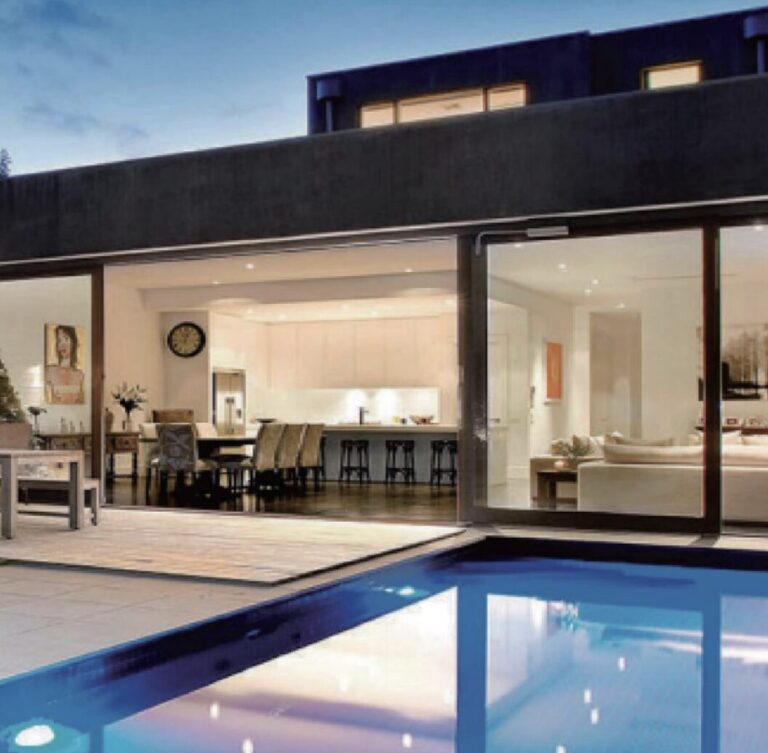
Furnishing a luxury villa is not a furniture shopping exercise. A villa arrives from the builder as architecture — fixed wall lengths, ceiling heights, stair turns, sightlines — and every piece placed inside it either respects that geometry or fights it. That is why developers, architects, and designers treat furnishing as a managed program rather than a series of purchases.
Luxury villa furniture procurement from China is that program executed through Chinese manufacturers: planning, specifying, custom-manufacturing, inspecting, shipping, and installing complete furniture packages for high-end residential villa projects — most of them produced in Foshan, Guangdong. Instead of buying pieces one by one from retail showrooms, the project team converts architectural drawings into a furniture schedule, matches each product family to a specialized factory, approves prototypes, monitors production, runs pre-shipment quality control, and consolidates everything into coordinated containers for installation on site.
This guide is written for the people who run those projects: villa developers, architects, interior designers, real estate companies, luxury residential project managers, and international buyers furnishing one signature villa or a small portfolio of them. It walks through the entire sourcing cycle — requirements, design review, materials, factory matching, prototype approval, production, inspection, packaging, shipping, and installation — and explains the decisions that separate a coherent villa from a container full of beautiful mismatches.
Our Experience Managing Villa Furniture Procurement in China
Skyline Trading Co., LTD. operates from Foshan, Guangdong, one of China’s largest furniture manufacturing regions. Since 2012, our team has worked with international buyers, developers, and designers to coordinate custom furniture production, factory selection, quality inspections, and export logistics.
Unlike marketplace-based sourcing, our process starts from project requirements, drawings, and material specifications. We visit factories, verify production capability, review samples, monitor manufacturing progress, and coordinate shipment preparation before goods leave China.
Quick Answer: How Does Luxury Villa Furniture Procurement From China Work?
| Question | Short Answer |
|---|---|
| Where is the main furniture hub? | Foshan, Guangdong, China. |
| Who uses this service? | Villa developers, architects, interior designers and luxury homeowners. |
| How long does it take? | Usually several months including design approval, production, inspection and shipping. |
| What is the biggest risk? | Buying without factory verification, specifications and quality control. |
| What makes China attractive? | Custom manufacturing capability, supplier ecosystem and project-scale pricing. |
What Is Luxury Villa Furniture Procurement From China?
Luxury villa furniture procurement from China is the end-to-end management of a residential furnishing program — villa FF&E — sourced from Chinese furniture factories rather than local retailers. The buyer defines what every room needs, translates that into written specifications, engages factories (directly or through a sourcing partner) to custom manufacture the pieces, verifies quality at defined gates, ships the finished goods internationally, and installs them in the villa.
In one sentence: luxury villa furniture procurement from China is project-based custom manufacturing and international supply chain management applied to a private residence — not furniture shopping.
A retail purchase starts from what is available in a catalogue; a sourcing project starts from what the architecture requires. The villa has fixed wall lengths, ceiling heights, stair turns, and sightlines; the furniture must fit those constraints, match one material language across every room, arrive on a predictable date, and install without improvisation. That is why the methods come from hospitality FF&E and industrial purchasing — schedules, specifications, samples, inspections — while the goal stays residential: comfort and scale.
What This Guide Covers — and What It Deliberately Excludes
Clear boundaries keep a procurement project (and an article) useful. This guide covers loose and built-in furniture for private villas: living and majlis seating, bedrooms, dining, kitchen cabinetry coordination, walk-in closets, outdoor furniture, and custom joinery, together with the factory, quality control, logistics, and partner-selection decisions around them.
It deliberately excludes three neighbouring topics that buyers often blur together:
- Villa finishing and construction costs — flooring, plaster, stone cladding, and MEP belong to the build budget, not the furnishing budget. Mixing the two corrupts both.
- Hotel FF&E programs — contract-grade hospitality furniture is engineered for commercial abuse cycles, fire codes, and brand standards. A villa needs residential comfort at architectural scale. If you are comparing the two mindsets, our commercial vs residential furniture guide explains the engineering divide, and our hotel furniture budget guide covers the hospitality side in depth.
- Retail import hacks — buying a few catalogue items online is shopping, not procurement, and most of the advice written for that scenario does not survive contact with a real villa project.
Every guide referenced throughout this article — verification, audits, quotations, importing — lives in our China Procurement Knowledge Hub, the parent library for this entire topic.
Why Do Developers Source Villa Furniture From China?
Developers source villa furniture from China because the country offers something local markets rarely combine: deep custom manufacturing capability, an unusually wide material range, cluster-level production speed, and a cost structure that rewards coordinated multi-room packages. For a single statement villa, the draw is bespoke execution. For a row of similar villas, the draw is repeatable specifications at a controlled unit cost.
| Driver | What It Means for a Villa Project | Where It Matters Most |
|---|---|---|
| Custom manufacturing depth | Factories routinely build from drawings, not just catalogues — oversized headboards, wall-length majlis seating, non-standard closet systems | Signature villas with architectural millwork ambitions |
| Material breadth | Solid wood, veneer, engineered boards, metal, natural stone, leather, and performance fabrics available from nearby suppliers | Projects that want one material language across all rooms |
| Cluster efficiency | Upholstery, case goods, metal, glass, and stone workshops operate within hours of each other in Guangdong | Full-package procurement with consolidated shipping |
| Cost structure | Landed cost for custom packages is typically well below equivalent local bespoke quotes — savings scale with volume and standardization | Multi-villa developments and repeat unit types |
| Export experience | Export packing, container loading, and documentation are routine for established factories | International procurement with strict delivery windows |
To be direct about the limits: China is the wrong tool when the move-in date is weeks away, when the design depends on touching materials in person before committing, or when nobody in the project can manage specifications, samples, and inspections across a distance. Procurement from China rewards preparation and punishes improvisation. The rest of this guide is essentially a manual for being prepared.
Why Is Foshan So Important for Furniture Manufacturing?
Foshan matters because it is not one factory town — it is a manufacturing ecosystem. Located in Guangdong province, immediately west of Guangzhou, Foshan hosts one of the densest concentrations of furniture production in the world: upholstery workshops, panel and case-goods plants, metal fabrication shops, glass and stone processors, hardware suppliers, foam and fabric traders, and finishing specialists, all within a compact industrial geography. A significant share of the furniture exported from China is manufactured, finished, or consolidated in this region.
For a villa buyer, the cluster shows up in day-to-day ways. Specialist matching becomes possible: a tailored sofa, a walnut veneer wardrobe, and a powder-coated outdoor set each go to a different specialist, yet stay geographically tight enough to inspect, consolidate, and ship together. Material lead times shrink because veneer, foam, hardware, stone, and glass suppliers sit near the factories, so sample rounds take days rather than weeks. Quality control becomes logistically realistic — an inspector can visit three factories in one day without a domestic flight. And consolidation works: multi-factory cargo stages in a local warehouse and loads into one container in a planned sequence — the difference between a coordinated arrival and five uncoordinated deliveries.
Each product family also has its own strength inside the cluster: upholstery districts for sofas and upholstered beds, panel plants with spray lines and CNC capacity for veneered case goods, board-processing specialists for closets, welding and powder-coating shops near aluminium extruders for outdoor frames, and marble processors within reach for statement tops.
From our work with international projects, the most common mistake is assuming that a large manufacturing cluster automatically means reliable quality. It does not. The factory behind the order must still be verified. Foshan contains world-class plants and workshops that should never receive a luxury deposit, and the only reliable way to tell them apart is on site. Our team operates from Foshan precisely because being here is what makes verification, sample control, and production monitoring practical — the same ground game we describe in our guide to custom furniture manufacturing in Foshan.
China Factory vs Trading Company: Which Should Villa Buyers Use?
A China furniture factory owns production — machines, workers, and control over quality and schedule. A trading company owns nothing on the production floor; it buys from factories and resells, adding margin and a communication layer. Both are legal and both can deliver a good villa, but they fail differently, and knowing which one you are talking to changes how you manage the project.
The trap is misidentification: many entities present themselves as factories while actually trading, and some genuine factories subcontract part of a package without saying so. Verification resolves the question faster than any sales conversation — our supplier verification guide covers the checks step by step.
| Dimension | Direct Factory | Trading Company |
|---|---|---|
| Price | Closest to ex-works cost for its own products | Adds a margin layer, but may access better volume pricing than you could |
| Product range | Limited to its machinery and skills | Broad — can assemble a whole villa package from many plants |
| Quality control | You inspect one floor; accountability is clear | Depends entirely on the trader’s diligence and honesty |
| Best fit | Large single-category volumes (e.g., 20 identical bedroom sets) | Multi-category packages when the buyer lacks local management |
For most villa projects the real decision is not factory versus trader — it is managed versus unmanaged. A full villa touches four to eight specialist producers. Unless you have a procurement team in Guangdong, someone must perform the coordinating role: matching factories, holding one material standard across them, sequencing production, and consolidating cargo. That role can sit with your own team, with a trading company, or with a sourcing partner whose incentive is aligned to your specification rather than to a resale margin. We break down the economics of each route — including the cases where going direct genuinely wins — in our sourcing agent vs direct factory analysis.
Rule of thumb: buy direct from a verified factory when one producer can genuinely make the whole scope. Use a coordinating partner when the scope spans multiple specialisms — which, for a luxury villa, it almost always does.
China Furniture Factory vs China Sourcing Partner for Villa Projects
A third option sits between the two models above, and it fits villa work especially well: a sourcing and manufacturing partner based inside China. The partner does not replace factories — it manages them. For a single product family bought in volume, a direct factory relationship is efficient. For a full villa package assembled from several specialists, the comparison usually looks like this:
| Dimension | China Furniture Factory | China Sourcing Partner |
|---|---|---|
| Product range | Limited to its own machinery and skills | Multiple factories matched per product family |
| Quality control | Internal — the producer checks itself | Independent monitoring against your specification |
| Best for | Single-category volumes | Full villa packages |
| Coordination | Buyer manages schedules, samples, and shipping | Partner manages production, QC, and consolidation |
| Accountability | One plant answers for one scope | One contract answers for the whole program |
The partner model earns its fee only when it enforces what you cannot enforce from abroad: standing at spray lines, rejecting substandard batches before loading, and holding every factory to one frozen material standard. Judge any partner on those behaviors — the framework later in this guide shows how.
What Does the Complete Villa Furniture Procurement Process Look Like?
The complete villa furniture procurement process runs through ten sequential stages: project requirements, design review, material selection, factory matching, prototype approval, production, quality inspection, packaging, shipping, and installation. Each stage produces a document or an approval that the next stage depends on. Skipping a stage does not save time; it moves the cost of that stage to the end of the project, where corrections are most expensive. Although hotel furniture follows similar sourcing discipline, villa projects require different priorities: comfort, personalization and architectural integration.
| # | Stage | Key Output | Risk It Controls |
|---|---|---|---|
| 1 | Project requirements | Room-by-room scope, budget frame, timeline | Undefined scope and moving goalposts |
| 2 | Design review | Furniture schedule with dimensions | Pieces that do not fit the architecture |
| 3 | Material selection | Approved samples and specification sheet | Finish disputes after production |
| 4 | Factory matching | Verified shortlist per product family | Deposits paid to the wrong producer |
| 5 | Prototype approval | Signed-off mockup or golden sample | Mass-producing an unproven design |
| 6 | Production | Progress reports, mid-line checks | Errors repeating across every unit |
| 7 | Quality inspection | Pre-shipment inspection report | Defects discovered after arrival |
| 8 | Packaging | Export-grade packing standard | Transit damage and rework |
| 9 | Shipping | Booked freight, documents, insurance | Port delays and clearance surprises |
| 10 | Installation | Staged assembly, punch list, handover | Site chaos and damaged finished work |
Stage 1 — Project Requirements
Requirements turn “furnish the villa” into a manageable scope. List every room and function — reception and majlis, family living, dining, master suite, secondary bedrooms, guests, home office, walk-in closets, terraces and garden — and decide for each whether it is in phase one or later. Set the intended level per zone: many successful villas raise the specification in the majlis and master suite while keeping guest rooms simpler, all within one material language. Capture the non-negotiables early: target completion date, occupancy status (empty shell, active site, or partly occupied), and any cultural or functional requirements such as formal guest reception seating or prayer-friendly layouts. At the end of this stage you should be able to state, in one page, what is being bought, for when, and at what level of finish.
Stage 2 — Design Review
Design review converts drawings into a furniture schedule — the single most important document in the project. Working from the architect’s plans and the interior designer’s intent, record every piece with a room code, a unique item code, dimensions, materials, finish references, and quantity. Check each critical dimension against the architecture: sofa lengths against wall runs, dining tables against clearances for pulling chairs, wardrobes against finished openings, headboards against corridor and stair geometry. Flag anything that must disassemble for transport. The schedule becomes the basis for quotations, contracts, inspection criteria, and container planning — and later, the arbiter when a delivered piece and a rendering disagree.
A Gulf villa project taught us this the hard way: a majlis sofa was approved against the wall length on plan, but nobody had checked the staircase turn between the entrance hall and the reception room. The sofa arrived beautifully made — and could not pass the turn. It was eventually hoisted through a window by crane, at a cost and embarrassment that one measured site visit during design review would have avoided. We now record stair turns, elevator cabins, and door openings for every ground-floor room before drawings are frozen.
Stage 3 — Material Selection
Materials are selected once, in person, and then frozen. Approve physical samples — not screen colours — for every surface family: wood species and veneer cut, lacquer sheen, metal finish, stone slab, leather or fabric grade, and cushion fills. View wood and stone under lighting close to the villa’s actual lighting plan; a walnut that glows warm in a showroom can go grey under cool LEDs. Where consistency matters across rooms, define a master reference — one approved panel, one metal swatch, one fabric lot — that every factory must match. Write the results into a specification sheet with codes and photos, attach it to every purchase contract, and treat any later change as what it is: a re-pricing event with schedule consequences, not a casual swap.
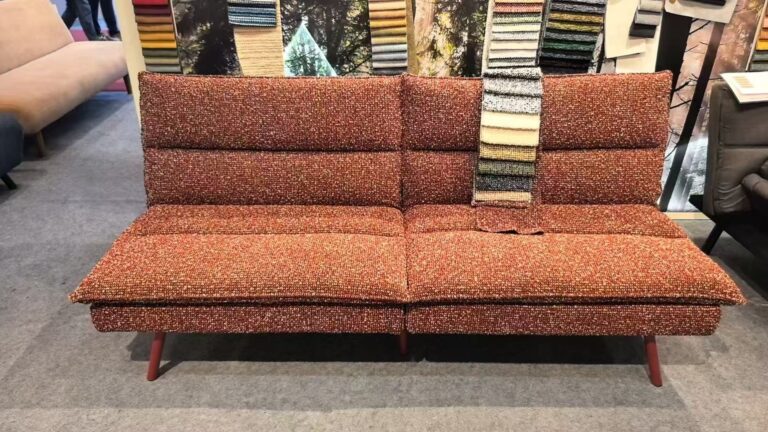
Lighting is the variable buyers forget. On one project, a grey-washed veneer approved under warm showroom LEDs looked almost silver once installed beneath the villa’s cool-white cove lighting. The sample had matched perfectly — under the wrong light. Since then, we review every wood, stone, and metal approval under a colour temperature close to the actual lighting plan, and we note that temperature on the specification sheet.
Stage 4 — Factory Matching
Factory matching pairs each product family with a producer whose actual capability fits it — not whoever sends the prettiest catalogue. Shortlist two or three candidates per family, then verify before any money moves: business licence and export history, a physical audit of the workshop (machines running, finishing line condition, materials storage), and evidence of comparable export work. Confirm who will really make your goods — the audited plant or a subcontractor. Compare quotations on identical specifications, identical Incoterms, and identical packing standards, or the comparison is fiction; our quote comparison guide provides the matrix. Only after verification and like-for-like pricing should deposits be discussed. This stage is where projects quietly succeed or fail, which is why our factory audit guide goes deep on doing it properly.
In real projects, this is usually where problems appear. A factory can show excellent showroom pieces but still lack the production discipline required for a complete villa package. We have seen projects fail not because the factory could not make furniture, but because nobody controlled specifications between different suppliers — three beautiful samples from three workshops, and none of them matching the others’ wood tones or metal finishes. That is precisely the failure this stage exists to prevent.
Stage 5 — Prototype Approval
A prototype converts drawings and samples into physical truth before mass production. For a villa, prototype the high-risk pieces: the majlis sofa (comfort, seat depth, fabric behaviour), the master headboard (scale against the wall), one wardrobe run (hardware, door alignment, internal layout), and one outdoor piece (finish weight, sling or cushion attachment). Review the prototype against the schedule — dimensions, comfort, finish, hardware feel — and sign it off with dated photographs. The approved unit becomes the golden sample: sealed at the factory, referenced in the inspection criteria, and matched by every subsequent unit. Changes requested after approval should be documented and re-priced formally. Teams that skip prototyping usually meet their design for the first time in the container — with no leverage left to fix what they find.
The gate earns its keep in small ways. On one Gulf villa program, the first majlis prototype came back looking exactly like the rendering — and sitting wrong. Seat depth ran six centimetres deeper than specified: comfortable for lounging, exhausting for formal reception posture where guests sit upright. Because the prototype existed, the fix cost one foam revision and ten days. Without it, forty seats would have carried the error into a completed majlis.
Stage 6 — Production
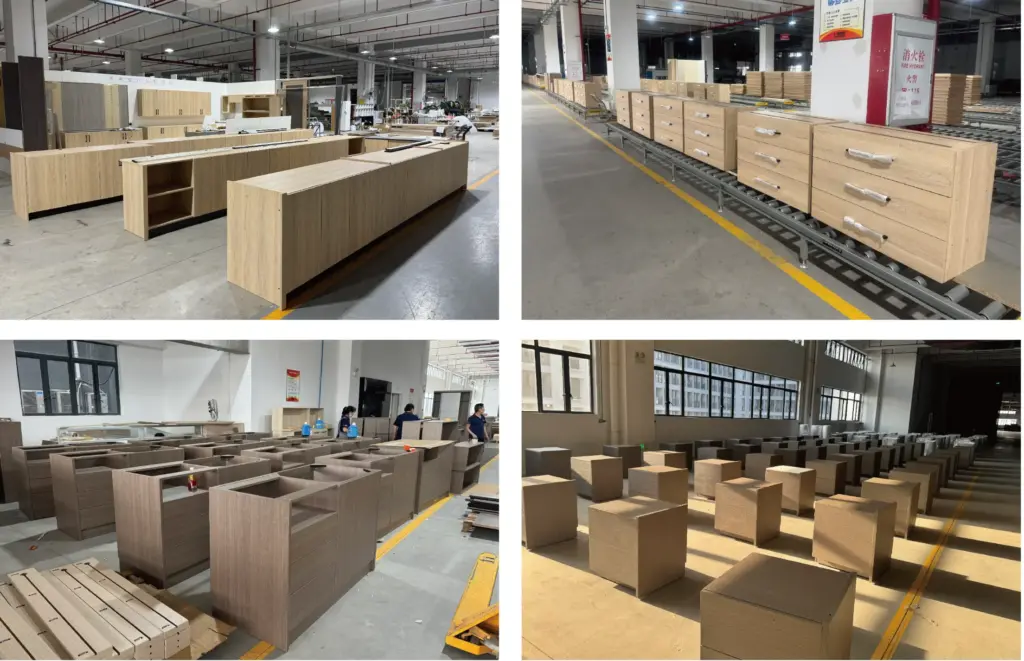
Production is monitored, not assumed. Agree a production calendar per factory with milestones — frame-up, foam and upholstery, spraying, assembly, packing — and require progress reports with dated photos at each milestone. For custom-heavy packages, insert a during-production inspection at roughly the halfway point: this is when systematic errors (a veneer batch off-tone, stitching tension wrong, hardware substituted) are still cheap to correct, before the error multiplies across every unit. Keep change control strict: any modification goes through written approval, never verbal messages to the line. A local presence matters most in this window — being able to stand at the spray line the week your panels are coated is the difference between monitoring and hoping.
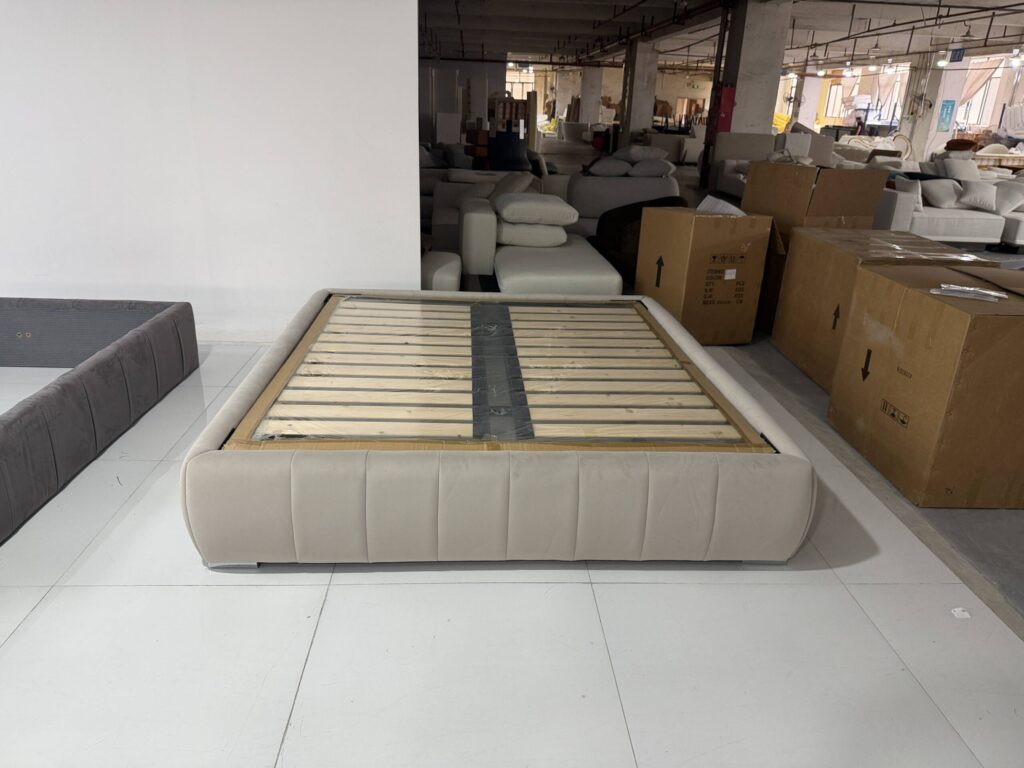
Milestone photos earn their value in details. During one villa order, progress shots showed headboards moving on schedule — but the fabric lot code visible in the corner of one photo did not match the approved specification. The factory had substituted a visually similar grade with a lower rub count. Caught at week three, the fix meant replacing fabric on twelve units; caught at delivery, it would have meant a dispute across an ocean.
Stage 7 — Quality Inspection
Pre-shipment inspection (PSI) is the last gate before your balance payment and your cargo part ways with any leverage. Inspectors check every piece — or a defined sampling of large runs — against the schedule, the approved samples, and the golden sample: dimensions, colour and finish match, structural soundness, drawer and door operation, upholstery seams and foam recovery, hardware completeness, labelling by room, and export packing condition. Findings are documented with photos; failures trigger defined remedies agreed in advance — repair, remanufacture, replace, or discount. Payment timing should respect this gate: structures that release the majority of the balance only after PSI acceptance keep the buyer’s incentives alive. The detailed criteria we apply are outlined in the quality control section below.
A recent inspection shows why the gate matters. On a large villa package, our inspectors failed eight wardrobe doors for lacquer micro-cracks — invisible in photographs, obvious under raking light. The container was held, the doors were remade, and the shipment left twelve days later. Had those doors reached site, the remedy would have been months of rework coordination instead of twelve days inside the factory.
Stage 8 — Packaging
Export packaging is engineering, not wrapping. Furniture travels for weeks, gets handled by forklifts and cranes, and crosses climates. Specify corner protection and edge guards on every exposed surface, foam or bubble interleaving between finished faces, carton or crate construction appropriate to the piece (crates for stone tops, glass, and fragile statement items), and moisture protection for ocean transit — silica loads or container desiccants for wood-bound cargo heading to humid destinations. Require room-code labelling on every carton so installation teams can stage by floor without opening everything. Cushions and soft goods often ship separately or vacuum-packed to protect shapes and save volume. Photograph the packed cargo per carton; those photos settle damage claims quickly.
Stage 9 — Shipping
Shipping planning starts months before sailing, not at the dock. Multi-factory cargo consolidates at a warehouse near the cluster, quantities get checked against the packing list, and containers load in a deliberate sequence — heavy low, fragile protected, room-coded groups positioned so the first rooms to install unload first. Choose Incoterms consciously: FOB keeps freight and insurance with you, CIF shifts them to the seller, DDP pushes responsibility to your door at a price. Book sailings against the installation calendar with buffer for peak-season space shortages, arrange marine insurance, and prepare the document set early so customs clears without drama. Our importing from China guide covers the terms and paperwork in detail.
Stage 10 — Installation
Installation succeeds on site conditions and sequence, not effort. Before the container sails, confirm the path of entry: gate width, elevator cabin dimensions, stair turns, and door openings against the largest assembled pieces — and confirm which units were engineered to knock down for exactly this reason. Schedule installation after wet trades and painting are complete, or protect finished work obsessively. Unpack room by room in the planned order, assemble with the right crew (white-glove teams for upholstered and finished pieces, not general labour), anchor tall units to walls, and inspect each piece against the PSI report as it is unwrapped — transit damage claims are time-sensitive. Close with a punch list, fix minor site scratches on the spot, and archive the as-built schedule, care instructions, spare hardware, and finish leftovers for future additions.
Installation planning also means planning around buildings, not only furniture. On one project, the tower’s service elevator went out of operation the week our containers arrived, and closet modules built at full width could not travel the stairwell alternative. The modules waited three weeks in a warehouse until the elevator returned. Every closet system we produce now ships in module sizes that pass the smallest measured path of entry — even when that means extra joints on the shop drawings.
Which Furniture Categories Make Up a Luxury Villa Package?
A luxury villa package is organized by room function, and each category carries its own sourcing logic — its own factories, tolerances, and failure modes. Treating all of it as one homogeneous “furniture order” is the fastest route to a disjointed result.
| Category | Typical Scope | Procurement Notes |
|---|---|---|
| Living room / majlis | Sofas, lounge chairs, coffee and side tables, consoles, media units | Highest visual priority; comfort specs matter as much as looks |
| Bedrooms | Beds, headboards, nightstands, dressers, benches, reading chairs | Match mattress standards to destination market; integrate power where designed |
| Dining rooms | Dining tables, chairs, buffets, display cabinets | Seat count, extension logic, and chair-pull clearances drive dimensions |
| Kitchens | Cabinetry, islands, pantries (loose furniture interface) | Coordinate with MEP and appliance cutouts; measure after site finishes |
| Walk-in closets | Wardrobe systems, islands, shelving, mirrors, integrated lighting | Most measurement-sensitive category; effectively architectural joinery |
| Outdoor furniture | Lounge sets, dining sets, daybeds, planters | UV, heat, and moisture specs differ completely from indoor pieces |
| Custom cabinetry | Built-ins, TV walls, bar units, study joinery, doors and panels | Shop drawings and site dimensions govern; install sequencing critical |
Living Room and Majlis
The living room — and in Gulf villas, the majlis — carries the project’s first impression, so it justifies the deepest specification work. Seat depth, foam density, and frame construction determine how the seating feels in year three, not just in the showroom; fabric selection balances texture against cleanability in a space that entertains. Scale is the common error: sofas sized for apartments disappear against six-metre walls. Upholstery of this level belongs with specialist makers — the same craft base we describe in our custom sofa manufacturing guide, adapted here to residential comfort rather than contract durability ratings.
Bedrooms
Bedroom procurement revolves around the bed wall. Oversized, made-to-measure headboards anchor the master suite; nightstands follow at a height that works with the mattress, not the catalogue. Decide early whether nightstands integrate charging and lighting — wiring added after production is visible forever. Secondary bedrooms should share the master’s material language while simplifying detail, which reduces spray-batch conflicts and cost. Confirm mattress sizes against the destination market’s standards before frames are built; an imported king frame and a locally sold mattress occasionally disagree by centimetres that matter.
Dining Rooms
Dining procurement is arithmetic before aesthetics: count the regular seats, decide the extension behaviour, and reserve chair pull-back and circulation space on the plan before fixing table length. Stone-topped tables — marble or sintered stone — need slab approval and, for book-matched patterns, direction and numbering agreed at the processor. Buffets need back-of-piece depth clearance if they sit against walls with doors. Chairs deserve a prototype even when the table does not: joint quality and recline behaviour show up only in the flesh.
Kitchens
Kitchen cabinetry sits at the border between furniture sourcing and construction, so define the interface explicitly. Whoever measures after site finishes wins the tolerance battle — cabinet runs should be surveyed once floors and walls are done, with gaps designed into the drawing rather than discovered on site. Appliance cutouts, sink runs, hood ducting, and lighting circuits must be frozen before production. Factories in the Foshan region handle high-specification residential kitchens routinely; the procurement task is less about finding capability and more about controlling the information flow between your MEP drawings and their shop drawings. Villas designed around large-scale entertaining sometimes add back-of-house catering lines; that equipment follows a separate commercial specification path, described in our commercial kitchen equipment guide.
Walk-in Closets
Walk-in closets are the most measurement-critical category in the package — they are, functionally, fitted architecture. Systems combine panels, hanging zones, drawers, shoe racks, islands, mirrors, and increasingly integrated lighting and sensors. Survey the room after finishes, design to the survey (not the plan), and approve a full shop-drawing set including door swings and drawer extensions. Hardware quality — slides, hinges, pull-out mechanisms — separates a closet that feels expensive daily from one that annoys daily; specify soft-close and load ratings explicitly.
Outdoor Furniture
Outdoor pieces live in a different physics: intense UV, heat cycling, dust, and in coastal villas, salt air. Frames lean toward powder-coated aluminium or treated teak; slings and cushions need solution-dyed, UV-stable textiles with replaceable covers; stone and ceramic tops must tolerate thermal shock. Indoor-looking outdoor furniture made with indoor materials fades and fails within seasons — a recurring and avoidable loss. Because construction and coating dominate outcomes here, we apply the same verification logic described in our outdoor furniture manufacturing guide: inspect the welding and the coating line, not just the sample chair.
Custom Cabinetry and Built-ins
Custom cabinetry — TV walls, bar units, study joinery, feature doors — is where the villa’s material language either comes together or falls apart, because these pieces touch the architecture directly. They demand shop drawings reviewed against site dimensions, finish samples matched to the loose furniture palette, and an installation slot sequenced with the trades around them. Tolerances should be stated (reveals, gaps, scribe allowances), and wall-fixing points coordinated with the structure. Done well, built-ins are what make a furnished villa read as one designed object rather than a collection of purchases.
Which Materials Should You Specify for Luxury Villa Furniture?
Materials decide longevity, appearance, and a large share of cost — and in procurement, they are the difference between a specification and a hope. Every material below is legitimate in a luxury villa; what matters is using each where it performs and writing it down precisely.
| Material | Best Use in a Villa | What to Specify | Watch-Outs |
|---|---|---|---|
| Solid wood | Frames, legs, structural parts, statement tabletops | Species (oak, walnut, ash), kiln-dried, moisture content suited to destination climate | Movement with humidity; solid-wide panels can warp — engineer for it |
| Veneer | Large flat surfaces, cabinet fronts, matched patterns | Cut type, species, matching method (book-match, slip-match), protective coat | Batch colour drift — approve master panels per production batch |
| MDF / engineered board | Painted panels, closet systems, curved forms | Density grade, emission class (E1/E0), edge treatment, substrate behind veneer | Weight and screw-holding; poor quality board telegraphs through paint |
| Metal | Table bases, frames, legs, trim, outdoor structures | Steel vs aluminium, tube wall thickness, coating type and thickness | Thin-wall “luxury” frames that flex; coating chips at cut edges |
| Marble / stone | Dining tops, consoles, islands, accent surfaces | Slab approval (not chips), thickness, edge profile, sealing, book-match plan | Natural variation and porosity; set expectations for veining and care |
| Leather | Sofas, majlis seating, headboards, desk tops | Type (full-grain, corrected, split), thickness, dye method, hide origin expectations | Aniline beauty stains easily; protected leathers suit family spaces |
| Fabrics | Upholstery, drapery interfaces, outdoor cushions | Composition, double-rub rating, lightfastness, cleanability, fire treatment where required | Residential-grade fabrics (roughly 10–15k double rubs) wear fast in social rooms; performance grades start around 30k+ |
Three cross-material rules keep a villa coherent. First, freeze one metal finish and one dominant wood tone for the whole house — mixed metaphors read as accidents. Second, match material choices to climate: Gulf sun punishes unprotected textiles and dark outdoor finishes, and humid coastlines punish unfinished board edges. Third, put emission classes in writing for boarded interiors — low-formaldehyde boards (E1 or stricter) matter in tightly sealed, air-conditioned homes. None of this is exotic; it is simply the habit of writing what the showroom assumes.
How Does Quality Control Work for Villa Furniture Made in China?
Quality control for China-made villa furniture works as three sequential gates — factory inspection before ordering, production monitoring during manufacturing, and pre-shipment inspection before the balance payment and loading. Each gate exists to catch a specific class of failure while it is still correctable, and each one loses most of its value if skipped.
| QC Gate | When | What It Verifies | Failure It Prevents |
|---|---|---|---|
| Factory inspection / audit | Before deposit | Legal entity, real manufacturing capability, equipment, processes, export track record | Paying a middleman or a workshop that cannot deliver the spec |
| Production monitoring | During manufacturing | Materials match approvals, milestones hold, errors caught at first unit | Systematic defects repeated across the whole order |
| Pre-shipment inspection | After production, before loading | Dimensions, finishes, function, quantities, packing against the schedule and golden sample | Discovering problems after arrival, with no leverage |
Factory Inspection Before You Pay
The first inspection is of the factory itself. On-site audits confirm the entity is real and capable: machines actually producing (not a rented showroom), finishing lines maintained, raw materials stored correctly, and staff who recognise your product when asked. Audit reports should be read critically — the tells that separate a working plant from a paper one are easy to miss from abroad. For villa buyers, the audit also answers the quieter question: is this producer honest about what it subcontracts?
Audit visits produce moments worth remembering. On one pre-deposit inspection, the workshop we visited ran clean floors and modern machines — and its finishing booth stood idle in the middle of a working week, which the manager explained as “finishing done next door during busy months.” The quotation was attractive; the structure behind it was not. The order was re-matched to a plant with its own line at a slightly higher price, and the shipment left on schedule. The audit fee felt expensive for one hour — until it redirected a deposit.
Production Monitoring While Goods Are Made
Monitoring keeps the specification alive during the weeks your order occupies a production slot. Practical tools: milestone photo reports tied to the production calendar, a during-production check on custom-heavy orders, and immediate escalation paths when a milestone slips. The highest-value moment is the first article off each line — reviewing the first completed sofa or wardrobe catches calibration errors while they affect one unit, not forty. Monitoring also protects schedule: a slipping milestone seen in week two can be recovered; the same slip discovered in week ten becomes a delayed villa.
Pre-Shipment Inspection Before Loading
The PSI is conducted against a checklist derived from your schedule and approvals:
- Quantity and item codes match the packing list and purchase order
- Dimensions within agreed tolerances for every inspected piece
- Colour and finish match the approved samples and golden sample under neutral light
- Doors, drawers, and mechanisms operate cleanly; soft-close functions work
- Upholstery seams, foam recovery, and fabric pattern alignment pass
- Glass, stone, and mirror items free of chips, scratches, and cracks
- Hardware packs, feet, anchors, and assembly instructions complete per carton
- Room-code labels correct and export packing intact (corner protection, interleaving, desiccants)
Findings are classified (critical, major, minor) with photographic evidence, and remedies — repair, remake, replace, discount — execute before the container closes. Buyers sometimes cancel inspections to save a small fee; in our experience that trade is almost always negative, because the inspection fee is a rounding error beside the cost of returning or reworking furniture across an ocean.
How Much Does a Luxury Villa Furniture Package Cost in China?
For planning purposes, luxury villa furniture packages from China are usually calculated by scope rather than villa size alone. Square metres tell you how large the villa is; the furniture schedule tells you what the budget must cover — and the two numbers regularly disagree.
A smaller luxury villa can easily require a larger furniture budget than a bigger one when its scope includes:
- Custom joinery — built-ins, TV walls, and closet systems measured to site dimensions
- Imported materials — book-matched stone, specialty veneers, and performance textiles specified over local alternatives
- Upholstery specifications — higher foam densities, leather grades, and abrasion ratings in social spaces
- Outdoor areas — terraces, pergolas, and gardens furnished to indoor quality levels
- Installation requirements — occupied sites, tight access, white-glove crews, and phased delivery
The working method is the same at any budget level: price the furniture schedule item by item, add logistics, duties, and installation, then hold a contingency for late changes. The six levers below explain why two quotations for “the same villa” rarely match — and which of them a buyer actually controls.
What Drives the Cost of Luxury Villa Furniture Procurement from China?
Cost in villa furniture procurement is driven by six factors — villa size, material selection, degree of customization, quantity, shipping, and installation — layered over one governing principle: price follows specification. Two villas of identical area can sit an order of magnitude apart in furniture budgets because one specified veneer-matched joinery and book-matched marble while the other specified “nice modern pieces.” That is why serious estimates are built from the furniture schedule, never from square metres alone.
| Cost Factor | Direction of Impact | Planning Note |
|---|---|---|
| Villa size and room count | Scales volume of pieces and containers | Phase the schedule; furnish priority zones first without breaking the material language |
| Materials | Highest single lever on unit cost | Concentrate premium materials on hero pieces; simplify secondary rooms |
| Customization level | Rises with engineering time, sampling, and one-off setups | Customize what touches walls; use made-to-measure or catalogue-modified for freestanding pieces |
| Quantity and repetition | Repetition lowers unit cost; one-offs carry full setup cost | Multi-villa developers should standardize unit types before pricing |
| Shipping | Adds a meaningful percentage on top of ex-works pricing; volatile with freight markets | Consolidate to full containers; compare FOB vs CIF vs DDP on total landed cost |
| Installation | Scales with site complexity and piece count | Budget professional crews, site protection, and time for punch-list closure |
A defensible budget is assembled, not guessed: build the furniture schedule, obtain like-for-like quotations against it, add logistics and duties for the destination, add installation, then hold a contingency for late design changes and site realities — because in furnishing projects there are always late design changes.
We advise clients to stop asking “what does a villa cost to furnish?” and start asking “what does this schedule cost, produced to this specification, delivered to this city?” The first question produces marketing numbers. The second produces a budget you can defend to an investor.
What Most Villa Buyers Get Wrong When Sourcing Furniture From China
In our Foshan operation, five failure patterns account for most of the trouble we are called in to fix. Buyers search for suppliers before preparing drawings. They compare prices without comparing specifications. They choose factories by photographs. They ignore installation planning until the container is already booked. And they underestimate how much the material approval step decides the final result.
None of these are sourcing failures — they are process failures, which is good news, because process can be fixed before money moves. Beyond those five patterns, these are the mistakes we see repeated across villa projects regardless of budget:
- Buying from pictures. Renderings and reference photos are intentions, not specifications. Without dimensions, materials, and finish codes in writing, every factory will interpret differently — and all of them will believe they matched your idea.
- No furniture schedule. Without a central document, quotations are incomparable, inspections have no criteria, and the container becomes a surprise.
- Skipping verification. Deposits sent to entities that were never audited — sometimes to traders posing as factories, occasionally to nothing at all. Read our rundown of China procurement risks before wiring anything.
- Comparing quotes on different bases. One offer includes export packing and FOB; another quotes ex-works with thin packaging. The “cheap” quote is usually just quoting less.
- Approving samples verbally. If the approval is not documented — signed sample, photos, dates — the factory’s memory and yours will diverge exactly when it is expensive.
- Ignoring the path of entry. Sofas that cannot turn the stair landing, headboards that do not fit the elevator, closets assembled on the wrong floor. Measure routes before production, not after arrival.
- Treating the villa like a hotel order (or vice versa). Contract-grade durability specs inflate cost unnecessarily; residential-grade construction in a social majlis fails early. Know which standard you are buying.
- Cancelling inspections to save fees. The PSI is the last moment defects are the factory’s problem. After loading, they are entirely yours.
- Paying unbalanced structures. Heavy front-loaded payments remove your leverage precisely when quality issues surface. Stage payments against verifiable milestones.
- Leaving outdoor and accessories to the last minute. Outdoor sets, mirrors, consoles, and bedding-adjacent pieces bought hastily at the end rarely match the frozen material language.
- Managing by scattered chats. Decisions spread across messaging apps evaporate. One thread, one document set, one approver.
- Underestimating installation. Furniture that arrives flawlessly can still be scratched into mediocrity by the wrong crew on an unprepared site.
China Procurement vs Local Purchasing: Which Makes Sense for a Villa?
Neither channel wins universally — the right answer depends on timeline, customization depth, and how much project management the buyer can bring. Local purchasing buys speed and tangibility; sourcing from China buys customization depth, coherence, and cost efficiency at package scale. Mature projects often use both deliberately.
| Criterion | China Procurement | Local Purchasing |
|---|---|---|
| Customization | Full bespoke from drawings at every product family | Strong in local workshops for joinery; limited elsewhere to catalogue modifications |
| Material range | Very wide, with cluster supply chains | Curated by what showrooms stock or import |
| Lead time | Weeks to months including production and freight — plan early | Immediate to short for stocked goods; variable for local bespoke |
| Cost at package scale | Typically lower landed cost for comparable custom scope | Competitive for a few stocked pieces; escalates fast for full bespoke packages |
| Touch and feel before buying | Requires samples, prototypes, or a factory visit | Showroom-first experience |
| Management burden | Specification, QC, and logistics discipline required | Lower friction for small scopes |
| Coherence across the villa | High — one specification governs all factories | Fragmented unless curated aggressively |
| Reorder years later | Possible when files and golden samples are archived | Subject to showroom inventory turnover |
A pragmatic hybrid we often recommend: procure the architectural-touch pieces — closets, built-ins, majlis seating, master bed wall, dining statement table — from China against the frozen specification, and fill flexible freestanding accents locally where speed matters. The condition for the hybrid to work is the same as for full procurement: the material language must be fixed first, so local additions join the system instead of arguing with it.
How Do You Choose the Right China Villa Furniture Partner?
Choosing a China villa furniture partner is a capability-and-alignment decision, and it should be evaluated with the same rigour as the factories themselves. The partner’s job — whether an internal team, a trading company, or a sourcing and manufacturing partner — is to hold your specification constant across multiple producers, keep the calendar honest, and absorb the distance between your office and the factory floor.
| Criterion | What to Verify | Red Flags |
|---|---|---|
| On-the-ground presence | Physical office/team in the manufacturing region; ability to visit lines unannounced | Remote-only operation; “inspection” offered as outsourced day-trips |
| Verification discipline | Structured audits before deposits; willingness to share findings honestly | Pushing deposits before any audit; glossy profiles without substance |
| Specification literacy | Reads drawings, writes specs, manages sample libraries and golden samples | Quotes from photos; discomfort with written specifications |
| Multi-factory coordination | Track record assembling packages across specialist plants with one finish standard | Single-factory relationships presented as full-package capability |
| Quality control system | Defined gates, checklists, photo reporting, rejection remedies in advance | “We check everything” with no documented process |
| Logistics competence | Consolidation workflow, container planning, Incoterms fluency, document accuracy | Freight treated as an afterthought; vague answers on customs papers |
| Commercial transparency | Clear fee or margin model; quotes traceable to specifications | Opaque markups; resistance to like-for-like comparisons |
| Communication | Named project manager, single approval channel, written change control | Everything negotiable verbally; different answers from different staff |
Run every candidate through a short practical test before committing: send one real room’s schedule and ask for a sourcing plan — which factories, which verification steps, what timeline, what documents. Serious partners respond with structure; intermediaries respond with enthusiasm. And before signing anything, make sure you know what “verified” should mean for your scope.
Several of the programs we manage each year arrive as rescues: production already split across four or five workshops, approvals scattered through chat threads, and no frozen material standard anywhere. In one such handover, three different “white” finishes were in simultaneous production across a single master suite. Unifying the palette cost a few weeks and some remade panels; had the program started with a governing specification, it would have cost one drawing revision.
Why Work With Skyline Trading Co., LTD.?
Skyline Trading Co., LTD. is a China-based sourcing and manufacturing partner headquartered in Foshan, Guangdong — inside the furniture cluster this guide describes — operating since 2012 from a 1,500-square-metre showroom with a dedicated project team. We work with villa developers, architects, interior designers, and international buyers who need a full furniture program executed, not a supplier list forwarded.
Our role across a villa procurement project maps directly to the stages above:
- Requirements and design review — converting plans and mood boards into a priced, manufacturable furniture schedule
- Factory matching and verification — pairing each product family with audited specialist factories, confirmed on the factory floor before deposits move
- Custom manufacturing management — shop drawings, sample and prototype approvals, golden samples, and change control
- Quality control — production monitoring and pre-shipment inspection against the schedule, with documented remedies
- Logistics and project management — multi-factory consolidation, container planning, export documentation, and delivery sequencing
- Broader scope when needed — the same structure extends to smart home systems, lighting, tiles, and cladding, so the villa’s technology and finishes join one coordinated program
Because we sit inside the manufacturing region rather than above a marketplace listing, verification visits, mid-production checks, and container loading supervision are routine operations, not special requests. Our background spans hospitality and residential programs across the Middle East and beyond — selected references are available on our projects page, and our company story is on the about page.
Frequently Asked Questions About Luxury Villa Furniture Procurement from China
How much does luxury villa furniture from China cost?
There is no honest single number, because cost follows the furniture schedule and specification, not the villa’s size alone. A defensible figure is built by listing every piece with dimensions and materials, obtaining like-for-like factory quotations, then adding logistics, duties, installation, and a contingency. As a planning habit, expect logistics and installation to add a meaningful double-digit percentage on top of manufacturing, and expect customization and premium materials — not room count — to be the biggest cost levers.
Is China good for luxury villa furniture?
Yes — for customized, multi-room packages where design coherence and bespoke execution matter. China’s manufacturing clusters combine custom capability, material breadth, and export experience that most local markets cannot match at package scale. The caveat is management: results depend on verification, samples, and quality control. Well-managed programs achieve excellent outcomes; unmanaged ones meet their furniture for the first time at customs.
What is the best city in China for villa furniture sourcing?
Foshan, in Guangdong province, is the leading hub — it concentrates upholstery, case goods, cabinetry, metal, and finishing specialists within a compact area, with Guangzhou’s lighting and décor clusters adjacent. The concentration enables specialist factory matching, fast sampling, realistic inspection logistics, and multi-factory container consolidation. Capability is guaranteed by the cluster; quality is guaranteed only by verifying the individual factories you select within it. Many of these factories also list on online marketplaces — a listing suits small catalogue orders, but a multi-room custom package still depends on on-site verification.
How do I verify a Chinese furniture factory?
Verify in layers: confirm the business licence and export history from registries; audit the physical facility — machines running on real production, finishing line condition, materials storage; confirm the entity will itself manufacture your order rather than subcontract silently; and validate capability with a paid sample or prototype before large deposits. Remote checks alone are insufficient. A structured audit before any payment is the single highest-value hour in the entire project.
How long does custom villa furniture production take?
Plan in phases: specification and sampling typically run several weeks, custom production commonly runs in the range of eight to sixteen weeks depending on complexity and factory scheduling, and ocean freight adds further weeks by destination lane. Prototyping adds time upfront and repays it by preventing rework. The practical rule: engage the supply chain as soon as the design direction is stable, and hold schedule buffer before the move-in date rather than after the container sails.
What is villa FF&E?
Villa FF&E (furniture, fixtures, and equipment) refers to the movable furnishing scope of a residential villa project — seating, beds, case goods, tables, closet systems, lighting fixtures, and mirrors — as distinct from construction and finishing works. Borrowed from hotel project practice, the term signals that the villa is being furnished as a managed program with specifications, budgets, and quality gates, rather than decorated ad hoc.
Can Chinese factories build from my interior designer’s drawings?
Yes — building from drawings is standard practice in the export furniture industry. The working pattern: your designer supplies plans, elevations, and material references; the factory (or your sourcing partner) converts them into shop drawings for approval; samples or prototypes validate the interpretation; production follows the approved documents. The critical discipline is freezing an approved drawing set before cutting material, after which changes are formally re-priced.
Should I buy directly from factories or use a sourcing partner?
If one verified factory can genuinely produce your entire scope and you can manage specifications, inspections, and consolidation yourself or through local staff, direct purchasing maximizes control. If the package spans multiple specialisms — which a full villa almost always does — a coordinating partner usually delivers better total outcomes: unified specifications across factories, continuous QC presence, and consolidated shipping. Evaluate partners on transparency and process, not on claims of eliminating middlemen.
How is villa furniture different from hotel furniture?
Hotels buy contract-grade furniture engineered for intensive commercial use, fire compliance, and brand standards, priced per key across hundreds of identical rooms. Villas buy residential furniture at architectural scale — comfort, proportion, and material coherence across varied rooms, usually as one-offs or small repeats. Hotel durability specifications applied to a villa inflate cost without benefit; residential construction in a villa’s social spaces wears prematurely. Buy to the building’s true use pattern.
Which materials should I specify for a villa in a hot, sunny climate?
Prioritize UV-stable, heat-tolerant selections: solution-dyed performance fabrics with high lightfastness indoors near glass, protected or semi-aniline leathers for family areas, kiln-dried hardwoods and quality engineered boards with sealed edges, and for outdoors, powder-coated aluminium or teak frames with UV-rated cushions and replaceable covers. Specify low-emission boards (E1 or stricter) for air-conditioned interiors, and approve stone from full slabs rather than chips.
How many containers does a full villa package need?
Most single-villa packages consolidate into one to a few 40-foot high-cube containers, driven by the volume of upholstered pieces, closets, and outdoor sets and by how much disassembly was engineered in. Multi-villa developments scale roughly with unit count once designs standardize. The planning point is less the count than the sequence: load so that the first rooms to be installed unload first, and keep fragile and stone items crated and accessible.
What is a pre-shipment inspection and is it really necessary?
A pre-shipment inspection is a documented check of finished goods — quantities, dimensions, finishes, function, packing — against your approved schedule and samples, performed before the container is sealed and the balance paid. It is necessary because it is the last point at which defects are the factory’s problem and remedies are enforceable. Skipping it transfers every production error to your site, where fixes cost multiples and delay occupancy.
How do payments to Chinese furniture factories usually work?
Common structures stage payments against verifiable milestones — for example, a deposit to begin production and the balance after pre-shipment inspection acceptance, with variations negotiated by order size and relationship. The principle matters more than the percentages: keep enough of the payment contingent on inspection results that the factory shares your motivation to resolve defects before loading. Put the schedule, remedies, and payment triggers in the purchase contract.
How Do You Start a Luxury Villa Furniture Procurement Project?
Start with three documents, in this order: a room-by-room scope list, a furniture schedule drafted from your plans, and a realistic timeline working backwards from occupancy. With those in hand, request like-for-like quotations, verify the factories behind them, and commit to approving samples and prototypes before mass production. Whether you run the program internally or with a partner, the specification is the project — guard it, document it, and let every factory and shipment serve it.
If you are planning a villa program and want the sourcing side managed from inside the manufacturing cluster, send us your project details — drawings, room list, and target dates — and the Skyline Trading Co., LTD. team in Foshan will review your scope and propose a structured sourcing plan. For the Arabic edition of this guide, visit تأثيث الفلل من الصين.