
Author: Angie Sami — Procurement Manager, Skyline Trading Co., LTD (8 years in hospitality and building materials sourcing, 50+ aluminum factory audits across Foshan, Guangzhou, and Zhongshan). Connect on LinkedIn →
Last updated: July 12, 2026 | Reading time: 18 minutes | Sources: UN Comtrade, USITC, EU TARIC, LME, SASO SABER
Key Takeaways — Aluminum Door Import Cost 2026
- FOB pricing range: $70–250/m² depending on product type, glass specification, and hardware grade
- Landed cost uplift: 30–50% above FOB price for GCC destinations (freight, duty, VAT, customs)
- Savings vs. local sourcing: 30–50% for commercial projects, but narrows to 10–15% for small orders under 20 m²
- Total hidden costs: $2,500–4,500 beyond obvious FOB + freight + duty (FX spread, demurrage, packaging, sampling)
- Lead time from China to GCC: 11–15 weeks from order confirmation to job site delivery
- Common mistake: 60% of first-time importers skip specification comparison and pay 20–40% more in rework or replacement
Table of Contents
- Introduction: The Real Cost Equation
- Why China Dominates Aluminum Door Manufacturing
- Types of Aluminum Doors and Windows
- FOB Pricing Per Square Meter
- Complete Aluminum Door Import Cost Breakdown
- Country-Specific Duties and Import Cost Impact
- Total Cost of Ownership Analysis
- Illustrative Cost Example: Dubai Hotel Project
- Hidden Costs That Surprise First-Time Buyers
- How to Compare Supplier Quotes
- Market-Specific Compliance Requirements
- Cost-Saving Strategies
- Factory Verification Checklist
- Quality Control Through Production
- Shipping and Logistics Timeline
- Definitive Import Planning Checklist
- Frequently Asked Questions
- Related Resources
Real Aluminum Door Import Cost from China: Complete 2026 Landed Cost Guide
If you are reading this, you have probably received a factory quote from Foshan or Guangzhou that looks too good to be true. A thermally broken casement window with double Low-E glazing at $130 per square meter, when your local supplier in Dubai or Riyadh quotes $280. The natural reaction is to wire the deposit immediately.
Do not.
That $130/m² FOB quote covers production only. It does not include inland trucking to the port, export customs clearance, ocean freight, marine insurance, destination duties, VAT, customs brokerage, port handling, inland delivery, pre-shipment inspection, bank wire fees, or currency conversion spread. By the time that container clears customs at Jebel Ali or Jeddah Islamic Port, the real aluminum door import cost per square meter will be closer to $175–225.
This guide breaks down every layer of that gap — from factory-floor pricing through to job-site delivery — so you can compare a China-sourced quote against a local supplier with full visibility. Based on real Q2 2026 pricing data, 50+ factory audits across Guangdong’s aluminum manufacturing clusters, and actual landed cost calculations for GCC, US, UK, EU, and Australian markets. If you need a direct landed cost estimate for your project, contact our procurement team for a factory-verified quote.
If you have not yet verified your supplier, read our aluminum supplier verification guide before reviewing any figures below — a low quote from an unverified trading company is not a real cost saving.
Why China Dominates Aluminum Door and Window Manufacturing
China is the world’s largest exporter of aluminum doors and windows by a wide margin. According to UN Comtrade data, China accounts for approximately 22% of global trade in HS 7610.10 (aluminum doors, windows, and frames) — more than the next five exporting countries combined. The US imported $143 million worth of aluminum doors and windows from China in 2025 alone, making China the single largest foreign supplier to the American market.
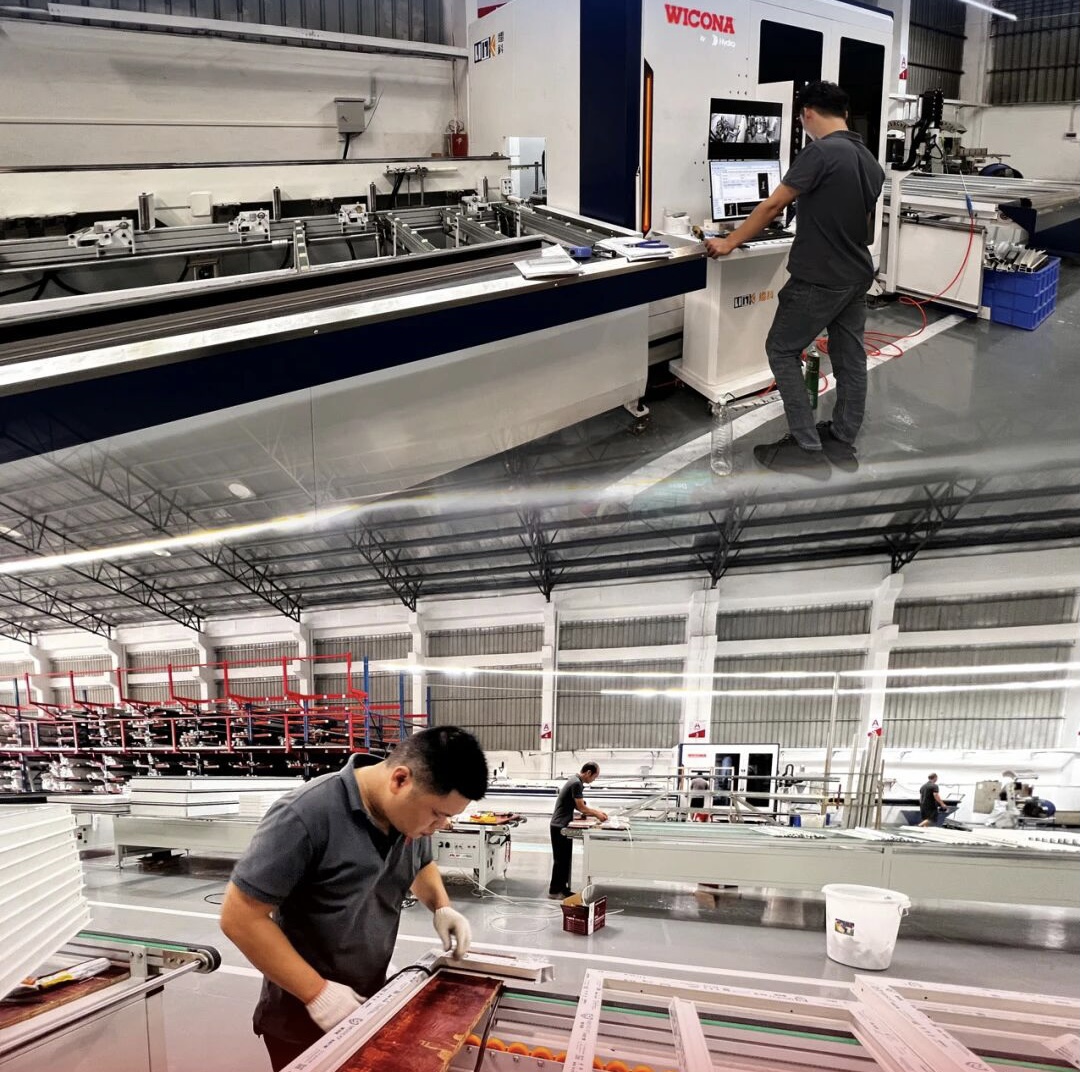
The manufacturing hub that matters most is Foshan, Guangdong province. Within a 30-kilometer radius, the world’s highest concentration of aluminum extrusion plants, powder coating lines, hardware manufacturers, and glass processors are located. The Guangdong cluster alone accounts for an estimated 42% of China’s aluminum window export capacity, followed by Zhejiang (28%) and Shandong (15%).
- Aluminum extrusion plants supplying 6063-T5 and 6063-T6 profiles at prices generally 30–50% below European equivalents (exact pricing varies with LME index fluctuations)
- Powder coating and anodizing lines at competitive rates due to the density of service providers in the region
- Hardware manufacturers producing hinges, multi-point locks, and handles at 40–60% below European prices
- Glass processors supplying Low-E double-glazed units at significant cost advantages
- Hundreds of fabrication workshops with combined output supplying projects worldwide
This industrial density — not cheap labor — is the real source of China’s cost advantage. A profile extruded in the morning can be powder-coated by afternoon and fabricated into a finished window by the next day. No cross-border trucking, no customs delays, no multilingual coordination. The result: a Chinese factory delivers a thermally broken, double-glazed casement window at $110–150/m² FOB that would cost $300–500/m² from Europe and $250–400/m² from a GCC fabricator. Product quality is comparable when specifications and factory capabilities are properly verified.
Types of Aluminum Doors and Windows Available from Chinese Factories
Chinese manufacturers produce the full spectrum of architectural aluminum systems. The table below covers the most commonly exported types, their applications, and key technical characteristics.
| Product Type | Best Application | Key Features | Typical Profile Depth |
|---|---|---|---|
| Sliding windows | Hotels, apartments, towers | Cost-effective, 2–6 track configurations | 50–80 mm |
| Casement windows | Villas, hotels, offices | Better sealing, outward/inward opening | 60–85 mm |
| Tilt-and-turn windows | European-standard projects | Dual-mode, superior airtightness | 70–90 mm |
| Sliding doors | Terrace, balcony, patio | Heavy-duty rollers, multi-point locking | 80–120 mm |
| Casement doors | Main entrance, commercial | Thermal break, structural glazing | 65–90 mm |
| Folding / bi-fold doors | Restaurants, open-plan villas | Stackable panels, custom widths | 80–130 mm |
| Curtain wall systems | Building facades, malls | Stick or unitized, structural performance | 120–200 mm |
| Fixed windows / vision panels | Stairwells, corridors | Non-operable, maximum insulation | 50–70 mm |
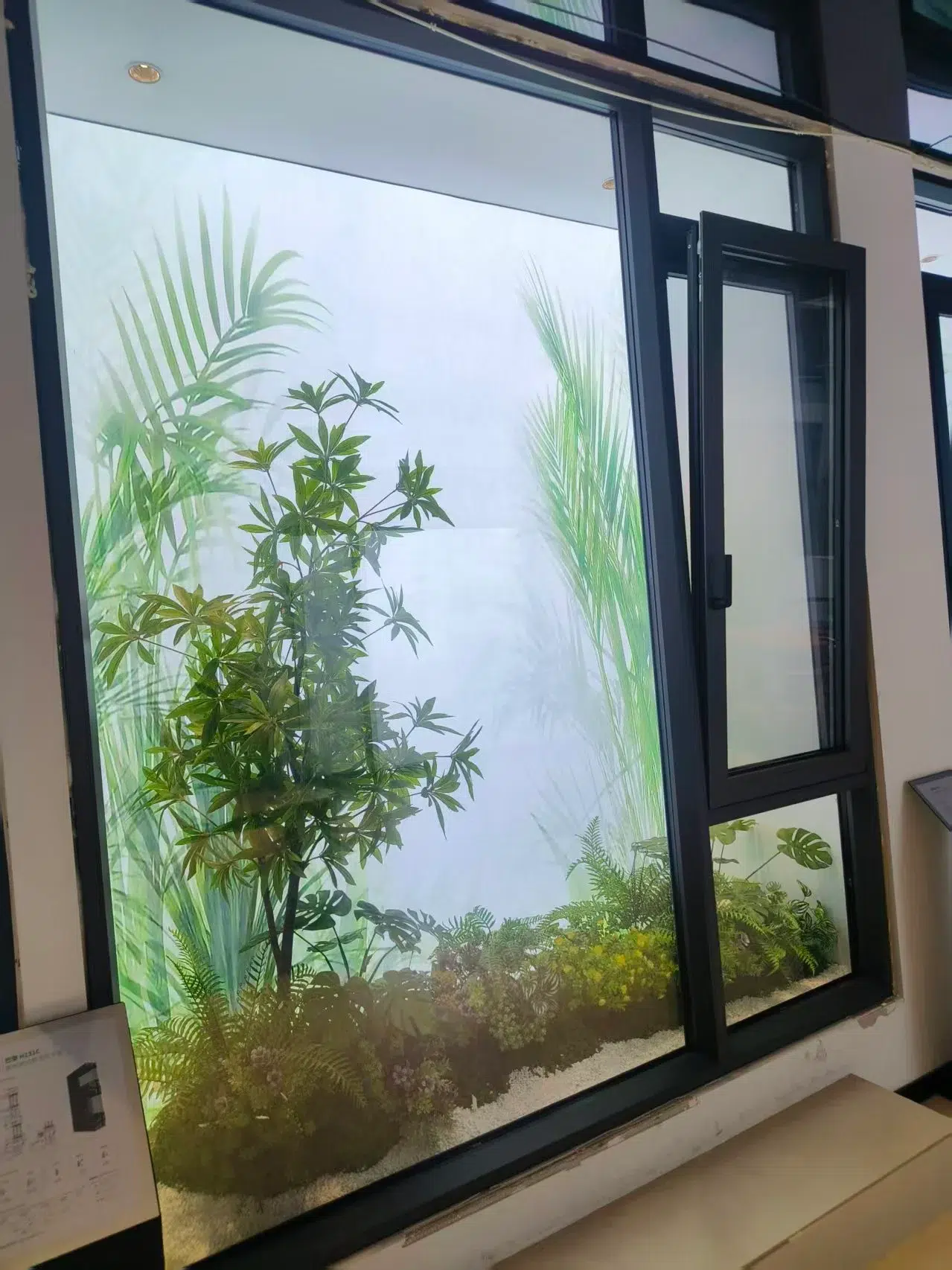
Each type can be customized in dimensions, RAL color, glass specification, hardware brand, and thermal break configuration. Customization typically adds 3–6 weeks to production lead time and 10–25% to the unit cost.
Real FOB Pricing Per Square Meter — Q2 2026
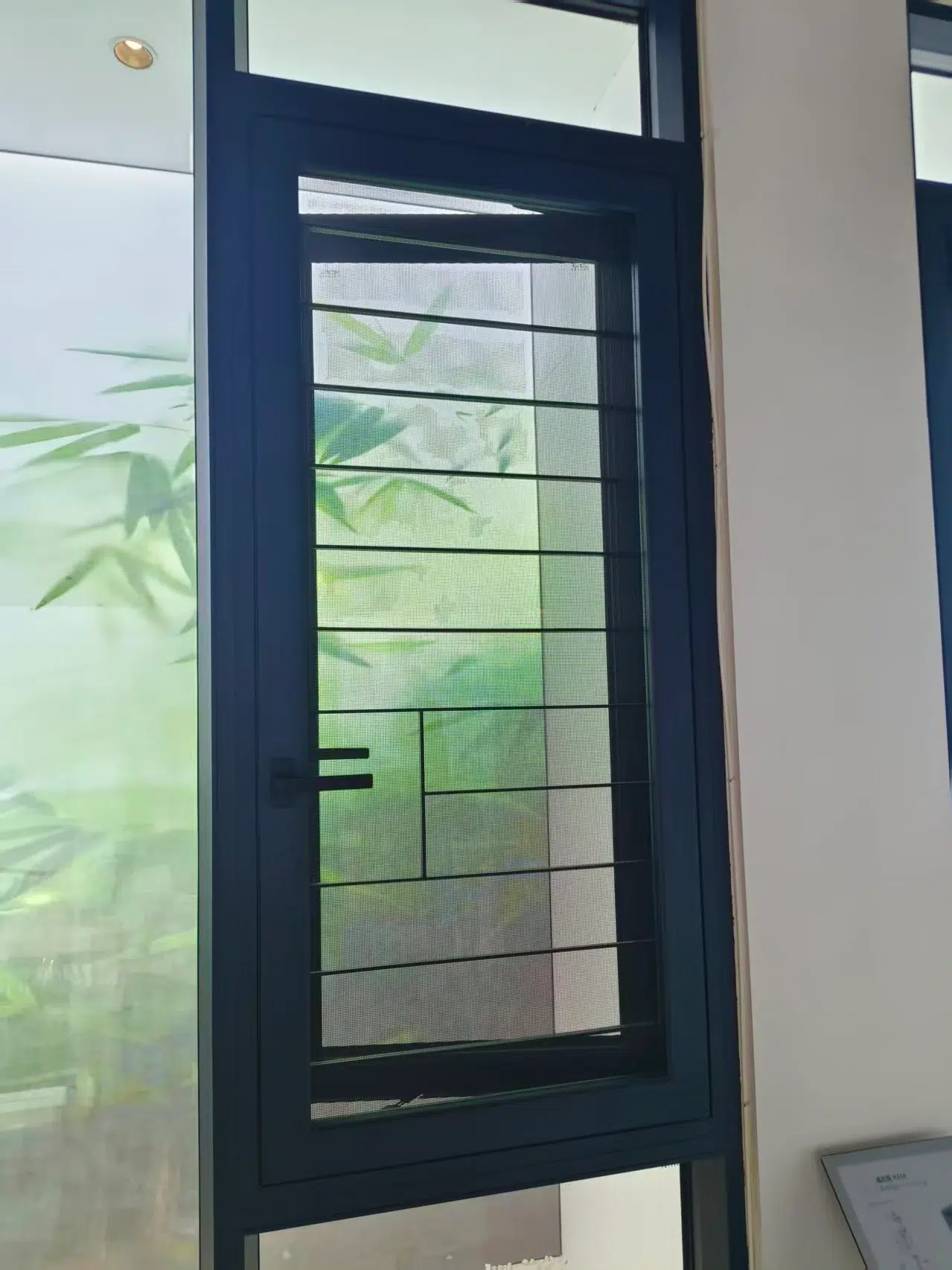
The following prices are based on quotations collected from verified manufacturers in Foshan and Guangzhou during Q2 2026. These are FOB China port prices for standard architectural-grade products: 6063-T5 alloy, PA66GF25 thermal break, powder-coated finish in standard RAL colors, with basic multi-point locking hardware. Glass specifications are noted per row.
| Product Type | Glass Specification | FOB Price ($/m²) | Lead Time |
|---|---|---|---|
| Sliding window | Single clear 5mm | $70–90 | 4–5 weeks |
| Sliding window | Double Low-E 6+12A+6 | $95–130 | 5–6 weeks |
| Casement window | Double Low-E 6+12A+6 | $110–150 | 5–6 weeks |
| Tilt-and-turn window | Double Low-E 6+12Ar+6 | $130–180 | 6–8 weeks |
| Sliding door | Single clear 5mm | $80–110 | 4–5 weeks |
| Sliding door | Double Low-E 6+12A+6 | $110–160 | 5–6 weeks |
| Casement door | Double Low-E 6+12A+6 | $130–190 | 5–6 weeks |
| Folding / bi-fold door | Double Low-E 6+12A+6 | $140–220 | 6–8 weeks |
| Curtain wall (unitized) | Double Low-E 6+12A+6 | $150–250 | 8–10 weeks |
What these prices include: 6063-T5 profile, PA66GF25 thermal break, powder coating in standard RAL, EPDM weather seals, basic multi-point locking hardware, tempered double glazing, and plywood crate packaging.
What adds cost: Custom RAL colors add 5–10%. Structural glazing (+10–15%). Premium hardware like Siegenia or Roto (+15–25%). Oversized panels beyond 2.4m (+10–20%). Laminated or acoustic glass (+20–40%). Hurricane-rated construction (+15–25%).
The Complete Aluminum Door Import Cost Breakdown
Your FOB factory price is the starting point, not the final number. Every importer needs to account for the following cost layers. The percentages below are based on actual imports to the GCC and represent typical ranges for a 20-foot container of aluminum doors and windows.
| Cost Component | % of FOB Value | Paid By | Notes |
|---|---|---|---|
| 1. Factory FOB price | 50–60% of landed cost | Buyer | Manufactured goods at China port |
| 2. Inland trucking | 1–2% | Factory or buyer | Foshan/Guangzhou to Nansha/Yantian: ~$200–400 per container |
| 3. Export customs docs | 0.5–1% | Factory or buyer | Export declaration, inspection, clearance fees |
| 4. Ocean freight | 8–15% | Buyer | $2,500–4,500 for 20ft to GCC; fluctuates seasonally |
| 5. Marine insurance | 0.5–1% | Buyer | 0.3–0.5% of cargo value for all-risks coverage |
| 6. Destination customs duty | 5–37.5% | Buyer | Varies by country; see country-specific section |
| 7. VAT / sales tax | 5–20% of CIF+duty | Buyer | Applied on total landed value including duty |
| 8. Customs brokerage | 1–2% | Buyer | $600–1,200 per shipment |
| 9. Port handling charges | 2–3% | Buyer | THC, document fees, seal fees |
| 10. Inland delivery | 2–5% | Buyer | Port to job site |
| 11. Pre-shipment inspection | 0.5–1% | Buyer | $400–800 for third-party QC |
| 12. Bank fees + FX spread | 1–3% | Buyer | Wire fees + 1–3% currency markup |
Bottom line: A $62,000 FOB order typically lands at $83,000–93,000 fully delivered to a GCC job site — a 35–50% uplift. The factory price accounts for roughly half the total. Importers who skip this calculation discover the real number after the deposit is wired, not before.
Country-Specific Duties: How They Affect Your Aluminum Door Import Cost
Import duty is the largest single variable in your aluminum door import cost. It changes based on trade policy, tariff reviews, and bilateral agreements. The table below provides a general reference for HS code 7610.10 as of mid-2026 — but rates are subject to change and must be verified with a licensed customs broker before finalizing your budget.
| Destination | Base Duty | Additional Tariffs | VAT / Tax | Effective Total |
|---|---|---|---|---|
| Saudi Arabia | 5% | None | 15% on CIF + duty | ~20.75% |
| UAE | 5% | None | 5% on CIF + duty | ~10.25% |
| Qatar | 5% | None | 5% on CIF + duty | ~10.25% |
| Kuwait | 5% | None | None | 5% |
| United States | 2.5% | Section 301 (25%) + Section 232 (varies) | State-dependent | ~27.5% + 232 + state |
| EU | 7.5% | Anti-dumping 21–48% on extrusions | 19–27% (country) | 28.5–55.5% |
| UK | 6% | Transitional anti-dumping 21–48% | 20% on CIF + duty | 27–54% |
| Australia | 5% (ChAFTA) | None | 10% GST on CIF + duty | ~15.5% |
| Canada | 8% | None on finished products | 5% GST + provincial | 13–18% |
| Singapore | 0% | None | 9% GST on CIF | ~9% |
| Egypt | 2–5% | None | 14% VAT on CIF + duty | ~16–19% |
| South Africa | 10–15% | None | 15% VAT on CIF + duty | 25–30% |
Important caveats:
- US: Section 301 (25%) and Section 232 aluminum measures are under periodic review. Always verify current HTS classification using the USITC HTS tool.
- EU: Anti-dumping duties (21–48%) apply to aluminum extrusions CN 7604. Finished doors and windows CN 7610 may qualify for the base 7.5% rate. Check EU TARIC.
- Australia: ChAFTA preference requires a valid Certificate of Origin. Without it, the general 10% rate applies.
External resources for duty verification: USITA HS Code Lookup | ITC Trade Map | SASO SABER | US Customs and Border Protection
Total Cost of Ownership Analysis: Cheap vs. Quality Aluminum Doors
The lowest unit price is rarely the lowest total cost. Here is a TCO comparison based on actual project data from GCC hospitality and commercial developments:
| Cost Factor | Budget-Grade Package | Premium-Grade Package |
|---|---|---|
| Alloy grade | 6060-T5 (lower tensile) | 6063-T5 / T6 |
| Wall thickness | 1.2–1.4 mm | 1.6–2.0 mm |
| Thermal break | PVC strip | PA66GF25 polyamide |
| Hardware | Unbranded | Branded (Hopo/Kinlong/Siegenia) |
| Glass | Single clear 5mm | Double Low-E 6+12Ar+6 |
| Per m² cost (FOB) | $55–75 | $110–150 |
| Landed cost per m² (GCC) | $85–115 | $160–220 |
| Lifespan before maintenance | 3–5 years | 10–15 years |
| Thermal performance (U-value) | 5.0–6.0 W/m²K | 1.4–2.0 W/m²K |
| 10-year TCO (500 m²) | $85,000–130,000 | $98,000–135,000 |
The budget package appears cheaper upfront but the gap narrows significantly over 10 years when replacement, energy loss from poor thermal performance, and maintenance costs are factored in. In hot climates like the GCC, the difference in cooling load alone can offset the initial cost advantage of budget-grade windows within 3–5 years.
Illustrative Cost Example: 500 m² Hotel Project in Dubai
To help you visualize how these cost layers stack up, here is a sample cost breakdown for a hotel project sourcing aluminum doors and windows from Foshan to Dubai. Figures are based on real Q2 2026 pricing as a representative example.
Assumptions: Verified Foshan manufacturer, ISO 9001, CE certification where applicable.
Product: 320 m² casement windows + 180 m² sliding doors, double Low-E 6+12A+6, bronze RAL 8025.
Incoterm: FOB Nansha, China.
| Cost Line Item | Details | Amount |
|---|---|---|
| FOB factory price | $124/m² × 500 m² | $62,000 |
| Custom RAL color surcharge | Bronze RAL 8025 — 8% surcharge | $4,960 |
| Inland trucking | Foshan → Nansha port | $800 |
| Export customs documentation | Inspection and clearance fees | $440 |
| Ocean freight | 1 × 20ft container, Nansha → Jebel Ali | $2,800 |
| Marine insurance | 0.4% of cargo value | $270 |
| CIF Dubai value | $71,270 | |
| UAE customs duty | 5% of CIF | $3,564 |
| UAE VAT | 5% of (CIF + duty = $74,834) | $3,742 |
| Customs brokerage fee | Clearance and documentation | $800 |
| Jebel Ali port charges | THC, terminal handling, seal fee | $1,200 |
| Inland delivery to Al Barsha | Port to job site, flatbed truck | $950 |
| Pre-shipment inspection | Third-party QC at 40% and 100% | $1,150 |
| Bank wire fees (2 transfers) | 30% deposit + 70% balance | $95 |
| Currency exchange spread | Bank margin on USD/AED conversion | $840 |
| Total landed cost | $83,611 | |
| Cost per m² (landed) | $167/m² |
The FOB price is $62,000 and the estimated total landed cost is $83,611 — a 35% uplift. Against a typical Dubai supplier quote of $145,000 for an equivalent specification, sourcing from China with accurate cost planning saves $61,389 (42%).
The key takeaway: the savings potential is significant, but only if you budget for duties, freight, VAT, and QC before committing. Without those line items in the budget, the 35% landed cost uplift becomes a crisis rather than a manageable expense.
Hidden Costs That First-Time Buyers Always Miss
Beyond the obvious cost layers, five expense categories consistently surprise first-time importers. Total hidden costs for a typical aluminum door import: approximately $2,500–4,500 beyond the obvious FOB + freight + duty calculation.
1. Currency conversion spread. Commercial banks add 1–3% to the exchange rate on USD-denominated wires to China. On a $62,000 payment, that is $620–1,860 in invisible cost. Dedicated FX services like Wise or OFX can reduce this to 0.4–0.8%.
2. Multiple wire transfer fees. A 30/70 deposit structure requires two wire transfers. Each incurs fees on both ends: $25–75 per wire from your bank, plus $15–30 from the Chinese receiving bank.
3. Port demurrage and detention. Most containers are allowed 3–5 free days at the destination port. After that, demurrage charges apply at $50–150 per day. Customs delays can easily add $500–1,500 in unexpected fees per container.
4. Packaging upgrades for commercial projects. Standard export packaging (PE foam + plywood crate) is adequate for most shipments. But commercial projects with polished or anodized finishes require upgraded packaging — moisture barrier bags, corner protectors, steel strapping — adding $200–600 per container.
5. Sampling and certification costs. Courier fees for profile samples from China via DHL or FedEx are $80–200 per shipment. Independent laboratory testing of thermal break performance or glass specifications costs $300–800 per test. CE documentation verification costs $150–400.
From Our Sourcing Team
“The most expensive mistake I see is buyers comparing two quotes without normalizing the specifications. They pick the cheaper one, then discover the profile walls are 1.2 mm instead of 1.6 mm, the thermal break is PVC instead of PA66, and the hardware has no brand name. They save 15% upfront and pay 40% more in replacement within 5 years. Always compare on specification first, price second — and always convert both quotes to the same Incoterm before comparing.”
— Angie Sami, Procurement Manager, Skyline Trading Co., LTD
How to Compare Supplier Quotes Like a Professional
The single most common mistake in aluminum procurement is comparing two quotes on different bases and concluding one is cheaper. These five variables must be normalized before any cost comparison is valid.
| Variable | What to Normalize | Why It Matters |
|---|---|---|
| 1. Incoterm | Convert all quotes to FOB China port | EXW excludes domestic logistics; CIF includes freight. FOB is the standard comparison basis. |
| 2. Alloy & wall thickness | 6063-T5 with min 1.6mm | Lower-grade alloys (6060-T5) or thinner walls (1.2mm) reduce structural integrity and lifespan. |
| 3. Thermal break | PA66GF25 polyamide | PVC substitutes degrade in 3–5 years, especially in hot climates. Visual inspection can’t distinguish them. |
| 4. Glass spec | Full build-up in writing | “Double Low-E” can mean many things. Verify thickness, coating type, gas fill, spacer type. |
| 5. Hardware brand | Named brand and model | Hardware is 15–25% of total cost. Unbranded hardware is a red flag — specify Hopo, Kinlong, Siegenia, or Roto. |
Rule of thumb: If the cheapest quote is more than 20% below the average of three comparable quotes, the difference is almost certainly in one of these five specifications — not a genuine pricing advantage. Do not take the savings. Ask the factory to explain what is different.
Market-Specific Compliance Requirements
GCC Markets (Saudi Arabia, UAE, Qatar, Kuwait, Oman, Bahrain)
- SASO SABER certification: Saudi Arabia requires product registration through the SABER system for aluminum building products. Certificate cost: $500–1,500 per product line.
- Emirates Quality Mark: UAE government projects require EQM certification for aluminum windows and doors.
- ISPM 15 fumigation: Solid wood components in packaging require fumigation certificates. Missing certificates cause 2–4 week quarantine delays at GCC ports.
- Arabic labelling: Saudi Arabia and some GCC states require product labelling in Arabic.
- 5% customs duty + 5–15% VAT depending on the destination country.
United States
- AAMA/WDMA/CSA 101/I.S.2/A440: The US specification for aluminum window performance classifies by design pressure (DP), air infiltration, water penetration resistance, and structural load.
- NFRC certification: National Fenestration Rating Council ratings for U-factor, solar heat gain coefficient (SHGC), and visible transmittance are required for energy code compliance.
- Impact resistance: Florida (HVHZ), Texas, and other hurricane-prone regions require missile-impact tested windows per TAS 201/202/203.
- ADA compliance: Door openings must provide minimum 32-inch clear width and accessible hardware height.
- Section 301 + Section 232 tariffs: Combined duty rate of approximately 27.5% + Section 232 measures. Verify current rates at USITC.
United Kingdom and European Union
- CE marking and UKCA: Since Brexit, UK requires UKCA marking alongside CE. EU requires CE marking under CPR 305/2011. Certificate must cover the full product scope.
- EN 14351-1: The harmonized European standard for windows and doors, governing air permeability, watertightness, wind load resistance, thermal transmittance, and acoustic performance.
- Passivhaus certification: For high-performance projects, windows must meet Passive House Institute standards with U-values below 0.80 W/m²K.
- EUDR compliance: Effective December 2026, wooden components require due diligence statements proving no deforestation in the supply chain.
- Anti-dumping duties: 21–48% on aluminum extrusions (CN 7604), but finished windows and doors (CN 7610) may qualify for the base 7.5% rate.
10 Cost-Saving Strategies for Aluminum Door Imports
Budget pressure is real in every construction project. These strategies reduce your aluminum door import cost without sacrificing quality or compliance.
- Standardize sizes across your project. Every unique window size requires a separate extrusion die. Standardizing to 3–4 size families reduces die costs by 50–70% and speeds up production by 2–3 weeks.
- Choose PA66GF25 thermal break over PVC. PVC is cheaper upfront but fails within 3–5 years. PA66 lasts the full lifespan of the window. The 8–12% cost premium pays for itself in avoided replacement within 4 years.
- Order full container loads. A 20ft container holds approximately 300–400 m² of windows. A 40ft HC holds 600–800 m². Per-unit freight cost drops by 35–40% when you upgrade from LCL to a full container.
- Use standard RAL colors. Custom RAL colors add 5–10% to the unit price and 7–10 days to lead time. If your project is not brand-specific, choose from the factory’s standard palette.
- Combine multiple orders into one shipment. If you import for multiple projects, consolidate into a single container. One customs clearance, one inspection, one inland delivery — saving 15–25% on logistics costs.
- Negotiate deposit terms. The standard is 30/70. If you have a strong trading history or can provide a bank reference, negotiate to 20/80. Every 10% reduction in deposit improves your cash flow by thousands.
- Use a freight forwarder instead of direct carrier booking. Forwarders with consolidated volume get container rates 15–25% below spot market. They also handle customs documentation, reducing brokerage fees.
- Pre-shipment inspection from a third-party agency. A $600–800 inspection protects a $60,000+ investment. Factories that know they are being inspected produce higher quality — our audit data shows a 40% reduction in defects on inspected orders.
- Order spare glass units and hardware with the main shipment. Reordering a single broken glass unit later costs $300–500 in freight and minimum order charges. Adding 5% spare units to your main container costs < 2% of the total order value.
- Use a single sourcing partner for the complete package. Splitting orders across multiple suppliers increases logistics costs by 15–25% — separate shipments, separate clearances, multiple QC processes. One supply chain is cheaper than three.
The one thing you should never cut: Third-party inspection. A $600–800 pre-shipment inspection protects your entire investment. Skipping it is not a saving — it is a gamble on your project timeline.
Factory Verification Checklist
A low quote from an unverified factory is not a cost saving — it is a liability. This checklist is specific to aluminum door and window manufacturers.
| Verification Item | What to Check | Red Flag |
|---|---|---|
| Business license | 18-digit USCC; verify on NECIPS | Recently registered company claiming decades of experience |
| Factory location | Baidu Maps satellite view | Address is an office building — trading company |
| Extrusion capability | Does the factory operate its own extrusion presses? | No extrusion line = assembler, not manufacturer |
| Export history | Bills of Lading from past 24 months | No export records = first-time exporter |
| CE certification | Valid CoC under CPR 305/2011 | Expired or scope excludes your product |
| ISO 9001 | Verify on IAF CertSearch | Non-accredited certificate |
| Project references | Installation photos from similar projects | Only showroom photos |
| Sample quality | Physical sample of profile and hardware | Hesitation to send samples |
| Production capacity | Monthly output in m², shifts per day | Claims don’t match factory size |
| Inspection acceptance | Third-party QC at defined milestones | Insistence on self-inspection only |
For a more comprehensive process including video calls, financial checks, and on-site audits, read our aluminum door supplier verification guide and use our free supplier verification tool.
Quality Control Through Production
Every dollar saved by skipping quality control typically costs ten dollars in rework or replacement. For aluminum doors and windows, we recommend a minimum of two QC interventions per order.
Raw material verification (before production): A QC inspector visits the extrusion plant to confirm alloy grade using a handheld PMI spectrometer, measure wall thickness (±0.05mm tolerance), and review the coating spec sheet. Cost: $300–400.
Mid-production inspection (40% completion): The inspector evaluates frame assembly accuracy, sealant consistency, glass unit integrity, and hardware installation. Dimensions checked against approved shop drawings. Cost: $400–600.
Pre-shipment inspection (100%): Random sample per AQL standards. Tested for dimensional accuracy (±1mm), squareness, hardware function, glass seal integrity, and packaging adequacy. Cost: $500–800.
Total QC investment: $1,200–1,800 for a standard order — roughly 1% of landed cost. Compare this to a rejected container worth $83,000+. QC at 1% is the cheapest insurance you can buy.
Shipping and Logistics Timeline
A typical aluminum door order from China to the GCC takes 11–15 weeks from order confirmation to job site delivery.
| Phase | Duration | Key Activities |
|---|---|---|
| 1. Sample approval | 1–2 weeks | Review profile, hardware, and color samples |
| 2. Raw material procurement | 2–3 weeks | Factory orders billets, glass, hardware |
| 3. Extrusion and coating | 1–2 weeks | Extrusion, aging, powder coating |
| 4. Fabrication | 2–3 weeks | Cutting, assembly, glazing, hardware |
| 5. MPI (40%) | 0.5 day | Third-party QC visit |
| 6. PSI (100%) | 0.5–1 day | Final QC + loading supervision |
| 7. Packaging + inland | 3–5 days | Crating, labeling, trucking to port |
| 8. Export customs | 2–3 days | Document submission, inspection |
| 9. Ocean freight to GCC | 18–22 days | Nansha/Yantian → Jebel Ali/Dammam |
| 10. Destination clearance | 3–7 days | Document review, duty payment |
| 11. Inland delivery | 1–2 days | Flatbed truck to job site |
To EU or US East Coast, add 7–14 days for ocean transit. To Australia, add 14–18 days. Build a 2-week buffer into every schedule — Chinese New Year, Golden Week, factory capacity constraints, and port congestion are recurring risks.
Definitive Import Planning Checklist — 10 Steps Before You Pay
Before you wire a deposit to any Chinese aluminum factory, complete these ten steps:
- Confirm alloy grade and wall thickness — 6063-T5/T6 with minimum 1.6mm wall thickness in writing on the proforma invoice.
- Specify thermal break material — PA66GF25 (polyamide), not PVC. Request a cross-section drawing showing the thermal break position.
- Define the full glass specification — Build-up (e.g., 6mm tempered Low-E + 12mm argon + 6mm tempered), spacer type, and coating specification.
- Agree on hardware brand and model — Named brands only. No “high-quality hardware” without a brand name.
- Normalize all quotes to FOB China port — Convert every quote to the same Incoterm before comparing prices.
- Get a landed cost estimate from your customs broker — Send them the CIF value and HS code before finalizing your budget.
- Verify the factory — Complete the 10-point verification checklist before sending any payment.
- Schedule third-party inspection — MPI at 40% and PSI at 100%. Do not rely on the factory’s own inspection.
- Arrange freight with a forwarder — Get quotes from 2–3 forwarders on your route. Book 2 weeks before the cargo is ready.
- Budget for hidden costs — Add $2,500–4,500 for FX spread, demurrage, packaging upgrades, and sampling.
Download the complete import checklist (PDF) →
Frequently Asked Questions
For commercial projects ordering 100+ square meters, China sourcing typically saves 30–50% compared to GCC fabricators and 40–60% compared to European manufacturers. For small residential orders under 20 m², the fixed costs of freight, inspection, and customs brokerage erode most of the savings — local suppliers are often more cost-effective for these smaller quantities.
FOB China port prices range from $70–90/m² for basic sliding windows to $150–250/m² for unitized curtain wall systems. After adding freight, duties, VAT, and customs clearance, the landed cost to a GCC job site typically adds 30–50% on top of the FOB price. For a typical casement window with double Low-E glazing at $124/m² FOB, the landed cost is approximately $167/m² to Dubai.
Most Foshan factories require 50–100 m² per product type for custom-profile orders. For standard profile designs the factory already produces, MOQs can be as low as 20–30 m². Some factories accept smaller orders but charge a small-order surcharge of 15–25%.
Saudi Arabia applies a 5% customs duty on aluminum doors and windows (HS 7610.10) plus 15% VAT on the CIF value plus duty. No anti-dumping duties apply to Chinese aluminum products. The total tax burden is approximately 20.75% of the CIF value. Importers must also register products in the SABER system.
Yes — as of mid-2026. Aluminum doors and windows from China to the US are generally subject to the 25% Section 301 tariff plus the 2.5% MFN base rate. Section 232 aluminum measures may also apply depending on product classification and current US trade policy. Always verify current rates using the USITC HTS tool.
FOB China port is recommended for first-time buyers. The factory handles domestic logistics, export customs clearance, and loading. You arrange ocean freight, insurance, and destination-side costs through your own freight forwarder. DDP is simpler but gives you less visibility into actual freight and duty costs.
Direct sailings from Nansha or Yantian to Jebel Ali (Dubai) take 18–22 days. To Dammam or Jeddah, add 2–4 days. Including loading, customs clearance, and inland delivery, total transit from China port to GCC job site is typically 4–6 weeks.
Yes, when required by the destination market. Many export-focused Foshan manufacturers hold valid CE certification under the EU Construction Products Regulation (CPR) 305/2011. The certification covers thermal transmittance, air permeability, water tightness, wind load resistance, and acoustic performance. Request the factory’s Declaration of Performance and verify the certificate.
The industry standard is 30% deposit with the order and 70% balance against shipping documents or pre-shipment inspection report. For first-time buyers, some suppliers may request 40–50% deposit. For repeat customers or large-volume orders, the deposit can be negotiated down to 20%. Avoid paying 100% in advance.
Start with the business license: ask for the 18-digit Unified Social Credit Code and look it up on China’s NECIPS system. Verify the registered address matches the factory location on satellite view. Request Bills of Lading from the past 24 months. Ask for valid ISO 9001 and CE certificates. Read our full verification guide.
Both are the same alloy with different heat treatments. T5 yields 150–180 MPa tensile strength — sufficient for most architectural doors and windows. T6 yields 200–240 MPa — specified for high-wind-load areas, large-span structures, and structural glazing where higher strength is required.
Chinese glass processors supply single clear (4–12mm), double-glazed (various cavity widths), Low-E hard/soft coat, argon and krypton gas fill, laminated acoustic, tempered safety, heat-soaked, fire-rated, and curved glass. The most common commercial spec is double Low-E soft coat with argon fill and warm-edge spacers.
Aluminum doors from China are quoted and transacted in USD. If your local currency weakens against the USD between quote and payment, your effective cost increases proportionally. A 5% USD strengthening against your currency means a 5% cost increase. For large orders, use forward contracts or currency hedging.
Direct sourcing works for experienced buyers with China-based teams. A sourcing agent adds value for first-time importers — their fee (3–8% of order value) is offset by better factory pricing and avoided QC failures. Skyline Trading operates its own procurement team in Guangzhou and Foshan for full-service management.
Standard packaging: each unit wrapped in PE foam, then stretch film, packed in a plywood crate with steel strapping. Corner guards protect vulnerable edges. For specialty finishes, add moisture barrier bags and extra foam at additional cost. Crates are forklift-ready and container-stackable.
For a $62,000 FOB order (500 m² of mixed casement windows and sliding doors), the total landed cost to a Dubai job site is approximately $83,611 — a 35% increase over the FOB price. Against a local Dubai quote of $145,000, the savings are $61,389 or 42%. See the full breakdown in Section 7 above.
Related Resources
- How to Verify Aluminum Door and Window Suppliers in China — Step-by-step verification process with NECIPS, Baidu Maps, and Bill of Lading checks
- How to Import Aluminum Doors for Hotels and Commercial Projects — Project-specific sourcing for hospitality developments
- Choosing an Aluminum Windows Supplier in China for Hotels — Supplier selection criteria for hospitality-grade aluminum systems
- China Sourcing Glossary (120+ Procurement Terms) — Essential terms for anyone importing from China
- Procurement Risks When Importing from China — 17 common pitfalls and how to avoid them
- Free Supplier Verification Tool — Automated desktop checks with PDF risk report
- Hotel Furniture Budget Guide — Complete FF&E cost breakdown for hospitality procurement
- Hotel OS&E Procurement Guide — Operating supplies and equipment cost breakdown
- Custom Hotel Furniture from China — Bespoke manufacturing for hospitality projects
- China Factory Audit Guide — How to verify supplier capabilities before production
- Aluminum Door Import Cost (this guide)
- Contact Skyline Trading — Get a Landed Cost Estimate — Factory-verified quotes with full duty and freight breakdown
- Aluminum Panel – aluminium panels from China
Ready to Start Your Aluminum Door Import Project?
Skyline Trading Co., LTD works directly out of Guangzhou and Foshan — the heart of China’s aluminum manufacturing industry. We manage supplier verification, factory audits, pre-shipment inspections, and freight coordination for commercial, hospitality, and residential projects.
Send us your project details for a factory-verified quote with a full landed-cost breakdown:
- Product type and quantity — doors, windows, m²
- Destination country — GCC, US, EU, UK, Australia
- Target specification — glass, hardware, RAL color, thermal break
Get Your Landed Cost Estimate →
Or email [email protected] with product type, quantity, and destination for a 48-hour response.
Last updated: July 12, 2026. Part of the China Procurement Hub. Written by Angie Sami, Procurement Manager at Skyline Trading Co., LTD. Follow our procurement insights on LinkedIn.