
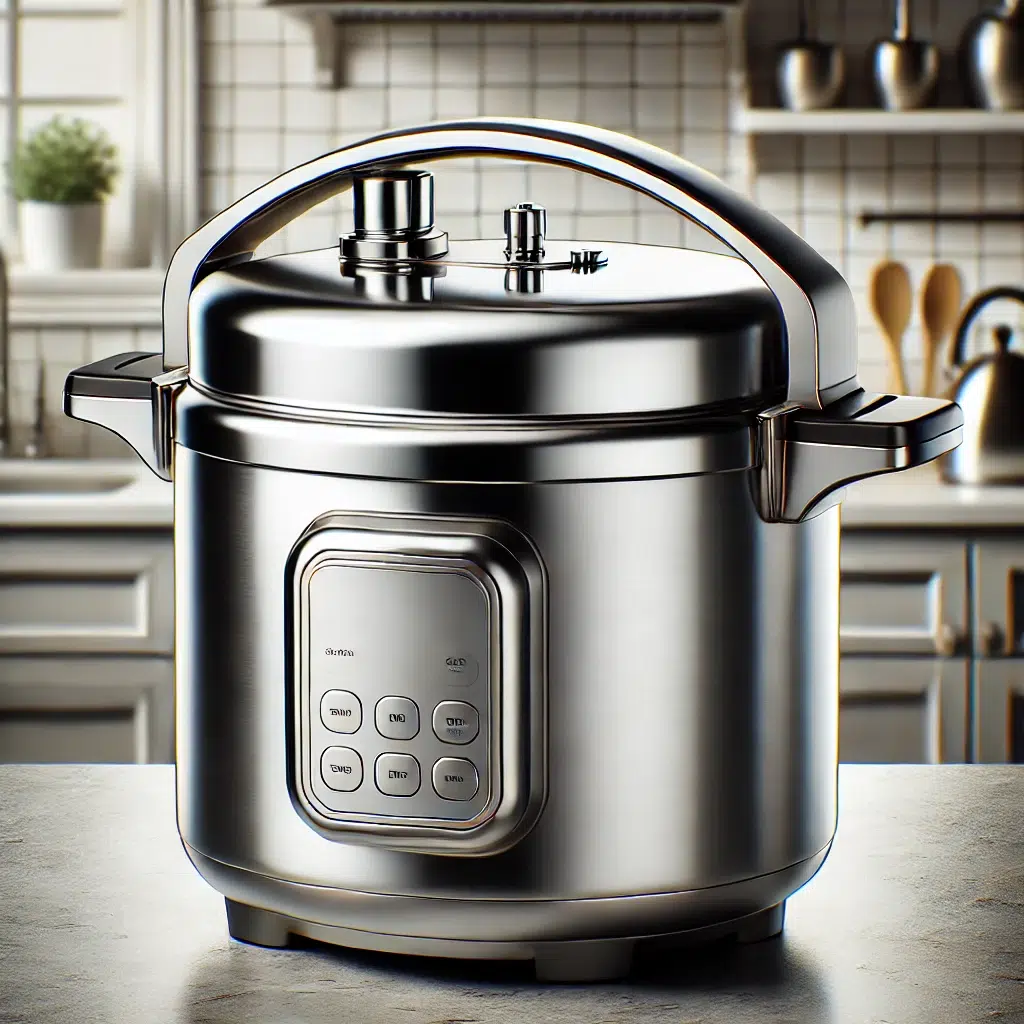
Commercial Stainless Steel Pressure Cookers for Restaurants and Food Production

Table of Contents
- Key Takeaways
- Why Source Pressure Cookers from China
- Types of Stainless Steel Pressure Cookers
- Stainless Steel Grades Explained
- Manufacturing Process Overview
- Quality Standards and Certifications
- Material Comparison Table
- Product Specification Comparison
- Price Breakdown by Size and Grade
- Minimum Order Quantities and Lead Times
- Top Manufacturing Regions
- How to Verify a Pressure Cooker Factory
- Common Defects and Inspection Guide
- Packaging Requirements for International Shipping
- Import Duties and Tariff Considerations
- Why Use a Sourcing Agent
- Expert Insight from Angie Sami
- Frequently Asked Questions
- Related Resources
Key Takeaways: China produces over 60% of the world’s stainless steel pressure cookers, with Guangdong province alone accounting for 40% of global output. Sourcing directly from Chinese manufacturers can reduce costs by 30-50% compared to domestic suppliers. The key to successful sourcing is understanding stainless steel grades (304, 316, 201), verifying factory certifications, and working with experienced procurement professionals. Leading manufacturing hubs include Foshan, Zhejiang, and Shandong, each offering different price points and quality levels. For importers and distributors, partnering with a reliable sourcing agent like Skyline Trading Co., LTD eliminates language barriers, reduces risks, and ensures consistent quality control throughout the procurement process.
Why Source Stainless Steel Pressure Cookers from China
The global pressure cooker market is projected to reach $4.2 billion by 2027, with China remaining the dominant manufacturing powerhouse. For importers, distributors, and retail chains, sourcing stainless steel pressure cookers from China offers compelling advantages that directly impact your bottom line and competitive positioning.
Cost Advantages
Chinese manufacturers benefit from economies of scale, established supply chains, and lower labor costs. A 304 stainless steel 5L pressure cooker that costs $25-35 to produce in China might cost $60-80 in European or American factories. Even after factoring in shipping, duties, and quality control, importers typically see 30-50% cost savings. Volume orders of 5,000+ units can push savings even higher, with some factories offering additional 10-15% discounts for annual contracts.
Manufacturing Capacity and Speed
China’s cookware manufacturing ecosystem is unmatched globally. Foshan alone has over 800 cookware factories, with total annual capacity exceeding 200 million units. This concentration means faster production times, easier quality control, and the ability to scale orders quickly. Whether you need 500 units for a pilot launch or 50,000 units for a national retail chain, Chinese factories can accommodate virtually any volume.
Product Variety and Customization
Chinese manufacturers offer the widest range of pressure cooker options available anywhere. From basic stovetop models to sophisticated electric pressure cookers with digital controls, the variety is extensive. Most factories offer OEM and ODM services, allowing you to customize branding, colors, packaging, and even minor design features to differentiate your product line in competitive markets.
Established Export Infrastructure
China’s export infrastructure is world-class, with major ports in Guangzhou, Shenzhen, Shanghai, and Ningbo offering regular shipping routes to every continent. Customs procedures for cookware are well-established, and experienced freight forwarders can handle all documentation. Most factories have dedicated export departments familiar with international requirements and can manage the entire process from order to shipment.
Types of Stainless Steel Pressure Cookers
Understanding the different types of pressure cookers available from Chinese manufacturers is essential for selecting the right products for your market. Each type serves distinct customer segments and carries different price points, margins, and market opportunities.
Stovetop Pressure Cookers
Traditional stovetop pressure cookers remain the most popular choice for both home and commercial use. They offer faster cooking times, higher pressure (typically 15 PSI), greater durability, and no dependency on electrical outlets. Chinese manufacturers produce stovetop models ranging from compact 2L units ideal for small households to massive 16L commercial models used in restaurant kitchens. The construction is typically a three-ply base (stainless steel-aluminum-stainless steel) for even heat distribution, with heavy-duty handles and multi-stage safety systems.
Electric Pressure Cookers
Electric pressure cookers have seen explosive growth, driven by convenience and smart kitchen trends. These units integrate heating elements, pressure sensors, and programmable controls into a single appliance. Chinese electric pressure cookers typically feature LCD displays, multiple cooking presets, delay timers, keep-warm functions, and safety lockout systems. Premium models include WiFi or Bluetooth connectivity for smartphone control. The electric segment offers higher margins but requires additional certifications (UL, ETL, CE) and more rigorous quality control.
Commercial Pressure Cookers
Commercial-grade pressure cookers are engineered for continuous heavy-duty use in restaurants, hotels, catering facilities, and food processing operations. These units feature thicker walls (0.8-1.2mm), reinforced handles, industrial-grade gaskets, and larger capacities (10L-50L). Chinese commercial pressure cookers often include features like spring-loaded safety valves, pressure gauges, and heavy-duty locking mechanisms. For hospitality buyers, commercial units offer the best per-unit economics and longest service life.
Specialty Pressure Cookers
Chinese manufacturers also produce specialty variants including canning pressure cookers (pressure canners), double-pressure cookers with detachable inner pots, and traditional designs for specific regional markets. Indian-style pressure cookers with unique handle designs and whistles are a significant export category. These specialty products often command premium pricing and serve niche markets with less competition.
Stainless Steel Grades Explained
The grade of stainless steel used in pressure cooker manufacturing directly impacts durability, safety, appearance, and price. Understanding the differences between common grades is crucial for making informed purchasing decisions when sourcing from China.
Grade 304 Stainless Steel (18/8)
Grade 304 is the industry standard for quality pressure cookers. With 18% chromium and 8% nickel, it offers excellent corrosion resistance, formability, and weldability. The 18/8 composition provides a bright, attractive finish that maintains its appearance over years of use. Grade 304 pressure cookers are suitable for most cooking applications, including acidic foods, and are the most commonly specified grade for export markets in North America, Europe, and Australia. The higher nickel content also contributes to better heat retention and more even cooking.
Grade 316 Stainless Steel (16/10/2)
Grade 316 is the premium option, adding 2% molybdenum to the chromium-nickel formula. This addition provides superior resistance to chlorides, acids, and salt corrosion. Grade 316 pressure cookers are ideal for coastal regions, salt-heavy cuisines, and commercial applications where cookware undergoes frequent cleaning with harsh chemicals. While 15-25% more expensive than 304, 316 grade pressure cookers offer extended lifespan and are often specified for high-end hospitality installations and pharmaceutical/medical food preparation.
Grade 201 Stainless Steel
Grade 201 uses manganese and nitrogen to partially replace nickel, reducing material costs by 30-40% compared to 304. While still functional for pressure cookers, 201 grade has lower corrosion resistance and may show discoloration over time, particularly with acidic foods. It’s commonly used for budget-priced pressure cookers targeting price-sensitive markets. For importers, 201 grade offers lower entry costs but may require more warranty claims and customer service over the product lifecycle.
Choosing the Right Grade for Your Market
For premium retail and professional markets, specify 304 or 316 grade. For value-oriented retail channels, 304 provides the best balance of quality and cost. Reserve 201 grade for extremely price-sensitive markets where initial cost is the primary purchasing factor. Always verify the actual grade used through material test certificates (MTC) from the factory, as some manufacturers may substitute lower grades if not properly specified in contracts.
Manufacturing Process Overview
Understanding the pressure cooker manufacturing process helps importers identify quality checkpoints and evaluate factory capabilities. The production process involves multiple specialized stages, each requiring specific equipment and expertise.
Material Preparation
The process begins with sourcing stainless steel sheets from mills. Reputable factories purchase from established mills like TISCO (Taiyuan Iron and Steel) or Baosteel, ensuring consistent material quality. Sheets are cut to size using precision laser or mechanical cutting equipment. For three-ply bases, aluminum sheets are laminated between stainless steel layers using high-pressure bonding.
Forming and Shaping
Deep drawing is the primary forming method, where flat steel sheets are progressively shaped into pot bodies using hydraulic presses. Multiple drawing stages may be required for deeper pots. The process requires precise control of pressure, speed, and lubrication to prevent tearing or wrinkling. Quality factories use computer-controlled presses with real-time monitoring to ensure consistent wall thickness and dimensional accuracy.
Trimming, Polishing, and Surface Treatment
After forming, excess material is trimmed and edges are rolled for safety. The pot bodies then undergo multi-stage polishing to achieve the desired surface finish. Mirror finish, satin finish, and brushed finish are the most common options. Surface treatment may include passivation (chemical treatment to enhance corrosion resistance) and electropolishing for premium products. The finish quality significantly impacts the product’s market positioning and price.
Component Assembly
Handles, lids, valves, gaskets, and other components are assembled using spot welding, riveting, or screw attachment. Handle materials include Bakelite (heat-resistant plastic), stainless steel, and silicone-wrapped designs. Lid mechanisms are particularly critical, requiring precise alignment for proper sealing and pressure retention. Safety components including pressure indicators, backup valves, and gasket release systems are installed and calibrated at this stage.
Quality Testing
Every pressure cooker undergoes pressure testing to verify safety and performance. This includes hydrostatic pressure tests (filling with water and pressurizing), air pressure decay tests, and safety valve function verification. Reputable factories test 100% of units, not just statistical samples. Results are documented and traceable by serial number for each batch.
Quality Standards and Certifications
Certifications are non-negotiable when sourcing pressure cookers. They verify that products meet safety, health, and performance standards required by your target market. Working with certified factories protects your business from liability and facilitates customs clearance.
LFGB Certification (Germany/EU)
The German LFGB (Lebensmittel- und Futtermittelgesetzbuch) is one of the world’s strictest food contact material standards. LFGB-certified pressure cookers undergo rigorous testing for migration of harmful substances, ensuring they’re safe for food preparation. This certification is recognized throughout the EU and is often required by premium retailers. Testing includes chemical analysis for heavy metals, plasticizers, and other potentially harmful compounds.
FDA Registration (United States)
Products sold in the United States must comply with FDA food contact material regulations. While FDA doesn’t “approve” pressure cookers per se, manufacturers must register as food facilities and ensure materials comply with 21 CFR regulations. For electric pressure cookers, UL or ETL listing is typically required by retailers and insurance companies. The FDA also requires proper labeling including manufacturer information, material composition, and care instructions.
CE Marking (European Union)
CE marking is mandatory for pressure cookers sold in the EU, indicating compliance with relevant European directives including the Pressure Equipment Directive (PED), Low Voltage Directive (LVD), and RoHS (Restriction of Hazardous Substances). For electric pressure cookers, the EMC (Electromagnetic Compatibility) Directive also applies. CE marking requires technical documentation, risk assessment, and ongoing quality control procedures.
Additional Certifications
Depending on your target market, additional certifications may include: SASO (Saudi Arabia), SABS (South Africa), BIS (India), PSE/JIS (Japan), KC (Korea), and AS/NZS (Australia/New Zealand). Many Chinese factories maintain certifications for multiple markets simultaneously. Always verify certifications directly with the issuing body, as fraudulent documentation does exist in the marketplace.
Material Comparison Table
The following table compares key properties of the three main stainless steel grades used in pressure cooker manufacturing. This information helps importers make informed decisions based on their target market, price point, and quality requirements.
| Property | Grade 201 | Grade 304 | Grade 316 |
|---|---|---|---|
| Chromium Content | 17% | 18% | 16% |
| Nickel Content | 4.5% | 8% | 10% |
| Molybdenum | None | None | 2% |
| Tensile Strength | 515 MPa | 505 MPa | 515 MPa |
| Corrosion Resistance | Moderate | Good | Excellent |
| Salt Resistance | Low | Moderate | High |
| Heat Resistance | Up to 925°C | Up to 925°C | Up to 925°C |
| Magnetic | Yes | No | No |
| Relative Cost (per kg) | $1.20-1.50 | $1.80-2.20 | $2.30-2.80 |
| Typical Thickness | 0.4-0.6mm | 0.5-0.8mm | 0.5-0.8mm |
| Recommended Use | Budget markets | General purpose | Premium/commercial |
| Food Safety Rating | Adequate | Excellent | Superior |
Product Specification Comparison
Below is a detailed comparison of common pressure cooker specifications across different sizes and types. These specifications represent industry-standard configurations available from most Chinese manufacturers.
| Specification | 2L Home | 4L Home | 6L Home | 10L Commercial | 16L Commercial |
|---|---|---|---|---|---|
| Body Diameter | 16cm | 20cm | 22cm | 28cm | 32cm |
| Body Height | 12cm | 14cm | 16cm | 20cm | 24cm |
| Body Thickness | 0.5mm | 0.6mm | 0.7mm | 1.0mm | 1.2mm |
| Base Thickness | 3mm | 4mm | 5mm | 6mm | 7mm |
| Net Weight | 1.2kg | 1.8kg | 2.3kg | 4.2kg | 6.5kg |
| Max Pressure | 90kPa | 90kPa | 90kPa | 90kPa | 90kPa |
| Serves | 1-2 | 3-4 | 4-6 | 10-15 | 20-30 |
| Lid Type | Twist lock | Twist lock | Twist lock | Clamp | Clamp |
| Handles | 2 side | 2 side | 2 side | 4 side | 4 side |
| Safety Valves | 2 | 2 | 2 | 3 | 3 |
| Pressure Gauge | No | No | Optional | Yes | Yes |
| Induction Compatible | Yes* | Yes* | Yes* | Yes | Yes |
* Three-ply encapsulated base required for induction compatibility on smaller models.
Price Breakdown by Size and Grade
Pricing data below reflects 2025-2026 factory gate prices for standard configurations. Actual prices vary based on order volume, customization, and current stainless steel commodity prices. These figures represent FOB Guangzhou pricing.
| Model (Size) | Grade 201 | Grade 304 | Grade 316 | Electric 304 |
|---|---|---|---|---|
| 2L Stovetop | $6.50 | $8.50 | $11.00 | $22.00 |
| 3L Stovetop | $7.20 | $9.80 | $12.50 | $25.00 |
| 4L Stovetop | $8.50 | $11.50 | $14.80 | $28.00 |
| 5L Stovetop | $9.80 | $13.20 | $17.00 | $32.00 |
| 6L Stovetop | $11.00 | $15.00 | $19.50 | $38.00 |
| 8L Stovetop | $14.50 | $19.50 | $25.00 | $48.00 |
| 10L Commercial | $18.00 | $24.00 | $31.00 | N/A |
| 16L Commercial | $26.00 | $35.00 | $45.00 | N/A |
Price adjustments: Custom logo (laser engraving): +$0.30-0.50/unit. Custom color coating: +$1.00-2.00/unit. Custom packaging: +$0.80-1.50/unit. Volume discount (5,000+): -10-15%. Volume discount (10,000+): -15-25%. Premium packaging (gift box): +$2.00-3.00/unit.
Minimum Order Quantities and Lead Times
Minimum order quantities and lead times vary significantly between factories and depend on whether you’re ordering standard catalog products or custom-designed items. Understanding these parameters helps you plan your procurement timeline and negotiate effectively.
| Order Type | Typical MOQ | Production Time | Shipping (Sea) | Total Lead Time |
|---|---|---|---|---|
| Standard Catalog (stovetop) | 200-500 units | 20-30 days | 15-30 days | 35-60 days |
| Standard Catalog (electric) | 500-1,000 units | 25-35 days | 15-30 days | 40-65 days |
| Custom Logo/Packaging | 1,000-2,000 units | 30-40 days | 15-30 days | 45-70 days |
| Custom Design (ODM) | 3,000-5,000 units | 45-60 days | 15-30 days | 60-90 days |
| New Mold Development | 5,000+ units | 60-90 days | 15-30 days | 75-120 days |
Planning tip: Factor in 2-3 weeks for pre-production activities including sample approval, contract finalization, and material procurement. For seasonal products, begin sourcing 6-9 months before your target launch date. Working with an experienced sourcing agent like Skyline Trading Co. can compress timelines by 1-2 weeks through established factory relationships and streamlined communication.
Top Manufacturing Regions in China
China’s pressure cooker manufacturing is concentrated in three primary regions, each with distinct characteristics, price points, and specializations. Choosing the right region for your sourcing needs impacts product quality, pricing, and logistics.
| Region | City/Zone | Specialization | Price Range | Quality Level |
|---|---|---|---|---|
| Guangdong | Foshan, Shunde | Premium stainless steel, electric cookers | Mid-High | Premium |
| Zhejiang | Yongkang, Xinhua | Mass market, budget to mid-range | Low-Mid | Standard |
| Shandong | Zhangqiu, Binzhou | Traditional designs, iron woks, pressure cookers | Mid | Good |
| Hebei | Xingyang | Cast iron, budget stainless steel | Low | Basic |
| Fujian | Nan’an, Quanzhou | Hardware, valves, components | Varies | Good |
Foshan: The Cookware Capital
Foshan, located in Guangdong province just 30 minutes from Guangzhou, is China’s premier cookware manufacturing hub. The city hosts over 800 cookware factories, from small workshops to large-scale operations producing millions of units annually. Shunde district, in particular, is home to major brands and OEM factories serving global retailers. Foshan factories typically offer the best combination of quality, variety, and export experience. The proximity to Guangzhou port provides excellent logistics advantages.
Zhejiang: Value-Oriented Manufacturing
Zhejiang province, particularly Yongkang (known as the “Hardware Capital of China”), specializes in cost-effective production. The region has thousands of small to medium factories competing aggressively on price. While quality varies more than in Foshan, Zhejiang offers the best prices for budget-conscious importers. The challenge is finding reliable factories among the众多 options, which is where local sourcing agents prove invaluable.
Shandong: Traditional Craftsmanship
Shandong province has a long history of metalworking and cookware production. Zhangqiu, in particular, is famous for traditional iron woks but has expanded into stainless steel pressure cookers. The region offers good quality at moderate prices and is particularly strong in traditional-style pressure cookers popular in Asian and Middle Eastern markets.
How to Verify a Pressure Cooker Factory
Factory verification is the most critical step in the sourcing process. The difference between a reliable factory and a problematic one can make or break your import business. Here’s a systematic approach to verifying potential suppliers.
Document Verification
Start by requesting and verifying key documents: business license (check on Tianyancha.com for registration status and any legal issues), ISO 9001 certificate (verify with the certification body), product-specific certifications (LFGB, FDA, CE, UL), recent audit reports (BSCI, Sedex, or factory audit by third parties), and material test certificates for stainless steel. Never accept documents at face value—always verify independently.
Factory Visit or Virtual Audit
An in-person factory visit is the gold standard for verification. Key areas to inspect include production lines (capacity, organization, cleanliness), quality control stations (testing equipment, procedures, records), raw material storage (identification, segregation, traceability), finished goods warehouse (packaging, storage conditions), and worker conditions (safety equipment, training, morale). If an in-person visit isn’t possible, a live video audit via WeChat or Zoom can verify many of these same points.
Third-Party Verification Services
For high-value orders or when working with new factories, third-party verification provides objective assessment. SGS, Bureau Veritas, TÜV, and Intertek all offer factory audit services in China. A standard factory audit costs $300-800 and covers management systems, production capacity, quality control, and compliance. Pre-shipment inspections typically cost $200-400 per shipment and verify product quality before goods leave China.
Common Defects and How to Inspect
Understanding common defects helps you develop effective quality control procedures and catch issues before they reach your customers. The following defects are most frequently found in pressure cooker manufacturing and should be included in your inspection checklist.
| Defect Type | Description | Acceptable Rate | Prevention Method |
|---|---|---|---|
| Welding Defects | Visible seams, uneven welds, burn marks | <1% | Robotic welding, trained operators |
| Handle Issues | Loose, misaligned, or weak handles | <0.5% | Torque testing, pull tests |
| Gasket Problems | Improper fit, premature wear, cracking | <1% | Material testing, dimensional checks |
| Surface Defects | Scratches, dents, discoloration | <2% | Protective films, careful handling |
| Pressure Calibration | Inaccurate pressure indicators | <0.5% | Calibrated testing equipment |
| Dimensional Variation | Parts not meeting specifications | <1% | Go/no-go gauges, SPC monitoring |
| Packaging Damage | Dents, scratches from shipping | <2% | Drop testing, proper packing |
Inspection Methods
Effective inspection combines multiple methods: visual inspection for surface defects and workmanship; dimensional verification using calipers and gauges; functional testing of pressure mechanisms and safety features; material verification through spectrometer analysis; and packaging inspection including drop tests and compression tests. For large orders, consider a three-stage inspection: during production (10-20% complete), pre-shipment (100% of finished goods), and container loading (verify packing and quantity).
Packaging Requirements for International Shipping
Proper packaging is essential for pressure cookers shipped internationally. The long transit times, handling at multiple points, and varying storage conditions demand robust packaging solutions. Chinese manufacturers offer various packaging options, each with different cost and protection levels.
| Packaging Component | Standard Option | Premium Option | Custom Retail |
|---|---|---|---|
| Individual Box | Plain brown corrugated | Printed color box | Full-color retail packaging |
| Inner Protection | PE foam sheet | Custom foam insert | Molded pulp insert |
| Inner Carton | 4-6 units per carton | 4 units per carton | 2-4 units per carton |
| Outer Carton | 5-ply export carton | 7-ply heavy-duty carton | Retail-ready display box |
| Pallet | Standard wooden pallet | Fumigated pallet | Display pallet |
| Cost per Unit | $0.80-1.20 | $1.50-2.50 | $2.50-4.00 |
| Protection Level | Adequate | Good | Premium |
Critical packaging considerations: Anti-rust treatment is essential for ocean freight (VCI paper or oil coating). Moisture indicators help identify water damage. Corner protectors prevent crushing. Stackability testing ensures cartons won’t collapse under load. All packaging should include country of origin marking as required by import regulations.
Import Duties and Tariff Considerations
Import duties significantly impact your landed cost and must be factored into pricing models. Pressure cookers typically fall under specific HS (Harmonized System) codes that determine applicable duty rates.
HS Code Classification
Stainless steel pressure cookers generally fall under HS code 7323.11 (cooking appliances and tableware of iron or steel). Electric pressure cookers may be classified under 8516.60 (electric cooking appliances). The exact classification can affect duty rates, so consult with a customs broker to ensure correct coding for your specific products.
| Country/Region | HS Code | Standard Duty Rate | FTA Rate | VAT/GST |
|---|---|---|---|---|
| United States | 7323.11 | 1-3.4% | N/A | None |
| European Union | 7323.11 | 2.7-4.2% | Varies | 19-27% |
| United Kingdom | 7323.11 | 0-2.7% | Varies | 20% |
| Australia | 7323.11 | 0-5% | ChAFTA: 0% | 10% |
| Canada | 7323.11 | 0-8% | CPTPP: 0% | 5-15% |
| Middle East | 7323.11 | 0-5% | Varies | 5% |
Note: Duty rates change frequently. Always verify current rates with your customs broker before placing orders. Some countries offer duty exemptions for commercial kitchen equipment used in hospitality. Anti-dumping duties may apply to certain steel products from China—check for any active measures.
Why Use a Sourcing Agent
For many importers, working with a professional sourcing agent is the most effective way to navigate the complexities of purchasing from China. A good sourcing agent provides value that far exceeds their service fees, particularly when sourcing products like pressure cookers where quality and safety are paramount.
Risk Mitigation
Sourcing agents reduce risk through factory verification, quality control, contract protection, and ongoing supplier management. They know which factories are reliable and which to avoid. They can spot quality issues that less experienced importers might miss. And they provide a local presence to handle problems quickly if they arise. For first-time importers, this risk mitigation alone typically saves multiples of the agent’s fee.
Cost Savings
Experienced sourcing agents have established relationships with factories and understand true market pricing. They can negotiate better terms, identify cost-saving opportunities (like combining orders or optimizing packaging), and prevent costly mistakes. Many agents, including Skyline Trading Co., LTD, charge fees that are partially or fully offset by the savings they generate.
Communication and Logistics
Language barriers, cultural differences, and time zone gaps can derail even well-planned sourcing projects. Sourcing agents provide seamless communication, translating technical requirements, resolving misunderstandings, and ensuring both parties are aligned. They also coordinate logistics, handle documentation, and manage the entire supply chain from factory to port to destination.
Expert Insight: Angie Sami, Procurement Manager
“In my 12+ years of sourcing pressure cookers from China, I’ve seen the industry evolve dramatically. Today’s Chinese factories produce cookware that rivals European quality at a fraction of the cost. However, the key to successful sourcing isn’t just finding the cheapest price—it’s finding the right balance of quality, reliability, and value.”
“At Skyline Trading Co., we’ve built relationships with over 40 certified pressure cooker factories across Foshan, Zhejiang, and Shandong. This network allows us to match each client’s specific needs—whether they’re a restaurant chain needing heavy-duty commercial units or a retailer launching a premium home line—with the perfect manufacturing partner.”
“The biggest mistake I see first-time importers make is chasing the lowest price without understanding what they’re getting. A pressure cooker is a safety-critical product. Saving $1 per unit means nothing if you face recalls, warranty claims, or worse—a liability lawsuit. Always insist on proper certifications, material test certificates, and independent inspection. The peace of mind is worth every penny.”
Angie Sami
Procurement Manager, Skyline Trading Co., LTD
Guangzhou, China | Founded 2012
Frequently Asked Questions
Below are answers to the most common questions importers ask when sourcing stainless steel pressure cookers from China.
Q: What grade of stainless steel is best for pressure cookers?
A: Grade 304 stainless steel is the most common and recommended for pressure cookers. It offers excellent corrosion resistance, durability, and food safety. Grade 316 provides superior corrosion resistance for salt-heavy or acidic foods, while grade 201 is a budget option with lower nickel content.
Q: What is the minimum order quantity for pressure cookers from China?
A: MOQs typically range from 500 to 3,000 units depending on the factory and customization requirements. Standard models without custom branding may have lower MOQs of 200-500 units. Custom logo, color, and packaging usually require 1,000+ units.
Q: How long does it take to manufacture pressure cookers in China?
A: Production lead time is typically 25-45 days after order confirmation. Custom designs with new molds may require 45-60 days. Add 15-30 days for sea freight to most destinations. Rush orders may be possible at premium pricing.
Q: What certifications do Chinese pressure cookers need?
A: Depending on your target market: LFGB for Germany/EU, FDA registration for USA, CE marking for Europe, UL listing for North America, and SASO for Middle East. Most reputable factories can produce pressure cookers meeting multiple certification standards simultaneously.
Q: What is the price range for stainless steel pressure cookers from China?
A: Prices range from $8-15 for basic 2L models to $45-80 for premium 10L+ commercial units. Electric pressure cookers range from $25-120. Pricing varies by grade (304 vs 316), thickness, features, and order volume. Larger orders receive volume discounts of 10-25%.
Q: Which Chinese cities are best for sourcing pressure cookers?
A: Foshan (Guangdong) is the largest cookware manufacturing hub, known for premium stainless steel products. Zhejiang (Yongkang and Xinhua) specializes in budget to mid-range options. Shandong (Zhangqiu) is famous for traditional iron woks but also produces quality pressure cookers.
Q: What is the difference between stovetop and electric pressure cookers?
A: Stovetop pressure cookers are faster, more durable, and reach higher pressures (15 PSI vs typically 12 PSI for electric). Electric models offer programmable features, automatic pressure release, and convenience. Stovetop is preferred by professional chefs; electric is popular for home use.
Q: How do I verify a pressure cooker factory in China?
A: Request factory audit reports (BSCI, ISO 9001), visit the factory in person or via video call, check business licenses on Tianyancha.com, request samples before bulk orders, verify certifications directly with issuing bodies, and use third-party inspection services like SGS or Bureau Veritas.
Q: What thickness should stainless steel pressure cookers be?
A: For home use: 0.5-0.8mm body with 3-5mm encapsulated base is standard. For commercial use: 0.8-1.2mm body with 5-7mm base. Thicker steel means better heat distribution and durability but higher cost. Always check the base thickness as it’s critical for performance.
Q: Are Chinese pressure cookers safe?
A: Yes, reputable Chinese pressure cookers meet international safety standards. They include multiple safety features: pressure indicators, safety valves, locking mechanisms, and gasket release systems. Always choose factories with proper certifications and request safety test documentation.
Q: What are common defects in pressure cooker manufacturing?
A: Common defects include: uneven welding seams, poor handle attachment, defective gaskets, inaccurate pressure calibration, discoloration from poor heat treatment, scratches from improper handling, and packaging damage. Pre-shipment inspections catch 95%+ of these issues.
Q: How do I handle import duties for pressure cookers?
A: Pressure cookers typically fall under HS code 7323.11 (cooking appliances of iron/steel). Duty rates vary by country: USA 1-3.4%, EU 2.7-4.2%, UK 0-2.7%. Free trade agreements may reduce duties. Consult a customs broker for your specific country and confirm current rates.
Q: What is the difference between 304 and 316 stainless steel for pressure cookers?
A: 304 stainless steel contains 18% chromium and 8% nickel, offering excellent general-purpose corrosion resistance. 316 contains 16% chromium, 10% nickel, and 2% molybdenum, providing superior resistance to chlorides and acids. 316 costs 15-25% more but lasts longer in demanding applications.
Q: Can I put my own brand on pressure cookers from China?
A: Yes, most Chinese manufacturers offer OEM (Original Equipment Manufacturing) services. You can customize the logo (laser engraving, stamping, or printing), color, packaging, and sometimes minor design modifications. Custom orders typically require 1,000+ units and 5-10% higher pricing.
Q: What packaging is used for shipping pressure cookers internationally?
A: Standard packaging includes individual box with foam inserts, inner carton with 4-6 units, and export carton on pallets. Custom retail packaging is available. For sea freight, proper packaging prevents damage during 30-45 day transit. Anti-rust treatment is essential for ocean shipping.
Q: Why should I use a sourcing agent for pressure cookers?
A: A sourcing agent provides factory verification, quality control, price negotiation, language support, logistics coordination, and problem resolution. They save time, reduce risks, and often secure better prices than direct sourcing. This is especially valuable for first-time importers or those without China presence.
Q: What is the typical lifespan of a stainless steel pressure cooker?
A: A quality 304 stainless steel pressure cooker lasts 10-15 years with proper care. 316 grade can last 15-20+ years. The gasket typically needs replacement every 18-24 months. Commercial-grade units used daily may need more frequent maintenance but are built for heavier use.
Related Resources
Explore these additional resources from Skyline Trading Co., LTD to learn more about sourcing products from China:
- Commercial Kitchen Equipment Sourcing Guide — Complete guide to sourcing professional kitchen equipment from Chinese manufacturers, including ranges, ovens, refrigeration, and smallwares.
- China Sourcing Agent vs. Direct Factory — Detailed comparison of working with a sourcing agent versus contacting factories directly, including cost analysis, risk assessment, and when each approach is most appropriate.
- Hotel and Office Furniture from China — Comprehensive guide to sourcing hospitality and commercial furniture, including bedroom sets, lobby furniture, office chairs, and desks.
Ready to Source Stainless Steel Pressure Cookers from China?
Skyline Trading Co., LTD has been helping importers, distributors, and retail chains source quality pressure cookers from China since 2012. Our team, led by Procurement Manager Angie Sami, has deep relationships with certified factories across Guangdong, Zhejiang, and Shandong provinces.
What we offer:
- Factory verification and certification validation
- Sample coordination and quality testing
- Price negotiation and contract management
- Pre-shipment inspection services
- Logistics coordination and documentation
- Ongoing supplier relationship management
Contact us today to discuss your pressure cooker sourcing requirements. Whether you need 500 units for a pilot launch or 50,000 units for national distribution, we’ll match you with the right manufacturing partner.
Visit skyltc.com or reach out to our Guangzhou office to get started. Free initial consultation available for qualified importers.
This article was last updated in July 2026. Pricing, duties, and specifications are subject to change. Always verify current information with your sourcing agent or customs broker before placing orders.
© 2026 Skyline Trading Co., LTD. All rights reserved.