

China Sourcing Glossary (2026): 120+ Procurement & Logistics Terms Explained
Quick Access Glossary: A structured reference hub for importers, sourcing agents, and procurement teams working directly with Chinese factories and global supply chains.
Glossary Navigation:
A–D Frameworks | E–L Engineering | M–Z Financial | Expanded FAQ
Navigating cross-border procurement requires precise technical clarity. This master glossary serves as a dedicated terminology reference for global trade professionals, mapping out essential commercial, logistical, and legal terms used daily within mainland manufacturing hubs. Aligning these technical definitions protects capital assets, streamlines supplier relationships, and prevents structural supply chain errors.
Table of Contents
- What is a Sourcing Glossary?
- The B2B Procurement Lifecycle Timeline
- A–Z China Sourcing & Logistics Glossary
- Operational Case: The True Cost of Incoterms Misinterpretation
- Core Trade & Quality Comparison Matrices
- Core Procurement Knowledge Areas
- Common Terminology Risks & Pitfalls
- Frequently Asked Questions (FAQ)
What is a Sourcing Glossary?
A structured trade dictionary standardizes core operational terms across international supply chains. It converts ambiguous commercial promises into legally binding, verifiable milestones. By establishing explicit guidelines, importing groups ensure overseas manufacturers understand every production metric, eliminating guesswork from the factory floor to the final loading port.
The B2B Procurement Lifecycle Timeline
This structural timeline maps out international manufacturing workflows, illustrating how a project advances from early supplier discovery to final destination delivery.
Phase 1: Supplier Evaluation & Discovery
Core Metrics: Supplier Verification, Factory Audit, Production Capacity, RFQ, Quotation.
Buyers verify corporate legitimacy and machinery capability before deploying capital.
Phase 2: Product Engineering & Prototyping
Core Metrics: OEM, ODM, Specification Sheet, Bill of Materials (BOM), Tooling Cost, Golden Sample, Tolerance.
Technical drawings are converted into physical prototypes, serving as the definitive quality benchmark.
Phase 3: Commercial Contracting & Financial Placement
Core Metrics: Proforma Invoice, Purchase Order, Payment Terms (30/70 TT), Letter of Credit, MOQ, MPQ.
This phase locks down legal unit pricing, production timelines, and contractual safeguards.
Phase 4: Mass Production & Quality Assurance
Core Metrics: Mass Production, Lead Time, QA, QC, AQL, Pre-Shipment Inspection, Rework, Manufacturing Defect.
The factory runs active assembly lines under strict third-party verification checkpoints.
Phase 5: Logistics, Customs, & Final Port Delivery
Core Metrics: Incoterms (FOB, EXW, DDP), Bill of Lading, HS Code, Commercial Invoice, Packing List, Freight Forwarder, FCL, LCL, Container Loading Inspection.
Finished commodities clear customs and enter international shipping lanes to calculate real landed costs.
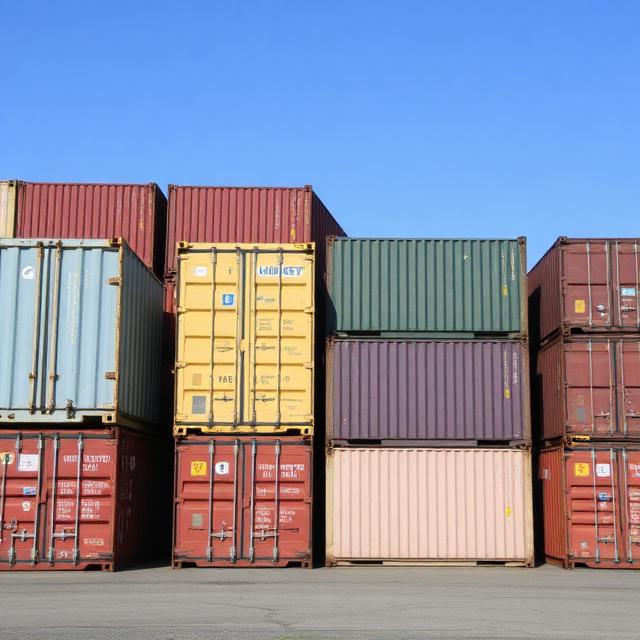
A–Z China Sourcing & Logistics Glossary (120+ Terms)
Category A – D: Logistics Frameworks & Initial Audits
- Anti-Dumping Duty: Highly targeted protective tariffs applied by importing customs on specific commodities priced below regional market value.
- AQL (Acceptable Quality Limit): A statistical sampling matrix defining the maximum number of allowable defects before a production batch faces total rejection.
- Air Waybill (AWB): A non-negotiable contract of carriage issued by air freight lines detailing routing, weight parameters, and trackability metrics.
- Bill of Lading (B/L): The foundational contract of carriage and legal title asset issued by maritime shipping lines.
- Blanket Sailing: An unexpected or planned cancellation of a scheduled cargo route by ocean carriers to balance market space capacity.
- Bonded Warehouse: A secure customs-monitored facility where imported or export-bound goods are stored without paying immediate local duties.
- BSCI (Business Social Compliance Initiative): A strict operational factory auditing framework monitoring labor rules, workplace safety, and environmental conditions.
- CBM (Cubic Meter): The universal volumetric unit used by freight forwarders to calculate ocean container space requirements and transport costs.
- CE Marking / RoHS / REACH: Mandatory regulatory declarations proving product conformity with European safety, environmental, and chemical thresholds.
- Certificate of Origin (C/O): An official legal form proving where a commodity was manufactured to determine international tariff framework eligibility.
- CIF (Cost, Insurance, and Freight): Incoterm where the supplier funds transport to the buyer’s destination port, including baseline maritime insurance coverage.
- CFR (Cost and Freight): Logistics arrangement identical to CIF, except the importing buyer remains fully responsible for sourcing cargo insurance.
- CIP / FCA / DAP: Flexible international shipping rules delineating exact cargo risk hand-off points across localized transit networks.
- Commercial Invoice: The definitive accounting statement customs officials use to assess real product valuations, entry fees, and applicable taxes.
- Container Loading Inspection (CLI): A final on-site verification checking that pallets are safely distributed, stacked, and locked inside ocean containers.
- Customs Broker: A licensed professional agency processing entry documentation, legal compliance, and tariff settlement at destination ports.
- DDP (Delivered Duty Paid): A maximum-liability shipping term where the manufacturer covers all transit, clearance, import duties, and final inland transport.
- Demurrage & Detention: Accumulating daily financial penalties charged when containers sit past allowed free time limits inside ports or terminal yards.
Category E – L: Engineering Protocols & Freight Documentation
- ERP (Enterprise Resource Planning): Specialized internal tracking software utilized by modern factories to schedule raw materials, machine allocations, and labor.
- Escrow Accounts: Secured third-party financial tools keeping production capital locked until explicit delivery milestones are verified.
- ETD & ETA: Essential logistical milestones tracking the Estimated Time of Departure and Estimated Time of Arrival.
- EXW (Ex Works): A baseline unit quote where the factory prepares packed crates but assumes zero transport or export compliance obligations.
- Factory Audit: An on-site operational evaluation assessing a supplier’s legal corporate registry, quality systems, and physical machinery capacity.
- FAI (First Article Inspection): A targeted engineering checkpoint testing the initial units coming off active tooling lines against technical blueprints.
- FCL (Full Container Load): A freight model where an importer secures exclusive use of an entire 20ft or 40ft maritime shipping container.
- FDA Registration / FCC: Mandatory market approvals ensuring compliance with US medical safety, food-contact rules, or radio emissions benchmarks.
- FOB (Free on Board): A balanced trade standard where the factory pays all local export fees up until the goods safely clear the ship’s loading rail.
- Force Majeure: A protective legal clause nullifying standard contractual liabilities when natural or geopolitical disasters disrupt regular manufacturing.
- Golden Sample: The finalized pre-production item signed off by both buyer and factory to serve as the definitive evaluation benchmark.
- HS Code (Harmonized System): A universal numeric classification code used globally to calculate precise import tariff rates and custom entry policies.
- Injection Molding / Die Casting: Heavy industrial manufacturing processes using custom steel tooling to press liquid polymers or metals into permanent shapes.
- Intermodal Freight: Complex multi-modal supply chain transit moving shipping containers across trucks, rail lines, and ocean vessels under a single contract.
- IP Protection: Targeted legal frameworks securing proprietary engineering designs, logos, and custom mold layouts from unauthorized reproduction.
- JIT (Just-in-Time): A lean inventory strategy scheduling raw material arrival directly with production line starts to reduce warehouse storage overhead.
- Landed Cost: The complete financial total of an import run, combining raw unit costs with freight, insurance, custom broker fees, and domestic transport.
- LCL (Less than Container Load): A cost-saving consolidation model where multiple smaller shipments share volume space inside a single ocean container.
Category M – Z: Financial Terms & Production Management
- Mass Production: The active manufacturing phase where assembly lines continuously process high-volume, validated commercial runs.
- MOQ (Minimum Order Quantity): The smallest unit volume a manufacturer requires to cover machinery calibration setups and material purchase costs.
- MPQ (Minimum Packing Quantity): The base unit configuration a factory uses to fill an un-splittable master shipping carton.
- NNN Agreement: A specialized Chinese contract preventing a supplier from using shared intellectual property to compete, stopping them from bypassing buyers in the market.
- Packing List: A mandatory logistical manifest tracking precise weights, physical dimensions, total crate counts, and distinct product contents.
- Proforma Invoice (PI): A preliminary bill outlining order quantities, specs, and bank coordinates, used to trigger international wire deposits.
- PSI (Pre-Shipment Inspection): A random quality verification check evaluating finished boxes against AQL levels before final balance clearance.
- Quality Assurance (QA): Systemic, preventive process engineering designed to monitor and optimize factory systems to stop defects before assembly lines roll.
- Quality Control (QC): Immediate, reactive product evaluations focused on finding and separating flawed items during active manufacturing cycles.
- RMA (Return Merchandise Authorization): A formal claims framework managing factory account credits or replacement product schedules for defective units.
- RMB (Renminbi / Yuan): The official currency of mainland China, heavily dictating base raw material and component pricing structures.
- SKU (Stock Keeping Unit): A unique inventory tracking number used to manage distinct variations and styles across warehouse databases.
- Sourcing Agent: A local professional supply chain partner managing factory negotiations, quality audits, and freight consolidation on behalf of the buyer.
- Specification Sheet: A technical master reference document defining exact dimensions, material compositions, packing layouts, and allowed error margins.
- T/T (Telegraphic Transfer): The primary electronic bank wire system utilized to process outbound manufacturing deposits and balance settlements.
- Tolerance: The mathematically defined, acceptable range of dimensional variation allowed around primary engineering metrics.
- VAT Rebate: An export tax refund issued by the Chinese government to domestic manufacturers, used strategically to negotiate lower base pricing.
- Yield Rate: The percentage tracking usable, flawless items passing final assembly compared to the total volume of raw material inputs.
Operational Case: The True Cost of Incoterms Misinterpretation
Choosing an inappropriate shipping term directly compromises project profitability. Importers frequently select Ex Works (EXW) because it features the lowest upfront unit quote, failing to account for localized logistics realities at the point of origin.
The $3,200 EXW Pitfall: An importer arranged an EXW delivery for a batch of custom components. The manufacturer finished the order on time but had no legal obligation to handle domestic trucking or export customs documentation. Because the buyer lacked an established local cargo partner to manage the goods and clear export customs, the container missed its shipping window. This structural oversight caused $3,200 in unexpected domestic trucking surcharges, port storage penalties, and emergency documentation fees.
Core Trade & Quality Comparison Matrices
1. FOB vs. EXW Cost & Risk Breakdown
| Operational Scope | Free On Board (FOB) | Ex Works (EXW) |
|---|---|---|
| Inland Local Transport | Managed and paid completely by the manufacturer | Managed and paid entirely by the importer |
| Export Customs Settlement | Handled directly via the factory export license | Assumed fully by the buyer’s cargo agent |
| Risk Transfer Hand-off | When crates safely clear the vessel’s loading rail | Directly on the manufacturer’s warehouse floor |
| Supply Chain Control | Balanced; factory handles origin, buyer runs freight | Buyer handles all steps but assumes all origin risks |
2. OEM vs. ODM Manufacturing Models
| Operational Parameter | Original Equipment Manufacturer (OEM) | Original Design Manufacturer (ODM) |
|---|---|---|
| Design Ownership (IP) | Owned exclusively by the client / importer | Owned fundamentally by the manufacturer |
| Upfront Mold Tooling CapEx | High; funded entirely by the buying brand | Minimal to zero upfront tooling costs required |
| Market Differentiation | Absolute; built to custom specifications | Moderate; cosmetic branding on existing patterns |
| Time to Market | Extended (typically 6–12 months for tooling) | Rapid deployment (often 30–60 days to line start) |
3. Quality Control (QC) vs. Quality Assurance (QA)
| Core Focus | Quality Control (QC) | Quality Assurance (QA) |
|---|---|---|
| Nature of Activity | Reactive; detecting flaws in finished batches | Proactive; optimizing the manufacturing setup |
| Execution Phase | During and post-production via inspections | Pre-production via standard procedures (SOP) |
| Primary Objective | To isolate and reject out-of-tolerance units | To build prevention systems against defects |
Core Procurement Knowledge Areas
To establish absolute semantic authority over your production files, focus on how key regulatory metrics interface with field operations.
HS Code (Harmonized System Code)
- Definition: A standardized numerical naming framework managed by the World Customs Organization (WCO).
- Operational Impact: It directly dictates tariff exposure, anti-dumping tax liabilities, and specific port entry rules. Applying an incorrect code leads to cargo impoundment or heavy financial fines.
- Sourcing Context: Corporate buyers verify that a factory’s suggested code perfectly aligns with the destination country’s custom framework before cargo departure to prevent surprise tax surcharges.
AQL (Acceptable Quality Limit)
- Definition: A statistical sampling standard calculating the precise number of minor, major, and critical defects permitted before a production batch faces rejection.
- Operational Impact: It removes subjective arguments from final quality evaluations by setting clear, legally binding numerical validation thresholds.
- Sourcing Context: Contracts feature an explicit AQL matrix (e.g., 0 Critical, 1.5 Major, 4.0 Minor) to govern independent pre-shipment inspections.

Common Risks in China Sourcing Terminology Misinterpretation
- Incoterm Blunders: Confusing EXW with FOB scales up origin fees. Buyers frequently discover too late they are liable for localized port handling charges.
- MOQ Calculation Failures: Accepting high production minimums ties up capital in slow stock. Importers should structure tiered order minimums linked to raw component setups.
- QC vs. QA Confusions: Relying only on product checks is reactive. Failing to implement preventive quality assurance setups causes repetitive factory line errors.
- Communication Weaknesses: Using casual instant messaging apps for technical tolerances creates engineering gaps. Plants require formal, signed specification drawings.
- Contract Legal Loopholes: Deploying boilerplate western agreements without validation under local laws invalidates protections. Contracts require bilingual precision and enforceable local arbitration setups.
Related Procurement Guides
- Importing from China Guide – Complete logistical mechanics and customs entry strategies.
- Factory Audit Guide – Step-by-step frameworks for on-site hardware and capacity testing.
- Supplier Verification Checklist – Risk prevention strategies to eliminate corporate fraud.
- Alibaba vs Factory – Analytical breakdown comparing trading entities against direct production plants.
Frequently Asked Questions (FAQ)
What is a China sourcing glossary?
A structured reference system that defines procurement, logistics, and manufacturing terms used in Chinese supply chains to reduce miscommunication and operational risk.
What does MOQ mean in China sourcing and manufacturing?
MOQ stands for minimum order quantity. It is the lowest unit count a plant requires to run machinery, cover raw material setups, and sustain labor costs for an order.
How much is the standard MOQ in China factories?
Minimum order quantities vary by item value. Basic injection-molded plastics often carry MOQs of 3,000 to 5,000 pieces. In contrast, complex heavy machinery or commercial architectural furniture setups may require only 10 to 50 units.
What is the difference between EXW and FOB cost impact?
Under EXW, the buyer pays for all logistics starting from the factory floor. Under FOB, the manufacturer covers inland trucking, container loading, and export clearance inside China. Confusing these terms can add thousands in unexpected origin charges.
What is FOB in international trade?
FOB means Free on Board. The manufacturer remains responsible for all costs and transport risks until the goods clear the shipping vessel’s rail at the loading port.
What is EXW pricing?
EXW stands for Ex Works. The supplier prepares the packed crates at their facility loading dock but assumes zero transport, trucking, or export documentation liabilities.
What is the safest Incoterm for importing from China?
FOB is widely considered the safest, most stable setup for professional brands. It gives buyers full control over international sea freight rates while leaving localized Chinese transit liabilities with the manufacturer.
How do hidden factory surcharges arise during production?
Sudden surcharges surface when engineering tolerances, raw material standards, or specific packaging formats are omitted from the initial Proforma Invoice. Suppliers may demand price increases mid-cycle if clear parameters were not fixed upfront.
Can international buyers claim the Chinese export VAT Rebate?
No, foreign buyers cannot claim this rebate directly. The tax credit is issued by the Chinese government strictly to domestic corporate entities and licensed export manufacturers. Sourcing agents use this rebate structure to negotiate lower base pricing for clients.
Downloadable Resources
Download Printable 120-Term Sourcing Glossary & Checklist (A4 Format)
About This Reference Hub
Last Updated: 2026
Reviewed By: Procurement & Supply Chain Team
Based On: 200+ completed sourcing and manufacturing projects across China industrial hubs (including Foshan, Guangzhou, and Shenzhen) managed by Skyline Trading Co., LTD.
Need Help Applying These Terms in Real Sourcing?
If you’re unsure how these definitions apply to your supplier or project, start with structured supplier verification before placing any order.
Request Supplier Verification or Factory Audit