
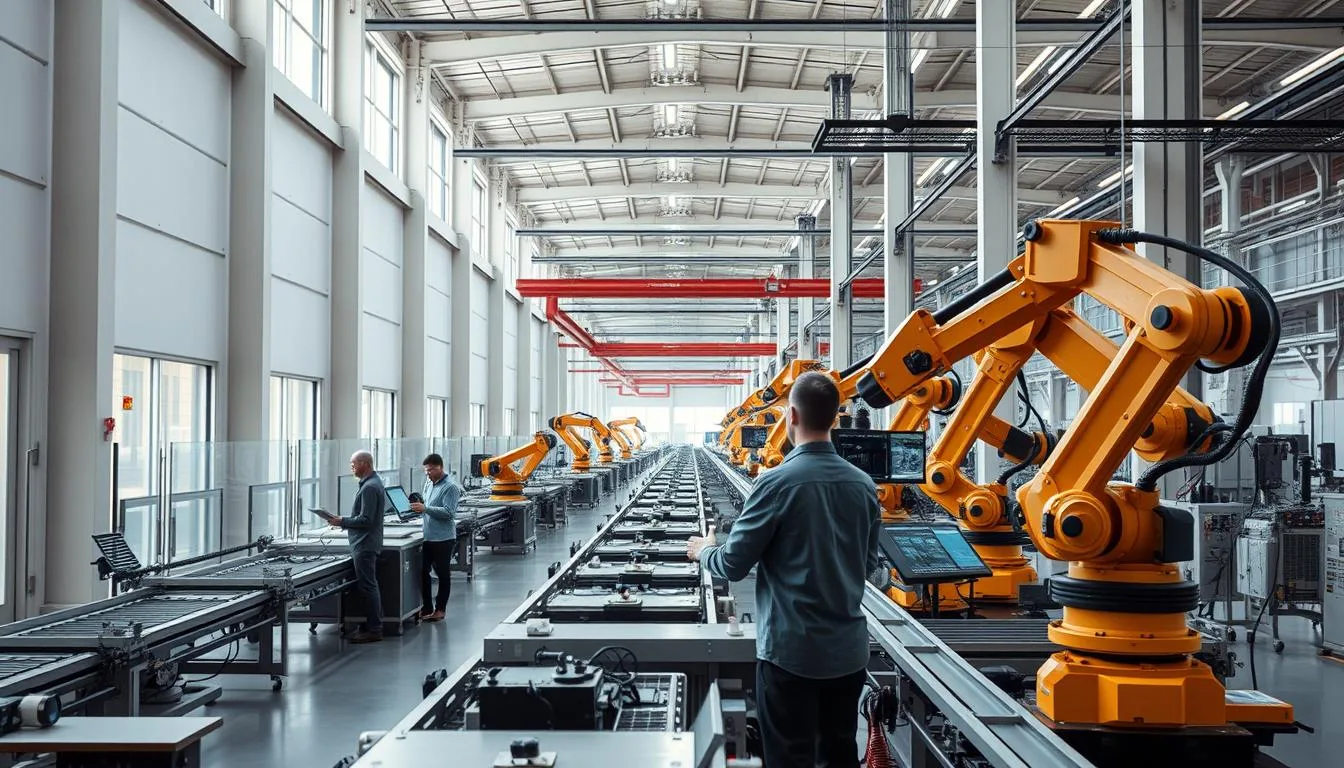
Adaptive Machines in Manufacturing: Modernizing Production Lines and Eliminating Bottlenecks
In mid-to-high-volume industrial facilities, rigidity is the ultimate enemy of profitability. When a production line is locked into rigid legacy setups, adapting to new packaging sizes, fluctuating raw material densities, or urgent item changeovers causes severe, costly operational halts. Modern manufacturing requires physical adaptability. Moving toward adaptive machines and automated hardware is no longer about matching industry trends—it is about securing day-to-day operational survival, minimizing planned downtime, and protecting bottom-line yields.
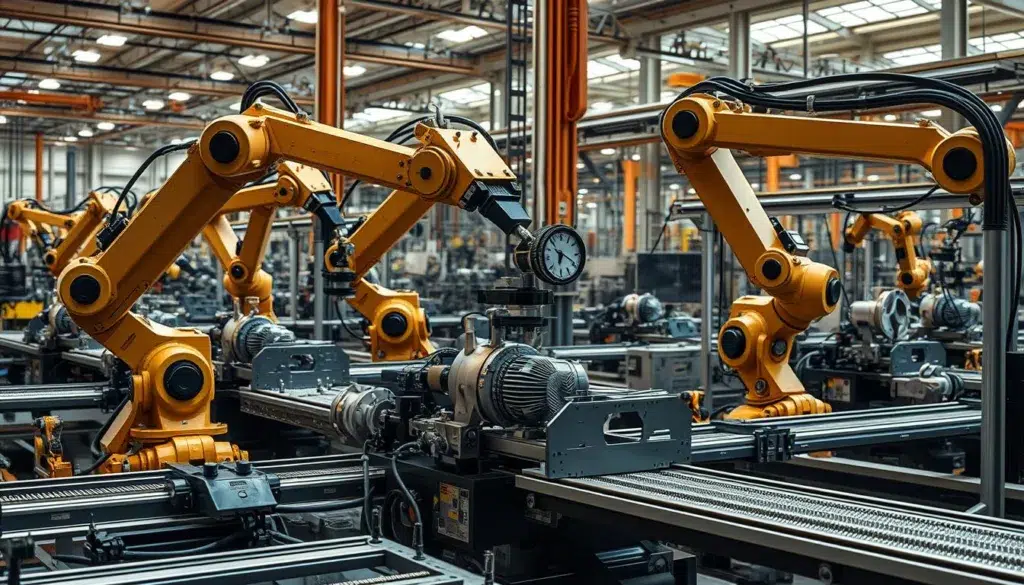
By blending practical engineering layout planning with modular hardware components, factories can shift from single-purpose setups into dynamic systems. Whether upgrading high-speed beverage bottling plants, automated coffee packaging operations, or heavy industrial assembly bays, success depends on how effectively mechanical assets handle real-time variations on the shop floor. This guide covers what adaptive manufacturing actually means in 2026, how closed-loop systems work, where bottlenecks hide, and the practical steps factories take to eliminate them—drawing on real project experience across the Middle East and global sourcing networks.
The industrial automation market reached USD 215 billion in 2025 and is tracking toward USD 533 billion by 2035. This is not a niche trend—it is the defining transformation of global manufacturing. Factories that embrace adaptive machines today will be the ones setting competitive benchmarks tomorrow. Those that delay risk falling behind not just in efficiency, but in their ability to attract clients, meet regulatory standards, and retain skilled operators who increasingly prefer working in modern, well-equipped facilities.
Adaptive Manufacturing Systems Overview
Adaptive manufacturing is a smart manufacturing approach that uses real-time data, AI-driven analytics, and modular automation to continuously adjust production processes. Instead of building a line that runs one product at one speed forever, adaptive systems respond to changes in demand, material properties, packaging formats, and equipment health without requiring complete manual reconfiguration. According to Siemens’ adaptive production framework, the convergence of operational technology (OT) and information technology (IT) has matured into systems that can evolve in real time, rapidly respond to shifting demands, and autonomously optimize operations.
For technical specifications on how our team designs, sources, and implements adaptive industrial infrastructure worldwide, explore our dedicated corporate overview on the About Skyline Trading page, or consult directly with our plant logistics engineers by emailing [email protected].
Key Industry Benefits
- Dynamic feedback loops stabilize material flow during unexpected fluid or material density shifts.
- Modular line layouts allow product format changeovers to occur smoothly with minimal transition downtime.
- Strategic placement of multi-axis sensors mitigates critical production line synchronization bottlenecks.
- Standardizing component selection simplifies international industrial spare parts sourcing and global procurement logistics.
- Predictive maintenance setups safeguard expensive mechanical assets from sudden electrical or structural failure.
- Integrating secure IoT tracking enables complete operational visibility across fast-moving automated packaging workflows.
Why Mechanical Rigidity Is the Silent Profit Killer
Every factory manager has experienced it: a minor variance in raw material quality, an urgent changeover request from a major client, or a single sensor failure that cascades into hours of unplanned downtime. The root cause is almost always the same—mechanical rigidity. When a production line is designed for a single product at a single speed with a single set of materials, any deviation becomes a crisis.
The financial impact is staggering. According to Deloitte’s 2025 Smart Manufacturing Survey, 92% of manufacturers say smart manufacturing will be the main driver of competitiveness over the next three years. Meanwhile, McKinsey research indicates that 72% of global manufacturers have already deployed at least one AI-powered automation system, up from just 28% in 2022. The gap between adaptive and rigid facilities is widening every quarter.
Consider a practical example from the beverage industry. A high-speed juice bottling line processing 400 bottles per minute encounters a batch of preforms with slightly different wall thickness. On a rigid line, this triggers a cascade: the filling station overfills or underfills, the capping turret misaligns, and the downstream accumulation table overflows. Total downtime: 45 minutes. Total cost: thousands of dollars in wasted product, lost throughput, and overtime labor. On an adaptive line, the same variance is detected by inline sensors, the filler auto-calibrates its volumetric parameters, and the capping station adjusts torque settings in real time. Total disruption: zero.
This is not a theoretical scenario. It happens daily in factories across the Middle East, Asia, and Europe. The facilities that survive and thrive are the ones that have invested in making their lines physically adaptable—not just digitally connected.
Real-World Experience from Production Line Projects
Over the years, Skyline Trading has participated in multiple beverage, coffee, and food packaging projects across the Middle East. Our work has included production line consulting, spare parts sourcing, automation upgrades, and factory setup support for facilities operating in major markets such as Saudi Arabia, Egypt, Iraq, and Yemen. Through these projects—spanning consulting on lines for regional beverage producers and establishing dedicated coffee and juice packaging setups—we have seen firsthand how production bottlenecks, spare parts availability, and line synchronization directly affect factory profitability.
Field Insight: In high-output beverage facilities, a micro-stoppage is often more damaging than a total shutdown. When a synchronization lag occurs between an automated liquid filler and the capping turret, product accumulation tables overflow instantly. Resolving this requires closed-loop sensor tracking that allows downstream machinery to adjust speed dynamically based on upstream output. This is the core principle behind adaptive machine design.
One pattern we observe consistently across Skyline Trading projects: factories that invest in adaptive hardware up front spend 40-60% less on maintenance interventions over the first three years compared to facilities running rigid legacy systems. The initial capital outlay is higher, but the total cost of ownership tells a completely different story when you factor in reduced scrap rates, fewer changeover delays, and lower emergency spare parts costs.
Solving Production Line Bottlenecks with Adaptive Machinery
Production bottlenecks are constraints that limit the flow of materials, information, or processes through a manufacturing system. They occur at various stages: material handling, machine processing, quality control checkpoints, and data processing nodes. Unlike traditional manufacturing environments, modern smart factory bottlenecks often involve complex interdependencies between physical processes and digital systems, making identification and resolution more challenging.
In many of the production line projects we analyze, the most destructive losses stem from mechanical rigidity. For example, a minor variance in PET preform quality or a split-second synchronization lag between the liquid filler and capping turret can jam an entire downstream line. Adaptive machinery solves this by using real-time closed-loop feedback systems that continuously monitor and adjust.
When an adaptive capping or filling station detects a structural anomaly or a slight change in fluid viscosity, it instantly auto-calibrates its pressure parameters and operational speed. This continuous adjustment prevents mechanical jams, drops scrap rates, and keeps high-speed sorting mechanisms running at full capacity without requiring manual operator intervention. The technology behind this is not new in concept—PID controllers have existed for decades—but the 2026 generation of adaptive machines combines edge computing, AI-driven anomaly detection, and high-frequency sensor arrays to achieve response times measured in milliseconds rather than seconds.
When modernizing existing facilities, integrating adaptive modules requires three core elements to work in perfect harmony: precision multi-axis sensors, rapid-response actuators, and decentralized control architectures. These components transform standalone hardware into smart, connected systems capable of managing everything from bulk liquid processing to complex commercial outfitting assembly. To explore how we build these high-durability setups for international operations, view our full range of Advanced Factory Solutions.
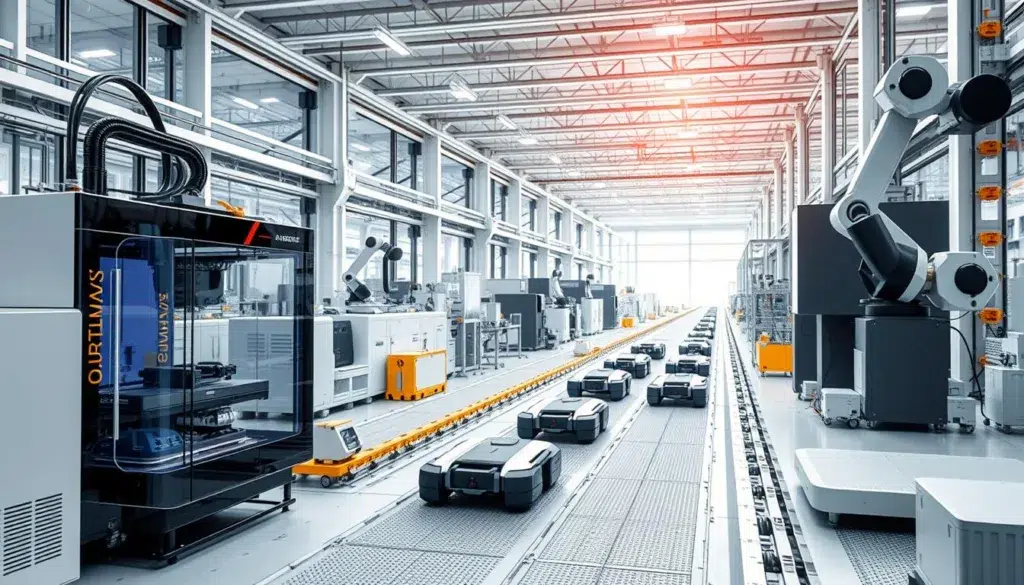
Common Plant Expansion Challenges
- Product Format Changeover Lag: Traditional lines require extensive physical tool swapping to transition from one packaging size or container shape to another. Adaptive systems use quick-change tooling and programmable servo drives to reduce changeover from hours to minutes.
- Spare Parts Scarcity: Utilizing proprietary, hyper-localized machinery components can cause weeks of downtime if a single photocell or motor fails. This is why component standardization on globally available brands matters so much.
- Downstream Packaging Jams: Accumulation tables often overflow if boxing or wrapping units cannot dynamically match the output of upstream processing equipment. Adaptive speed matching between stations eliminates this entirely.
For targeted technical guidance regarding machinery layout optimization or heavy industrial hardware procurement, contact our engineering office at [email protected]. Resolving these physical bottlenecks early is the most reliable way to future-proof your facility’s daily throughput.
How Adaptive Machines Work: The Closed-Loop Feedback System
Understanding why adaptive machines outperform rigid equipment requires knowing how closed-loop feedback actually works at the hardware level. Every adaptive machine contains three fundamental subsystems that operate in continuous coordination: the sensing layer, the processing layer, and the actuation layer.
The Sensing Layer
High-frequency sensors—proximity detectors, load cells, temperature probes, vibration analyzers, and vision systems—continuously monitor every physical variable on the production line. In a modern adaptive filling station, for example, inline sensors measure fill weight, liquid temperature, container position, cap torque, and seal integrity at rates exceeding 1,000 readings per second. This data stream creates a real-time digital picture of exactly what is happening at every station.
The Processing Layer
Edge controllers or PLCs receive the sensor data and compare it against programmed tolerance bands. When a reading falls outside acceptable parameters—say, a fill weight drifting 2% above target due to a viscosity change—the processor calculates the necessary correction in real time. In 2026, many of these processors incorporate lightweight AI models trained on historical production data, allowing them to predict drift before it actually causes a defect.
The Actuation Layer
Servo motors, pneumatic cylinders, and variable-frequency drives receive correction commands from the processing layer and make physical adjustments—infill volume, capping torque, conveyor speed, or sorting gate position—within milliseconds. The result is a production line that continuously self-corrects, maintaining quality and throughput even as input conditions change.
This three-layer architecture is what separates adaptive machines from conventional automation. A conventional machine executes a fixed program. An adaptive machine reads the physical environment, reasons about what it observes, and adjusts its own behavior accordingly. The difference in operational resilience is dramatic, especially in facilities running multiple product variants or dealing with variable raw material quality.
Digital Twins: Virtual Commissioning Before Physical Installation
One of the most powerful tools in modern adaptive manufacturing is the digital twin—a virtual replica of a physical production line that runs real-time simulations using live operational data. Digital twins allow engineers to test changeover scenarios, identify potential bottlenecks, and optimize line configurations before committing to physical modifications. This eliminates the costly trial-and-error approach that historically characterized factory upgrades.
In practice, a digital twin of a packaging line receives the same sensor data as the physical line. Engineers can simulate what happens when throughput increases by 20%, when a new product format is introduced, or when a critical station goes offline for maintenance. The simulation reveals downstream effects—accumulation rates, buffer capacity requirements, and potential synchronization failures—before they occur in reality. This capability is particularly valuable for facilities operating in the Middle East, where production ramp-ups often need to align with seasonal demand spikes such as Ramadan or holiday periods.
According to PwC’s 2026 Global Industrial Manufacturing Outlook, the share of manufacturers expecting to highly automate key processes by 2030 will jump from 18% today to 50%. Digital twins are a critical enabler of this transition, allowing factories to de-risk their automation investments by validating configurations virtually before committing capital.
Cross-Sector Integration: From Factories to Commercial Spaces
Beyond factory automation, Skyline Trading also supports large-scale hospitality projects, commercial kitchen equipment sourcing, and smart home technologies, allowing clients to work with a single procurement and engineering partner across multiple sectors. The exact same precision metalwork, heavy-duty electronic controls, and automated structural processing deployed on production lines are utilized to build commercial kitchen suites and high-end hotel infrastructure that endure grueling daily commercial use.
This cross-sector capabilities portfolio allows B2B clients to streamline their entire supply chain. Whether a project involves setting up an automated packaging plant, outfitting a luxury resort, or installing commercial-grade hospitality layouts, integrated sourcing networks guarantee component compatibility, strict international standards compliance, and unified global shipping logistics. The engineering principles—precision tolerances, modular design, and durable material selection—remain constant across sectors.
Sourcing Industrial Spare Parts and Components
An adaptive production line is only as reliable as its weakest component. A major issue we observe across global factories is the failure to standardize critical automation wear-and-tear parts. When a specialized sensor, pneumatic cylinder, or servo drive fails on a high-speed packaging line, finding an exact replacement can stall operations for days if the bill of materials relies on obscure or regional-only brands.
To eliminate this vulnerability, factory managers must build their infrastructure using globally accessible, high-tier component standards. Standardizing on world-class brands like Siemens, Rexroth, and Festo for critical parts—such as high-frequency photocells, smart solenoids, and heavy-duty electric motors—ensures that replacements can be sourced and shipped rapidly through established international trade channels.
Upgrading a facility from basic mechanics to an automated powerhouse requires careful cross-brand component mapping. Linking standalone systems with central control networks guarantees long-term operational consistency. To evaluate how we source and verify turnkey equipment setups for large-scale enterprise properties, explore our Hotel and Restaurant Solutions page.
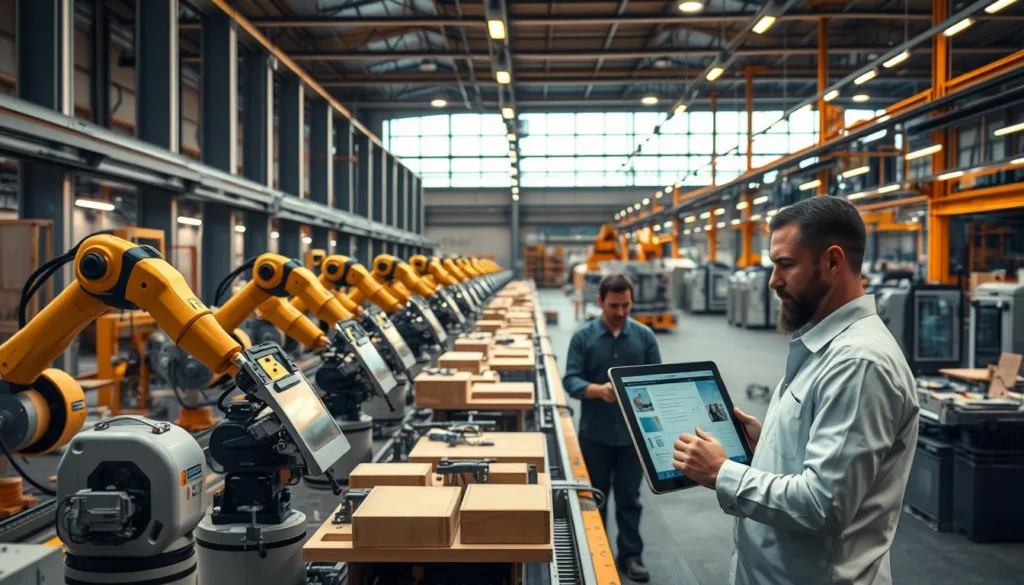
By prioritizing component standardization, industrial operators protect their heavy investments and minimize long-term maintenance costs.
Optimizing Automated Packaging and Filling Systems
The final phases of a production line—specifically filling, sealing, and boxing—are often where efficiency drops due to a lack of synchronization. In modern food and beverage manufacturing, such as specialized coffee roasting plants or high-volume juice production lines, deploying high-speed automated packaging systems is critical to sustaining high throughput.
For instance, automated coffee packaging machines must dynamically manage variations in roasted bean weights and gas release levels. Implementing precise volumetric or net-weigh filling units ensures that every pouch or carton is filled perfectly to specification, eliminating product overfill waste and guaranteeing tight seals under high speeds. The technology driving this precision has advanced significantly: modern net-weigh fillers use multi-stage weighing algorithms that achieve fill accuracy within ±0.1 grams, even at throughputs exceeding 120 packages per minute.
Downstream from filling, implementing smart welding and sealing technology guarantees airtight integrity for food-grade packaging, keeping products fresh during long international transit routes. Furthermore, integrating robotic pick-and-place arms for case packing removes manual handling bottlenecks, keeping case-loading speeds perfectly synchronized with upstream filling rates. To see how these smart systems integrate into residential and commercial properties, explore our comprehensive Smart Home Solutions.
Filling System Comparison: Traditional vs Adaptive
The difference between traditional and adaptive filling systems becomes clear when you examine operational metrics side by side. Traditional volumetric fillers operate on fixed displacement—they push the same volume regardless of liquid temperature, viscosity, or container variation. Adaptive net-weigh fillers continuously measure actual output weight and adjust valve timing in real time. In practice, this means adaptive systems achieve fill accuracy within ±0.1% compared to ±1-2% for traditional systems. Over a year of production at 400 units per minute, that accuracy difference translates to thousands of dollars in saved product per line.
Implementing Flexible Manufacturing System Layouts
As market demands require faster product cycles, deploying a flexible manufacturing layout is essential for staying competitive. These dynamic setups allow a single line to shift seamlessly between entirely different product variants with minimal downtime. Transitioning a standard layout into an agile setup begins with a comprehensive audit of the physical floor space to map material handling paths and identify exact mechanical constraints.
A data-driven space assessment uncovers hidden bottlenecks, indicating where manual transfer steps can be optimized using automated conveyors, smart gantry networks, or automated guided vehicles (AGVs). Success relies on smooth data exchange across all machinery on the floor, where industrial IoT hardware tracks machine utilization, monitors power draw, and sends real-time diagnostic data directly to central operator dashboards.
- Pre-Engineering Space Mapping: Defining exact linear and vertical clearance paths to maximize raw material and finished product flows. This includes calculating minimum bend radii for conveyor systems, establishing ergonomic operator zones, and mapping emergency egress routes that comply with local safety codes.
- Unified Communication Networks: Ensuring all localized PLCs speak identical protocols—whether OPC-UA, MQTT, or PROFINET—to guarantee instant, safe data transfers during fast product changeovers. Protocol mismatches are one of the most common and most preventable causes of integration failure.
- Hands-On Operator Training: Conducting regular, structured safety and calibration training so plant teams can manage the upgraded hardware confidently. The best automation system in the world is useless if operators do not understand how to interact with it safely and efficiently.
To learn how automated material handling and secure IoT sensor networks can optimize your factory floor layout, explore our comprehensive Smart Home Solutions page. Implementing these advanced systems protects your capital investment and ensures long-term operational adaptability.
IoT Integration and Predictive Maintenance
One of the most transformative aspects of adaptive manufacturing is the integration of Industrial IoT (IIoT) with predictive maintenance programs. Traditional maintenance follows fixed schedules—every 500 hours, every quarter, every year—regardless of actual equipment condition. This approach either wastes money on unnecessary maintenance or misses failures that occur between scheduled intervals. Predictive maintenance flips this model entirely.
IoT sensors installed on critical equipment—vibration sensors on motors, temperature sensors on bearings, current sensors on drives, acoustic sensors on pneumatic systems—continuously stream operational data to edge analytics platforms. Machine learning algorithms trained on historical failure patterns analyze this data in real time, identifying early warning signatures that precede mechanical failure. According to Intuz’s 2026 IoT predictive maintenance overview, 82% of equipment failures are random, not age-related, making scheduled preventive maintenance inherently insufficient. Predictive maintenance reduces unplanned downtime by 35-50% and extends asset lifespan by 20-40%.
Practical IoT Sensor Deployment
In a typical adaptive packaging line, the most valuable sensor placements include: vibration sensors on high-speed conveyor motors to detect bearing wear; current sensors on servo drives to identify abnormal load patterns; temperature sensors on sealing bars to ensure consistent heat application; and vision systems at quality checkpoints to catch defects that human operators might miss during extended shifts. Each sensor feeds data into a centralized monitoring dashboard that provides plant managers with real-time equipment health scores, predicted maintenance windows, and automated work order generation.
The ROI on IoT-driven predictive maintenance is well documented. Facilities that implement comprehensive sensor networks typically see maintenance cost reductions of 25-40% within the first 18 months, with the added benefit of more predictable production scheduling. When you know a bearing will need replacement in three weeks, you schedule it during a planned maintenance window. When that same bearing fails unexpectedly at 2 AM on a Saturday, you pay overtime, rush shipping, and lost production. The difference between these two scenarios is measured in tens of thousands of dollars per incident, and the IoT sensor investment typically pays for itself within the first prevented failure.
Beyond individual asset monitoring, IoT networks enable line-level optimization that would be impossible with manual observation alone. Correlating data across multiple stations reveals systemic inefficiencies—a conveyor running faster than necessary because a downstream station is consistently underperforming, or a heating element cycling unnecessarily because ambient temperature varies throughout the day. These cross-station insights, surfaced automatically through IoT analytics dashboards, unlock optimization opportunities that compound across the entire production line.
Component Standardization for International Operations
A recurring challenge in international factory operations is the patchwork of component brands across a single production line. When one station uses Siemens PLCs, another uses Allen-Bradley, and a third uses a regional brand with no international distribution, spare parts sourcing becomes a logistical nightmare. A single failed component from the obscure brand can shut down the entire line while procurement teams scramble to find a compatible replacement.
The solution is deliberate component standardization during the design phase. By specifying globally available brands for all critical automation components—PLCs, HMIs, servo drives, sensors, and pneumatic valves—factory operators ensure that replacements can be sourced from multiple distributors worldwide, cleared through customs using standard HS codes, and delivered within days rather than weeks.
This standardization also simplifies operator training. When every station uses the same PLC platform and programming environment, cross-training operators becomes significantly easier. A technician trained on Siemens TIA Portal can service any station on the line, reducing the dependency on specialized technicians for each piece of equipment.
Collaborative Robots and Operator Safety
Collaborative robots, or cobots, represent one of the fastest-growing segments in adaptive manufacturing. Unlike traditional industrial robots that operate behind safety cages, cobots are designed to work alongside human operators in shared workspaces. They use force-limiting sensors, speed monitoring, and safe proximity detection to stop or slow automatically when a human enters their work envelope. This makes them ideal for tasks that require both robotic precision and human judgment—such as quality inspection, complex assembly sequences, or packaging operations that handle variable product formats.
In 2026, cobot pricing has dropped significantly, with capable systems now available below $30,000 for light-duty applications. This accessibility has opened adaptive automation to small and mid-sized factories that previously could not justify the capital outlay for traditional industrial robots. For production lines that need to switch between multiple product variants several times per shift, cobots provide the flexibility that fixed automation cannot match—they can be reprogrammed for a new task in hours rather than weeks.
Safety integration is paramount. Every cobot deployment requires a formal risk assessment that maps all potential interaction zones, defines maximum approach speeds, and establishes emergency stop protocols. When integrated correctly, cobots reduce workplace injuries, improve task consistency, and free human operators for higher-value supervisory and quality control roles.
Budget Considerations for Factory Modernization
Understanding the true cost of factory modernization requires looking beyond the sticker price of individual machines. The total investment encompasses equipment procurement, facility modifications, integration engineering, operator training, and the production downtime during installation. Companies that budget only for hardware often find their actual costs running 30-50% higher than initial estimates.
A practical budgeting framework separates costs into four categories: capital expenditure (machines, controls, sensors), integration expenditure (engineering, programming, commissioning), training expenditure (operator certification, maintenance team upskilling), and contingency (typically 10-15% of total project cost for unforeseen site conditions or scope adjustments). Factoring in all four categories from the start prevents the budget surprises that derail projects and erode stakeholder confidence.
Companies should balance these upfront capital investments—including machinery procurement, specialized software licensing, and engineering setup fees—against projected long-term operational savings, such as reduced labor costs, lower scrap rates, and faster order fulfillment times. In most mid-to-high-volume facilities, the payback period for adaptive machinery investments falls between 18 and 30 months, after which the savings flow directly to the bottom line.
Energy Efficiency and Sustainability in Adaptive Manufacturing
Energy consumption is one of the largest operational costs in any manufacturing facility, and adaptive machines offer significant advantages over rigid systems in this area as well. A conventional production line runs at full power regardless of whether it is actively processing product or sitting idle between batches. Adaptive systems with IoT-enabled energy monitoring adjust motor speeds, conveyor rates, and heating elements based on actual production demand, reducing energy waste during low-throughput periods.
Variable-frequency drives (VFDs) on conveyor motors are a straightforward example. Instead of running a conveyor at full speed continuously, a VFD-driven adaptive system slows the conveyor when downstream buffers are full and accelerates when upstream output increases. This demand-responsive approach typically reduces conveyor energy consumption by 20-35% compared to fixed-speed operation. Across an entire production line with dozens of motorized stations, the cumulative energy savings are substantial.
Beyond energy, adaptive manufacturing reduces material waste. Precision filling eliminates product overfill, which in high-volume food and beverage operations can account for 2-5% of total product cost. Adaptive sealing reduces packaging material waste from failed seals and rework. Smart quality control vision systems catch defects earlier in the process, preventing the cost of processing defective products through subsequent value-added steps. These sustainability gains align with the growing regulatory and customer pressure for environmentally responsible manufacturing practices across the Middle East and globally.
Adaptive Manufacturing in the Middle East: Regional Considerations
Manufacturing facilities in the Middle East face unique operational challenges that make adaptive machinery particularly valuable. Extreme ambient temperatures affect equipment thermal management, requiring adaptive cooling systems that adjust based on real-time temperature monitoring. Dust and particulate matter in certain industrial zones demand adaptive filtration systems that increase capture rates when air quality degrades. Water scarcity in regions like Saudi Arabia and the UAE makes water-efficient adaptive filling systems—ones that minimize flush water waste during changeovers—a practical necessity rather than a luxury.
Supply chain dynamics in the region also favor adaptive approaches. Factories importing components from multiple international sources often encounter variability in parts quality and specification tolerances. Adaptive quality control systems that can accommodate these variations without halting production provide a significant competitive advantage. Additionally, the rapid growth of food and beverage manufacturing in Saudi Arabia, Egypt, and the Gulf states is driving demand for production lines that can quickly adapt to new product formats as consumer preferences evolve.
Government-led Industry 4.0 initiatives across the region are accelerating this transition. Saudi Arabia’s National Industrial Development and Logistics Program (NIDLP), the UAE’s Operation 300bn, and Egypt’s Manufacturing 4.0 strategy all provide incentives and frameworks for factories investing in adaptive automation technologies. Facilities that align their modernization plans with these programs can access financing support, technical guidance, and regulatory preferences that reduce the effective cost of implementation.
Conclusion: Partnering for Successful Factory Modernization
Transitioning to adaptive manufacturing marks a major shift in industrial production—one focused on extreme precision, rapid changeovers, and airtight quality control. By merging smart machinery with dependable automation components, factories can effortlessly scale up production to serve demanding regional and global B2B markets.
Utilizing flexible layouts, standardizing on premium spare parts, and optimizing automated packaging lines allows industrial operators to stay highly agile. This resilience helps maximize profit margins, eliminate material waste, and fulfill strict corporate contract specifications with complete confidence.
Ready to modernize your production facility? Success requires a clear strategic plan. Assess your current floor capacity, pinpoint your exact throughput bottlenecks, and partner with experienced industrial specialists who understand the realities of global sourcing and engineering logistics. Taking this structured path lets you unlock the true value of adaptive machinery and lead your market.
The factories that will dominate the next decade are not necessarily the ones with the most expensive equipment. They are the ones with the most adaptable systems—machines that read, reason, and respond to changing conditions in real time; layouts that reconfigure for new products in hours rather than weeks; and maintenance programs that prevent failures before they happen. This is what adaptive manufacturing delivers, and it is available today for facilities of every size.
To discover how Skyline Trading Co., LTD can design, source, and implement advanced adaptive machinery and industrial automation components for your business, contact our office at [email protected]. Our technical team is ready to deliver turnkey factory solutions tailored precisely to your operational needs.
Frequently Asked Questions
What makes an industrial machine “adaptive” in modern manufacturing?
An adaptive machine uses advanced sensors and closed-loop control software to monitor production conditions in real time. Unlike rigid legacy hardware, adaptive systems instantly adjust parameters like speed, pressure, and positioning to account for variations in material density, fluid viscosity, or packaging dimensions. The key difference is that adaptive machines read the physical environment and modify their own behavior, rather than simply executing a fixed program regardless of changing conditions.
How do adaptive machines help eliminate common production line bottlenecks?
In high-speed beverage or liquid filling lines, minor variations in raw materials can cause downstream jams. Adaptive machinery constantly monitors output quality and adjusts mechanical timing instantly, keeping sorting and capping mechanisms running smoothly without requiring a complete line stoppage. The closed-loop feedback system detects anomalies in milliseconds and makes corrections before they cascade into full production halts.
Why is component standardization critical for international factory operations?
Standardizing critical components like sensors, PLCs, and pneumatic cylinders on global brands (such as Siemens, Rexroth, or Festo) ensures that replacement spare parts can be sourced, cleared through customs, and delivered rapidly, avoiding weeks of costly downtime. It also simplifies operator training and reduces dependency on specialized technicians for individual pieces of equipment.
What are the primary requirements for optimizing automated packaging lines?
Optimizing these lines requires precise volumetric or net-weigh filling units to manage variations in product weight, smart sealing technology to guarantee airtight bag or container integrity, and robotic case packers to match upstream production speeds. The three systems must be synchronized through a unified control architecture to prevent downstream accumulation and waste.
What steps are involved in planning a flexible manufacturing layout?
Key steps include conducting a thorough physical floor plan audit to map material handling paths, identifying structural bottlenecks and clearance constraints, deploying automated conveyor systems or AGVs for material handling, establishing unified communication protocols across all machines, and providing structured operator training on the upgraded systems.
How does IoT integration improve overall equipment effectiveness (OEE)?
Industrial IoT networks use edge sensors to track machine health, power draw, and operational cycles in real time. This continuous data stream allows plant operators to run predictive maintenance programs, catching early warning signs of mechanical degradation before they cause unplanned failures. Predictive maintenance driven by IoT data typically reduces unplanned downtime by 35-50% and extends equipment lifespan by 20-40%.
Can these automated principles be applied to commercial kitchen projects?
Yes. The same precision engineering, automated structural welding, and robust electronic control components used in industrial packaging are applied to manufacture high-durability commercial kitchen suites and smart appliances for the hospitality sector. The engineering principles—modular design, precision tolerances, and durable material selection—remain constant whether the application is a production line or a commercial kitchen.
What budget factors should be weighed before launching a factory expansion?
Companies should balance upfront capital investments—including machinery procurement, specialized software licensing, integration engineering, and operator training—against projected long-term operational savings such as reduced labor costs, lower scrap rates, fewer emergency maintenance interventions, and faster order fulfillment times. A comprehensive budget framework that accounts for all four cost categories prevents the surprises that derail modernization projects.